

NEPRA Removes Fees and License Requirement
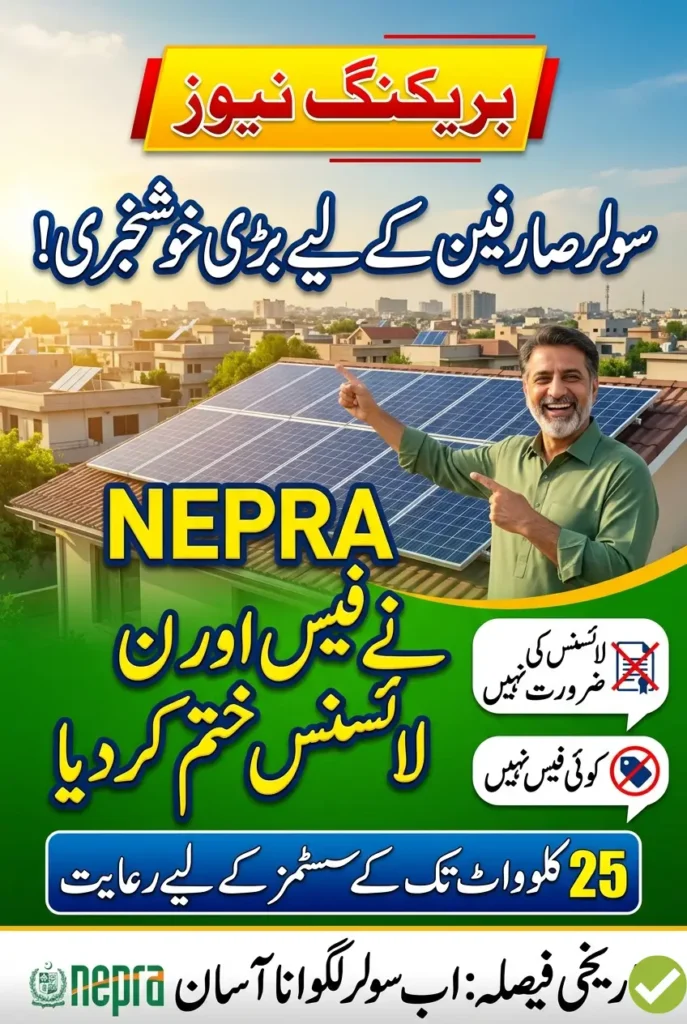
The National Electric Power Regulatory Authority has announced a major relief for solar energy users by abolishing licensing requirements and fees for small-scale solar installations. This decision applies to systems of up to 25 kilowatts, covering both residential and small commercial consumers across Pakistan. The move is expected to significantly boost rooftop solar adoption at a time when energy costs and power shortages remain major concerns.
UAE Exit From Oil Alliance Sends Shockwaves Across Global Energy
Previously, consumers installing solar systems were required to pay a one-time fee of Rs. 1,000 per kilowatt and obtain a license before proceeding. These requirements had become a barrier for many individuals and small businesses interested in switching to renewable energy. By removing these obstacles, NEPRA aims to simplify the process and encourage wider use of solar power.
Policy Shift and Government Direction
The decision follows directives from the federal government, particularly under the guidance of Sardar Owais Ahmed Khan Leghari. The Power Division formally requested NEPRA to reconsider its earlier policies that had imposed stricter requirements on small solar users. Acting on these instructions, NEPRA issued an official notification restoring the previous framework for systems up to 25kW.
This policy shift highlights the government’s intent to promote clean energy solutions and reduce dependence on conventional power sources. With rising electricity tariffs and frequent outages, solar energy has emerged as a practical alternative for many households and businesses.
Background of Solar Regulations
To understand the significance of this decision, it is important to look at the regulatory history. Under the Distributed Generation and Net Metering Regulations introduced in 2015, small solar systems up to 25kW were exempt from licensing requirements. Consumers could install these systems and have their applications processed directly by electricity distribution companies without paying any additional fees.
However, the introduction of Prosumer Regulations brought a major change. Approval authority was shifted to NEPRA, and new application fees were introduced even for smaller systems. This created additional steps in the process, leading to delays and increased costs for consumers.
The revised framework was widely criticized for making solar adoption more complicated. Many stakeholders argued that it went against the goal of promoting renewable energy and reducing reliance on traditional power sources.
Pakistan’s Military Spending Sees Significant Rise in 2025 Amid Regiona
Concerns From Industry and Stakeholders
Several organizations and industry groups raised concerns about the new regulatory requirements. The Private Power and Infrastructure Board warned that the changes could slow down the growth of solar energy in the country. It recommended restoring the earlier, simpler system to encourage more users to adopt solar solutions.
Similarly, the Pakistan Solar Association and other renewable energy companies expressed reservations about centralized approvals. They argued that involving NEPRA directly in every small-scale application would create unnecessary bureaucracy and delays.
These concerns played a key role in shaping the government’s decision to reverse the policy. By addressing these issues, the latest move aims to create a more supportive environment for solar energy development.
Impact on Consumers and Market Growth
The removal of licensing requirements and fees is expected to have a positive impact on both consumers and the solar industry. For households, the process of installing solar panels will now be faster, cheaper, and more accessible. This could encourage a larger number of people to invest in rooftop solar systems, reducing their dependence on grid electricity.
For small businesses, the decision offers an opportunity to lower operational costs by generating their own power. In sectors where electricity expenses form a significant part of overall costs, this change could improve profitability and sustainability.
At the same time, the solar industry is likely to benefit from increased demand. Installers, equipment suppliers, and service providers may see higher business activity as more consumers opt for solar solutions.
PTA Survey Reveals the Best Mobile Networks in Azad Jammu and Kashmir
Role of Net Metering and Distributed Generation
The concept of net metering remains central to the growth of solar energy in Pakistan. Under this system, consumers can generate electricity through solar panels and feed excess power back into the grid, receiving credits on their electricity bills. This not only reduces costs but also contributes to the overall energy supply.
By restoring the earlier framework, NEPRA has reinforced the role of distributed generation in the country’s energy mix. Small-scale solar systems can collectively make a significant contribution to reducing the burden on the national grid.
This approach aligns with global trends, where decentralized energy production is becoming increasingly important. Countries around the world are encouraging rooftop solar installations as part of their transition to cleaner energy sources.
Skardu Airport Runway Partially Closed Till June 28 Due to Maintenance Work
Challenges and Future Outlook
While the decision is widely welcomed, some challenges remain. Ensuring smooth coordination between consumers and electricity distribution companies will be essential to avoid delays in implementation. Proper guidelines and awareness campaigns may also be needed to help consumers understand the updated procedures.
Additionally, the long-term success of solar adoption will depend on consistent policy support and investment in infrastructure. As more people switch to solar, managing grid integration and maintaining stability will become increasingly important.
Looking ahead, the removal of licensing requirements could serve as a foundation for further reforms in the energy sector. Policymakers may continue to explore ways to promote renewable energy while balancing economic and technical considerations.
Possible Increase in Petrol Prices in Pakistan Economic Pressure Builds
Broader Significance for Renewable Energy
The move by NEPRA reflects a broader shift toward renewable energy in Pakistan. With increasing pressure to reduce carbon emissions and reliance on imported fuels, solar power offers a sustainable and cost-effective solution.
Encouraging small-scale solar installations can play a crucial role in achieving energy security. It not only reduces the load on traditional power plants but also empowers consumers to take control of their energy needs.
As global energy trends continue to evolve, Pakistan’s focus on renewable energy could help it adapt to changing conditions and build a more resilient energy system.
FAQs
1. What change has NEPRA introduced for solar users?
NEPRA has removed licensing requirements and application fees for solar systems up to 25kW.
2. Who benefits from this decision?
Residential users and small businesses installing solar systems up to 25kW will benefit the most.
3. Why were the previous regulations criticized?
They introduced fees and centralized approvals, making the process more complicated and discouraging solar adoption.
4. What is net metering?
Net metering allows solar users to send excess electricity to the grid and receive credits on their bills.
5. Will this decision increase solar adoption in Pakistan?
Yes, the simplified process and reduced costs are expected to encourage more people to install solar systems.
Action Against Cigarette Sector Allegedly Disrupted by Political
Final Words
The removal of fees and licensing requirements for small solar users marks a significant step toward promoting renewable energy in Pakistan. By simplifying the process and reducing costs, NEPRA has made solar power more accessible to the public. This decision not only supports consumers but also strengthens the country’s transition toward a cleaner and more sustainable energy future.