
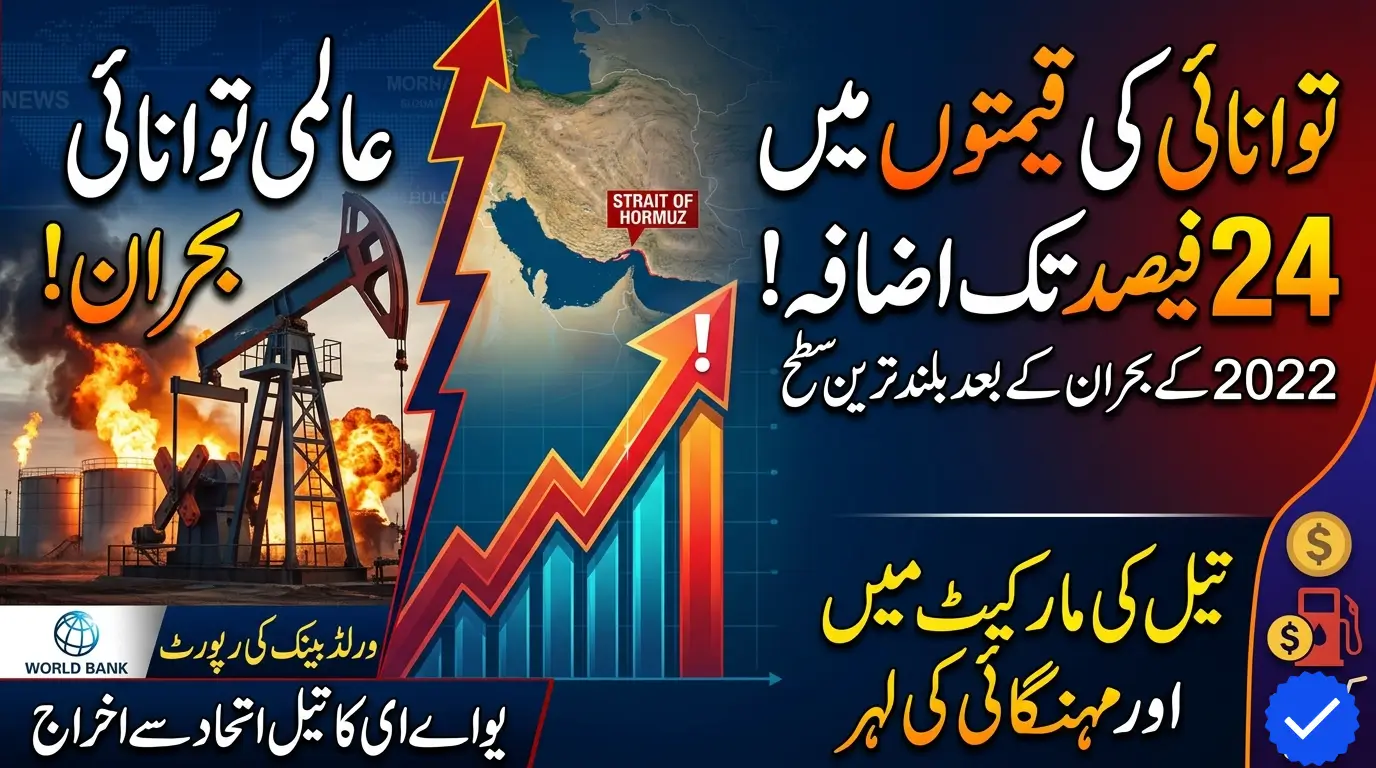
Energy Prices May Jump 24%
Global energy markets are facing renewed pressure as prices are expected to rise sharply in 2026, according to a report by the World Bank. The report forecasts a 24 percent increase in energy prices, potentially pushing them to their highest levels since the 2022 global energy crisis. This surge is being driven largely by geopolitical tensions in the Middle East, which have disrupted supply chains and created uncertainty across global markets.
UAE Exit From Oil Alliance Sends Shockwaves Across Global Energy

The expected rise in energy costs reflects broader challenges facing the global economy. As supply disruptions intensify, countries around the world are bracing for higher fuel costs, increased inflation, and slower economic growth. The situation is particularly concerning for developing nations, which are more vulnerable to fluctuations in global commodity prices.
Oil Market Disruptions and Price Trends
Oil markets have been among the hardest hit by recent developments. Prices for Brent crude oil have surged significantly, rising more than 50 percent by mid-April compared to the beginning of the year. The World Bank projects that Brent crude will average around $86 per barrel in 2026, up from $69 per barrel in 2025.
A key factor behind this increase is the disruption in the Strait of Hormuz, one of the world’s most critical shipping routes. This narrow passage handles approximately 35 percent of global seaborne crude oil trade, making it a vital artery for energy supply. Any instability in this region can have immediate and far-reaching effects on global oil prices.
The ongoing conflict in the Middle East has already led to a significant reduction in oil supply, estimated at around 10 million barrels per day. This represents one of the largest supply shocks in recent history, highlighting the scale of the disruption and its potential impact on markets.
Pakistan’s Military Spending Sees Significant Rise in 2025 Amid Regiona
Broader Commodity Price Increases
Beyond energy, the World Bank report indicates that overall commodity prices are expected to rise by 16 percent in 2026. This increase is being driven not only by higher energy costs but also by rising prices of fertilizers and metals.
Fertilizer prices, in particular, are projected to see a sharp increase of 31 percent. Among these, urea prices are expected to jump by as much as 60 percent. This has serious implications for the agricultural sector, as higher input costs could lead to reduced crop production and increased food prices.
Metals such as aluminum, copper, and tin are also expected to reach record highs. The demand for these materials is being fueled by growing industries such as electric vehicles, renewable energy, and data centers. As these sectors expand, the need for raw materials continues to rise, pushing prices upward.
Impact on Food Security and Agriculture
The surge in fertilizer prices is likely to have a direct impact on global food security. Farmers facing higher costs may reduce the use of fertilizers, leading to lower crop yields. This could result in reduced food supply and higher prices for essential commodities.
According to the World Bank, as many as 45 million additional people could be pushed into food insecurity due to rising agricultural costs. This is a significant concern, particularly for low-income countries where access to affordable food is already a challenge.
The connection between energy, fertilizer, and food prices highlights the interconnected nature of global markets. A disruption in one sector can quickly spread to others, amplifying its impact and creating broader economic challenges.
PTA Survey Reveals the Best Mobile Networks in Azad Jammu and Kashmir
Precious Metals and Investor Behavior
Another notable trend highlighted in the report is the rise in precious metal prices. These are expected to increase by 42 percent as investors seek safe-haven assets during times of uncertainty. Gold and other precious metals often attract investment when markets are volatile, as they are considered more stable compared to other assets.
This shift in investment behavior reflects growing concerns about economic stability. As geopolitical tensions persist and market conditions remain uncertain, investors are likely to continue favoring assets that offer security and reliability.
Inflation and Economic Growth Outlook
The rise in energy and commodity prices is expected to have a significant impact on inflation. In developing economies, inflation is now projected to reach 5.1 percent in 2026, higher than earlier estimates. This increase will put additional pressure on households, particularly those with limited incomes.
At the same time, economic growth is expected to slow. The World Bank forecasts growth in developing countries to decline to 3.6 percent, reflecting the combined effects of higher costs and reduced economic activity.
Higher energy prices increase production and transportation costs across industries, which are often passed on to consumers. This creates a cycle of rising prices that can be difficult to control, especially in economies that are already facing financial challenges.
Possible Increase in Petrol Prices in Pakistan: Economic Pressure Builds
Potential Future Scenarios
The outlook for global energy markets remains uncertain, with future developments largely dependent on the course of the ongoing conflict. If tensions escalate further, oil prices could rise even higher, potentially reaching $115 per barrel.
Such a scenario would have serious consequences for the global economy. Higher oil prices would likely lead to further increases in inflation, reduced consumer spending, and slower economic growth. Governments and central banks may need to take additional measures to stabilize their economies and support affected populations.
On the other hand, if the situation improves and supply disruptions are resolved, prices could stabilize. However, given the current level of uncertainty, markets are likely to remain volatile in the near term.
Action Against Cigarette Sector Allegedly Disrupted by Political Pressure on FBR Staff
Implications for Developing Countries
Developing nations are expected to bear the brunt of these changes. Higher energy and food prices can strain government budgets and increase the cost of living for citizens. In countries where energy imports account for a large share of expenditure, the impact can be particularly severe.
For countries like Pakistan and others in similar economic conditions, managing these challenges will require careful policy decisions. Efforts to diversify energy sources, improve efficiency, and support vulnerable populations will be crucial in mitigating the impact.
At the same time, the situation underscores the importance of investing in renewable energy and sustainable practices. Reducing reliance on imported fuels can help countries become more resilient to global market fluctuations.
FAQs
1. Why are energy prices expected to rise in 2026?
Energy prices are rising due to supply disruptions caused by geopolitical tensions in the Middle East, particularly affecting oil production and transport routes.
2. What is the expected price of Brent crude oil in 2026?
The World Bank forecasts Brent crude oil to average around $86 per barrel in 2026.
3. How will fertilizer prices affect food production?
Higher fertilizer costs may reduce crop yields, leading to lower food supply and higher prices.
4. What impact will rising energy prices have on inflation?
Increased energy costs are expected to push inflation higher, especially in developing countries.
5. Could oil prices rise even further?
Yes, if the conflict worsens, oil prices could increase to as much as $115 per barrel.
Skardu Airport Runway Partially Closed Till June 28
Final Words
The projected rise in global energy prices in 2026 highlights the fragile nature of today’s interconnected markets. With supply disruptions, rising costs, and geopolitical tensions shaping the outlook, the global economy faces a period of uncertainty. For policymakers, businesses, and consumers alike, adapting to these challenges will be essential in navigating the evolving energy landscape and maintaining economic stability.