

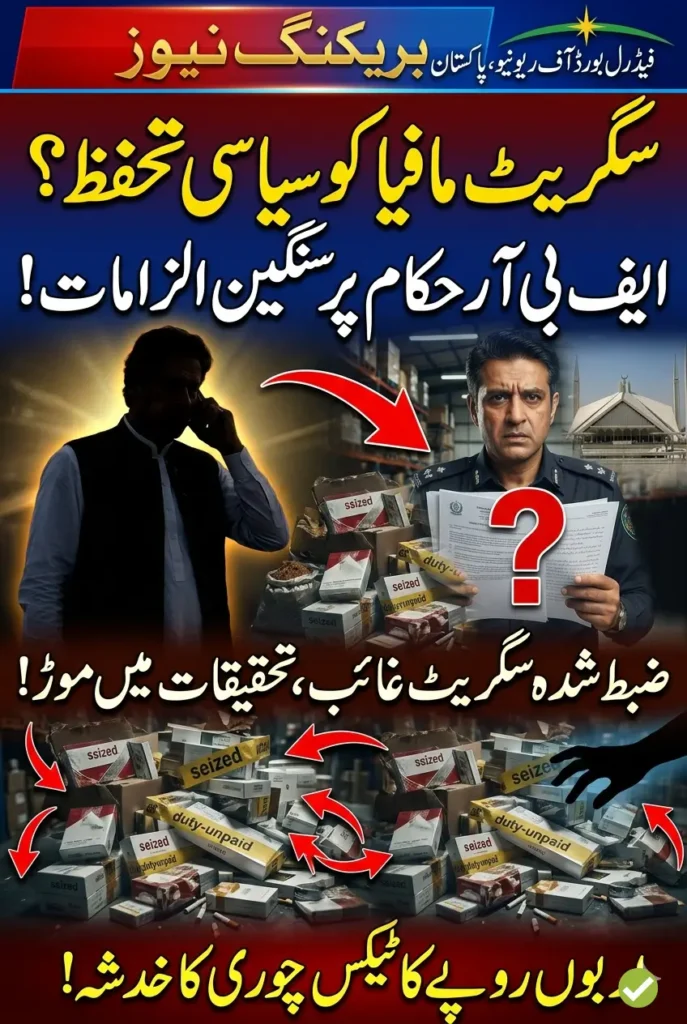
Pakistan’s cigarette industry is once again under the spotlight as serious allegations emerge regarding political interference in tax enforcement. Reports suggest that actions against tax-evading cigarette manufacturers are being disrupted due to pressure on Federal Board of Revenue (FBR) officials. This situation not only exposes weaknesses in enforcement mechanisms but also raises broader concerns about governance, accountability, and institutional independence in the country.
Govt May Drop 90% of New Development Projects in Next Budget
Growing Influence of Political Pressure
According to Inland Revenue sources, field officers across several regions are reluctant to initiate or pursue cases against certain cigarette manufacturers. The primary reason behind this hesitation is the alleged involvement of politically connected individuals who are believed to influence enforcement decisions.
Senior officials within the FBR claim that this pattern is deliberate rather than coincidental. Political figures are reportedly exerting pressure on field formations to avoid targeting specific companies. Additionally, public criticism of tax authorities in parliamentary committee meetings has created a climate of fear, discouraging officers from taking bold enforcement actions.
vivo V70 FE Launched in Pakistan with 200MP Camera and Flagship Features
Impact on Tax Compliance and Revenue
The consequences of such interference are significant. Pakistan already struggles with tax compliance, and the tobacco sector is particularly vulnerable due to high taxation and complex supply chains. When enforcement efforts are weakened, it creates opportunities for tax evasion and illicit trade to flourish.
Officials revealed that previous enforcement drives had resulted in a noticeable increase in tax collection from cigarette manufacturers. However, the current environment of uncertainty has slowed down these efforts, leading to potential revenue losses worth billions of rupees.
Rupee Headed Towards 400 Against British Pound But Defeats US Dollar Again
Conflict of Interest in Policy Circles
Another major concern is the presence of individuals with direct or indirect business interests in the tobacco industry within legislative bodies. These individuals, or their close associates, are reportedly involved in committees responsible for overseeing the sector.
This overlap creates a conflict of interest that undermines transparency and fairness. When policymakers have vested interests in the industry they regulate, it becomes difficult to ensure impartial decision-making and effective enforcement.
New Increased PTA Taxes For Samsung Galaxy S 23 Series in Pakistan
The Warehouse Controversy
The situation worsened following incidents involving the disappearance of confiscated cigarettes from warehouses in Khyber Pakhtunkhwa. The case dates back to 2024, when RTO Peshawar teams seized approximately 1,262 cartons of duty-unpaid cigarettes, along with large quantities of undocumented raw tobacco.
Due to a lack of proper storage facilities, the seized goods were temporarily placed in warehouses in Shahbaz Garhi, Mardan. Despite repeated warnings from FBR officials about inadequate security, a significant portion of the stock went missing after a security breach.
Although some of the goods were later recovered and moved to a facility in Swabi, another discrepancy was reported following administrative reshuffles. These incidents highlighted serious weaknesses in storage management and raised questions about accountability within the system.
Pakistan Ranks Lowest in South Asia for Fuel Affordability Amid Rising Petrol Prices
Shift in Investigation Focus
One of the most controversial developments has been the shift in focus from investigating tax evasion to scrutinizing FBR officials themselves. Instead of targeting those involved in illicit trade, inquiries have increasingly focused on the officers who carried out enforcement actions.
During Senate subcommittee sessions, FBR representatives were reportedly subjected to intense questioning and pressure. Some officers claimed they were asked to provide statements against senior officials, which they refused. This has created a sense of insecurity within the department and discouraged proactive enforcement.
Drone Ban in Punjab Extended Under Section 144
Institutional Weaknesses Within FBR
The issue also reflects deeper institutional challenges within the FBR. Reports of missing documentation, incomplete investigations, and pressure on officers indicate systemic weaknesses that hinder effective enforcement.
Without strong institutional backing, field officers are vulnerable to external influence. This lack of support not only affects their morale but also limits their ability to carry out investigations independently and effectively.
PM Launches Emergency Probe Over Rs. 111 Billion Solar Import Fraud Case
Role of Smuggling Networks
Enforcement teams have uncovered evidence of large-scale smuggling networks supplying raw materials used in cigarette production. These networks play a crucial role in the illicit tobacco trade, contributing to significant revenue losses for the government.
The discovery of undocumented raw tobacco stocks during inspections highlights the scale of the problem. However, dismantling these networks requires consistent enforcement and strong institutional support—both of which appear to be lacking under current circumstances.
Is Govt Removing NEPRA Charges and Licensing for Small Solar Users?
Changing Behavior of Enforcement Officers
The combined effect of political pressure, internal challenges, and high-profile investigations has led to a noticeable change in the behavior of enforcement officers. Many are now more cautious and reluctant to pursue cases that could attract political attention.
This shift poses a serious threat to the integrity of the tax system. When enforcement becomes selective or inconsistent, it creates an uneven playing field where compliant businesses are disadvantaged while violators continue to operate freely.
8171 Web Portal CNIC Verification 2026 – Complete Guide to Check BISP and Ehsaas Payment Status
Need for Structural Reforms
Experts emphasize the need for comprehensive reforms to address these challenges. Strengthening institutional independence is crucial to ensuring that enforcement agencies can operate without political interference.
There is also a need to improve storage and security arrangements for confiscated goods. Proper infrastructure, surveillance systems, and accountability mechanisms can help prevent incidents like missing stock and ensure the integrity of enforcement actions.
US Delegation’s Pakistan Trip Cancelled as Iranian Foreign Minister Departs
FAQs
1. What is the main issue in Pakistan’s cigarette sector?
The main issue is alleged political pressure on FBR officials, which is disrupting enforcement actions against tax-evading cigarette manufacturers.
2. Why are enforcement officers hesitant to act?
They fear political backlash, criticism, and lack of institutional support when dealing with influential individuals.
3. What happened to the seized cigarettes?
Some of the confiscated cigarettes went missing from warehouses due to poor security and management issues.
4. How does this affect Pakistan’s economy?
Weak enforcement leads to tax evasion, resulting in significant revenue losses and increased burden on compliant taxpayers.
5. Is there a conflict of interest in policymaking?
Yes, individuals linked to the tobacco industry are reportedly part of legislative bodies overseeing the sector.
From Airports to Districts Govt Announces New Facilities for Overseas Pakistanis
Final Words
The situation in Pakistan’s cigarette sector is a clear reminder that strong institutions are essential for effective governance. Political interference not only weakens enforcement but also undermines public confidence in the system.
To move forward, Pakistan must ensure that regulatory bodies like the FBR are empowered to act independently and fairly. Only through transparency, accountability, and consistent enforcement can the country tackle tax evasion and achieve sustainable economic progress.
Pakistan Panic Buys LNG at 140% Higher Price to Keep Lights On