
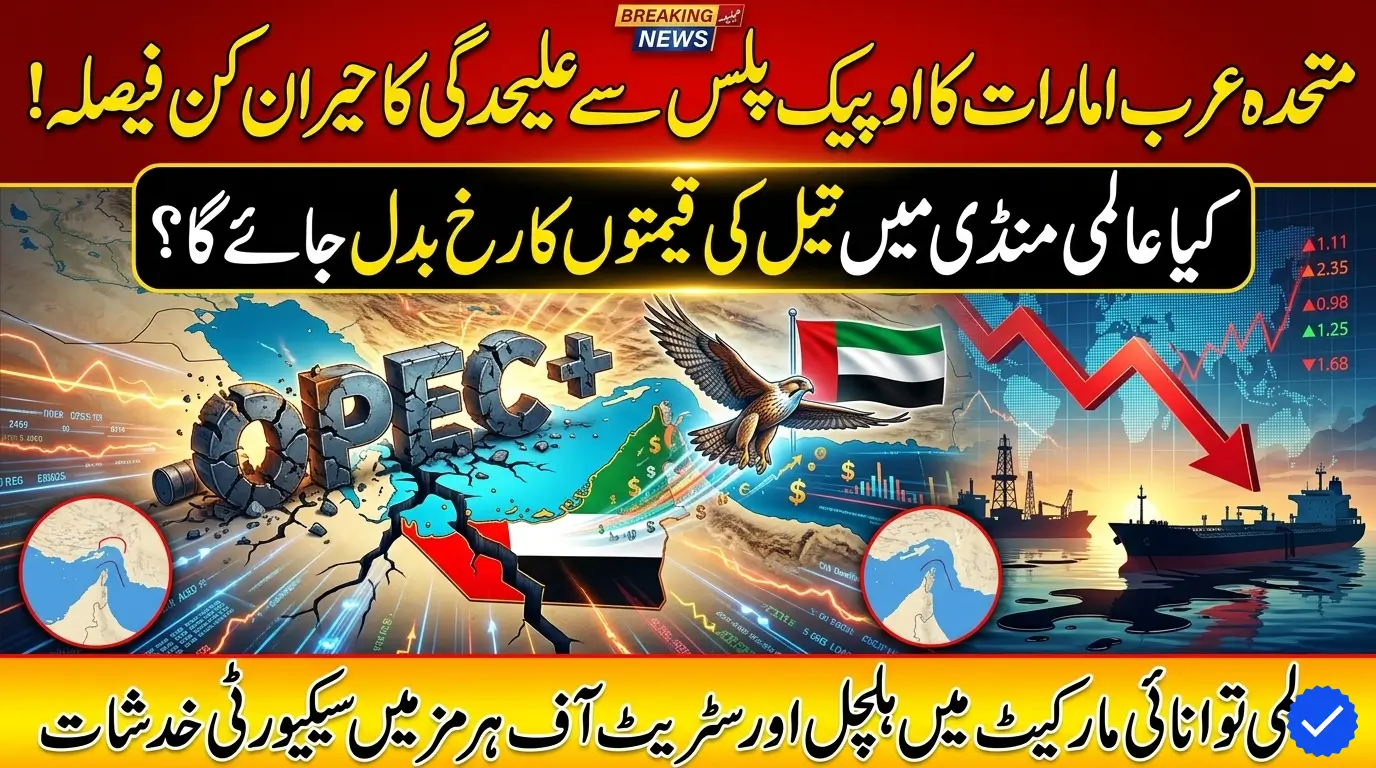
UAE Exit From Oil Alliance
The United Arab Emirates has announced its withdrawal from Organization of the Petroleum Exporting Countries and the broader OPEC+ framework, marking a major turning point in global energy politics. The decision comes at a time when oil markets are already facing uncertainty due to rising geopolitical tensions, particularly those linked to the ongoing conflict involving Iran. This unexpected move has raised concerns about the future of coordinated oil production and price stability worldwide.
Pakistan’s Military Spending Sees Significant Rise in 2025 Amid Region
The exit of the UAE, one of the most influential oil producers in the Gulf region, is being seen as a significant disruption to the long-standing alliance that has shaped global oil supply for decades. OPEC and OPEC+ have historically worked together to regulate output levels among member countries in order to stabilize prices and manage market fluctuations. The departure of a key player like the UAE could weaken this coordination and introduce greater volatility into global oil markets.
Rising Tensions and Strategic Timing
The timing of the UAE’s decision is closely linked to escalating tensions in the Gulf region. One of the most critical areas affected is the Strait of Hormuz, a vital route through which a significant portion of the world’s crude oil and liquefied natural gas shipments pass. Ongoing security concerns in this region have already disrupted supply chains, creating pressure on global energy markets.
With threats to shipping routes and infrastructure increasing, oil-producing countries are facing new challenges in maintaining stable exports. The UAE’s withdrawal appears to reflect a shift in strategic priorities, as it seeks greater flexibility in managing its production and export policies independently rather than within the constraints of a collective framework.
Impact on OPEC and Global Coordination
The departure of the UAE is expected to weaken cohesion within OPEC and OPEC+. These alliances have long relied on cooperation among member states to balance supply and demand in the global oil market. However, internal disagreements over production quotas and geopolitical differences have often tested the unity of the group.
By stepping away, the UAE may encourage other members to reconsider their positions, potentially leading to further fragmentation. This could make it more difficult for the remaining members to implement coordinated production cuts or increases, which have been key tools in stabilizing oil prices during times of crisis.
The move also raises questions about the future relevance of OPEC as a central force in global energy governance. While the organization still includes major producers, the loss of a prominent and strategically located exporter like the UAE could reduce its overall influence.
PTA Survey Reveals the Best Mobile Networks in Azad Jammu and Kashmir
Shifting Global Energy Dynamics
The UAE’s decision represents a broader shift in global energy dynamics. As one of the largest oil exporters in the world, the country has played a crucial role in shaping supply trends and influencing market behavior. Its exit signals a move toward more independent policymaking, which could alter how oil markets function in the coming years.
This shift may also impact relationships between oil-producing nations. Countries that remain within OPEC+ may need to adjust their strategies to account for the absence of the UAE, while non-member states could find new opportunities to expand their market share.
In addition, the decision comes at a time when global energy markets are undergoing significant transformation. The push toward renewable energy, combined with ongoing geopolitical uncertainties, is reshaping how countries approach energy security and economic planning.
Regional Security Concerns
The broader context of the UAE’s withdrawal includes rising security challenges in the Gulf region. Oil infrastructure and shipping routes have become increasingly vulnerable amid ongoing conflicts and political tensions. These risks have complicated export logistics for several countries, adding another layer of uncertainty to global supply chains.
Statements from senior UAE officials have also highlighted concerns about the effectiveness of regional cooperation during the crisis. Anwar Gargash has publicly criticized the response of regional organizations, suggesting that coordination among allies has not met expectations. Such remarks indicate growing frustration and may have contributed to the decision to pursue a more independent path.
Possible Increase in Petrol Prices in Pakistan: Economic Pressure Builds
Implications for Oil Prices and Markets
One of the most immediate concerns following the UAE’s exit is its potential impact on global oil prices. Without coordinated production policies, markets may become more unpredictable, with supply fluctuations leading to sharper price movements. Traders and analysts are closely monitoring the situation to assess how other producers will respond.
If the remaining OPEC+ members struggle to maintain unity, the market could see increased competition among producers. This might lead to higher output levels in some cases, putting downward pressure on prices, or supply shortages in others, causing prices to spike.
The uncertainty created by the UAE’s withdrawal could also influence investment decisions in the energy sector. Companies may become more cautious, delaying projects or adjusting strategies in response to changing market conditions.
Action Against Cigarette Sector Allegedly Disrupted by Political
Future Outlook for Energy Alliances
Looking ahead, the UAE’s exit could mark the beginning of a new phase in global energy cooperation. Traditional alliances like OPEC may need to adapt to changing realities, including shifting geopolitical landscapes and evolving energy demands.
Some experts believe that smaller, more flexible partnerships could emerge as alternatives to large, centralized organizations. Others argue that OPEC will remain relevant but will need to reform its approach to maintain influence.
For the UAE, the decision provides an opportunity to pursue its own energy strategy without external constraints. This could include adjusting production levels more freely, exploring new markets, and investing in alternative energy sources.
FAQs
1. Why did the UAE leave OPEC and OPEC+?
The UAE withdrew to gain more control over its oil production policies and in response to regional tensions and disagreements within the alliance.
2. What is OPEC+?
OPEC+ is a group that includes OPEC members and additional oil-producing countries that coordinate production to stabilize global oil markets.
3. How important is the UAE in global oil markets?
The UAE is one of the world’s largest oil exporters and plays a significant role in influencing global supply and pricing.
4. What impact will this decision have on oil prices?
The exit could lead to increased volatility in oil prices due to reduced coordination among major producers.
5. What is the Strait of Hormuz and why is it important?
The Strait of Hormuz is a key shipping route through which a large portion of global oil and gas supplies pass, making it critical to energy markets.
Skardu Airport Runway Partially Closed Till June 28 Due to
Final Words
The UAE’s withdrawal from OPEC and OPEC+ represents a major shift in the global energy landscape. At a time of rising geopolitical tensions and market uncertainty, this decision could reshape how oil production is managed worldwide. While it offers the UAE greater independence, it also introduces new challenges for global coordination and price stability. The coming months will be crucial in determining how markets and alliances adapt to this significant change.