

Why Pakistan Is Considered Highly Vulnerable
The US-Iran War Impact on Pakistan Economy could become one of the biggest economic challenges for the country in the coming years. According to a recent report by S&P Global Market Intelligence, Pakistan may face stronger macro-financial pressure than any other economy in the Asia-Pacific region if the Middle East conflict continues for a longer period. The report suggests that Pakistan’s economic growth could slow significantly, making recovery more difficult.
Govt Readies Next-Level Math to Increase Then Decrease Electricity Prices
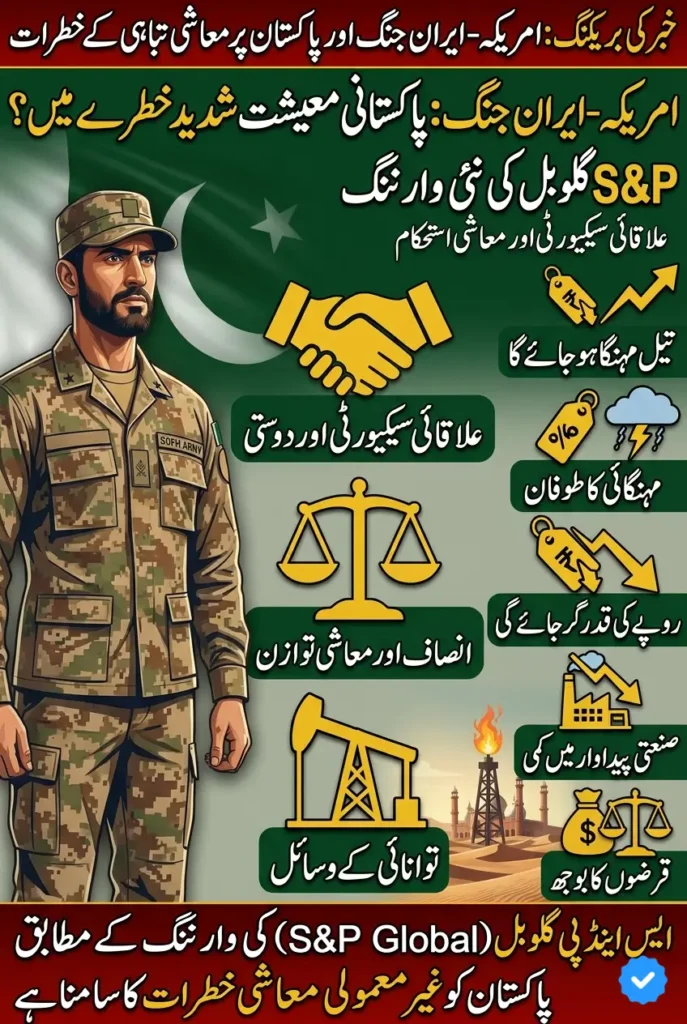
Pakistan’s economy remains highly dependent on Gulf countries for oil imports and remittances sent by overseas workers. Because of this, any long-term conflict in the Middle East can directly affect fuel prices, foreign exchange reserves, and financial stability. Experts believe that Pakistan’s existing economic weaknesses may increase the impact of regional instability.
Economic Growth Could Slow Down
The US-Iran War Impact on Pakistan Economy may reduce Pakistan’s GDP growth to nearly 3.2% in fiscal year 2027. Economic experts warn that continued geopolitical tensions can weaken business confidence, reduce industrial activity, and create uncertainty in trade markets. If the situation worsens, economic growth may become even slower than current estimates.
Higher energy costs could also place pressure on industries that rely heavily on imported fuel and raw materials. Manufacturing sectors may experience slower production due to expensive transportation and increased operational costs. As a result, exports could weaken while imports become more costly.
Rising Energy Prices and Inflation Risks
One of the biggest concerns regarding the US-Iran War Impact on Pakistan Economy is rising fuel prices. Pakistan imports a large amount of oil from Gulf countries, meaning global oil price increases can quickly affect domestic fuel costs. If international energy markets remain unstable, petrol, diesel, and electricity prices in Pakistan may continue rising.
Higher fuel prices often increase inflation because transportation costs become more expensive. This affects food prices, household expenses, and daily necessities. Families already facing inflation may struggle further if energy prices remain elevated for an extended period.
Govt Praises Itself for Shielding Public From Costly Electricity During US-Iran War
Pressure on the Pakistani Rupee
The US-Iran War Impact on Pakistan Economy may also create additional pressure on the Pakistani rupee. When oil import bills increase, Pakistan requires more foreign currency payments, which can weaken the local currency. A weaker rupee makes imported products more expensive, adding pressure on inflation and economic stability.
Pakistan has recently seen some improvement in foreign reserves due to financial support from friendly countries. However, experts warn that debt repayments and large financing requirements remain major challenges. The country is expected to need billions of dollars annually to manage external financial obligations.
Impact on Agriculture and Industries
Agriculture and industrial sectors may also suffer due to the US-Iran War Impact on Pakistan Economy. The report highlights possible fertilizer shortages caused by supply chain disruptions and increased import costs. This situation may reduce crop production and affect farmers’ incomes across different regions.
Industrial sectors could also face difficulties because rising fuel prices increase production costs. Transportation and retail industries may experience slower growth if consumers reduce spending due to inflation. These combined effects could weaken economic performance further.
Government Challenges and Economic Stability
Pakistan’s policymakers may face difficult decisions if the Middle East conflict continues. Authorities will need to balance inflation control, economic growth, and financial stability while following economic reforms linked to international financial programs. Managing public spending while controlling rising prices could become increasingly difficult.
The government may also need additional international financial support if economic pressure intensifies. Without external help, maintaining stability could become a greater challenge during prolonged geopolitical uncertainty.
Schools Directed to Remove Controversial O Level Book
FAQs
1. Why is Pakistan vulnerable to the US-Iran war?
Pakistan depends heavily on Gulf oil imports and overseas remittances, making it sensitive to Middle East instability.
2. How could the US-Iran war affect Pakistan’s economy?
The conflict may increase fuel prices, inflation, debt pressure, and weaken economic growth.
3. What GDP growth is expected for Pakistan?
S&P Global projects Pakistan’s GDP growth may slow to around 3.2% in fiscal year 2027.
4. Will inflation increase in Pakistan?
Yes, higher global energy prices could raise transportation and food costs, increasing inflation.
5. Can Pakistan recover from these economic challenges?
Recovery is possible, but it may require economic reforms, stable policies, and international financial support.
Final Thought
The US-Iran War Impact on Pakistan Economy could become a serious economic concern if regional tensions continue. Rising fuel prices, inflation, weaker growth, and financial pressure may affect businesses and ordinary citizens alike. While Pakistan has shown some economic improvement recently, long-term regional instability could test the country’s economic resilience in the years ahead.
IMF Pushes Pakistan Toward Major Sales Tax Reforms