
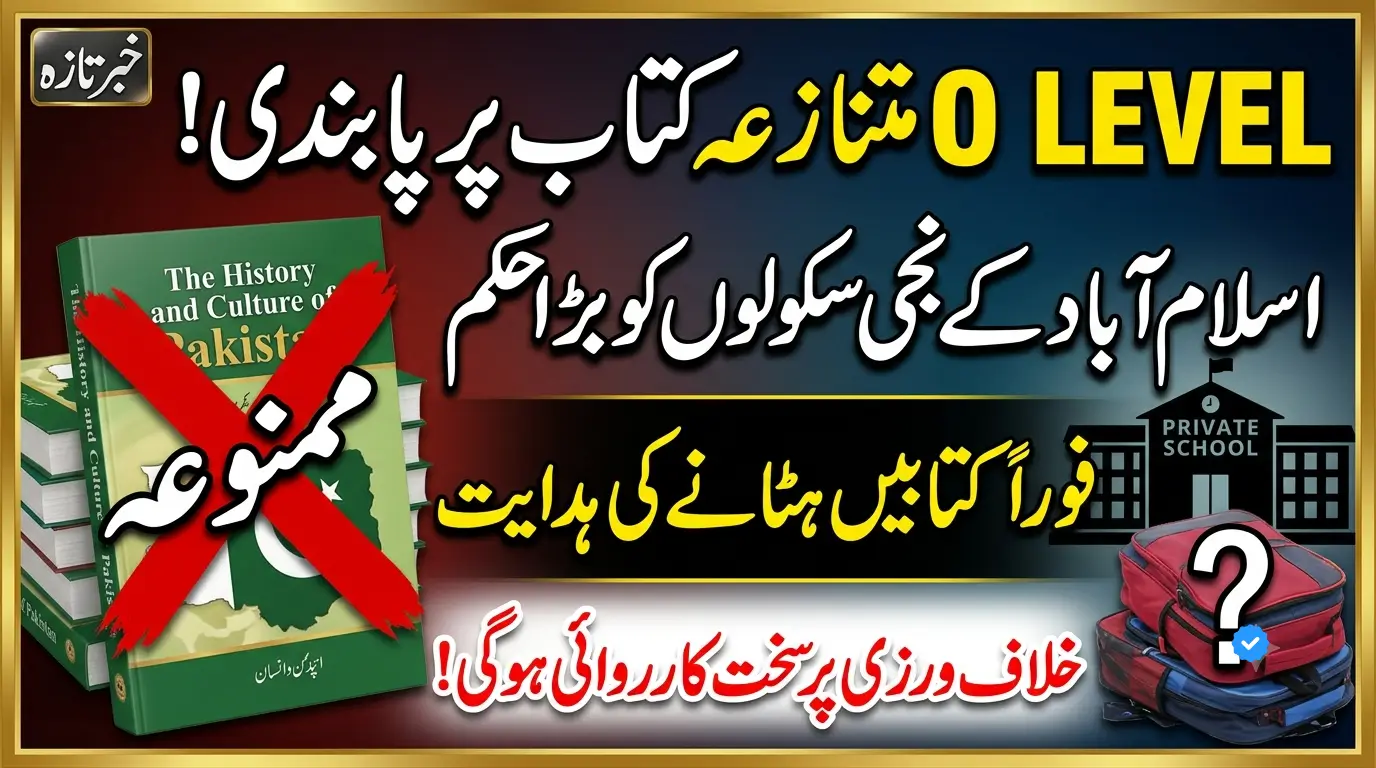
Authorities in Islamabad have directed private schools to immediately remove the O-Level book “The History and Culture of Pakistan” from classrooms, libraries, and academic activities. The decision was taken after officials confirmed that the book no longer holds endorsement from Cambridge International. The development has created a strong debate within Pakistan’s education.
Oil Crosses $111 After Mysterious Drone Attacks on UAE and Saudi Arabia
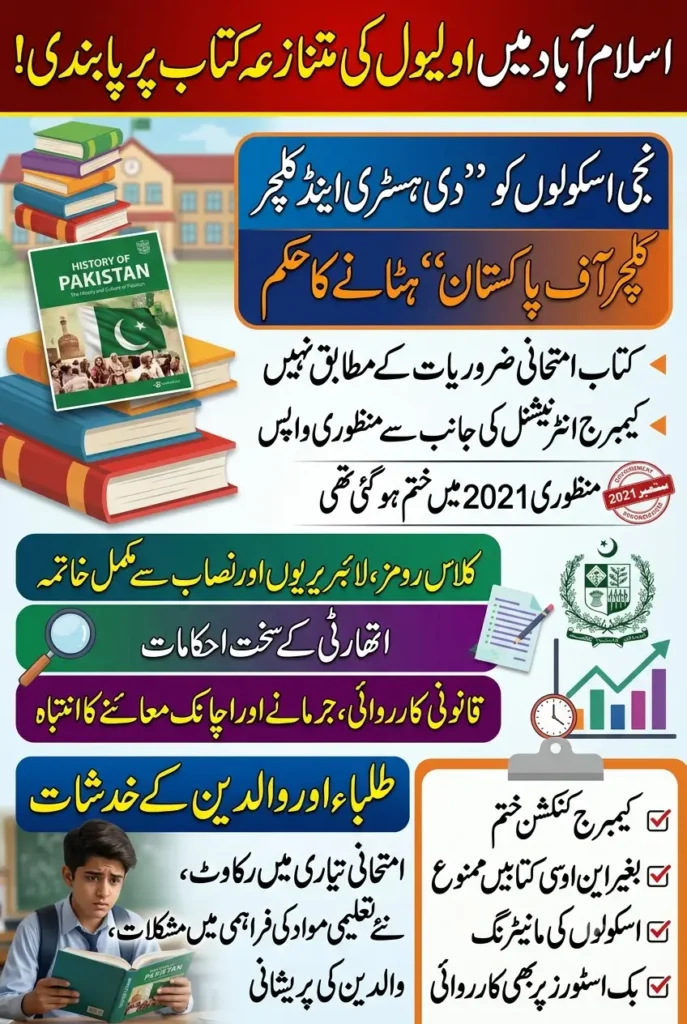
According to officials, the book’s endorsement was formally withdrawn in September 2021, yet several schools continued using it in classrooms. This raised serious concerns among education authorities, who believe that unapproved material should not remain part of official teaching systems.
Schools Directed to Follow Strict Orders
The ICT Private Educational Institutions Regulatory Authority has instructed schools to completely remove the book from their syllabus and educational activities. Authorities have warned that institutions failing to comply with the order may face legal action, financial penalties, and administrative consequences. Officials say the policy is part of a broader strategy to improve monitoring within the private education sector.
The administration has also introduced a new requirement under which private schools cannot include any book in their curriculum without obtaining a No Objection Certificate from relevant authorities. Officials believe this measure will help prevent the circulation of unauthorized or controversial material in schools. Educational institutions are now expected to carefully review all academic resources before introducing them into classrooms.
Surprise Inspections Across Islamabad
To ensure implementation of the orders, authorities have formed surprise inspection teams tasked with visiting schools across Islamabad. These teams will check classrooms, libraries, and academic records to confirm whether banned books are still being used. Officials say strict enforcement is necessary to maintain educational standards and ensure that schools follow official regulations.
The government has also announced plans to monitor bookstores and publishers involved in selling unapproved educational material. Authorities warned that bookshops distributing books without proper approval may also face raids and legal action. This decision reflects growing concerns about the lack of oversight in Pakistan’s private education market.
Debate Over Curriculum Regulation
The ban has triggered mixed reactions from parents, teachers, and education experts. Supporters of the decision argue that schools should only teach books approved by recognized educational authorities. They believe unauthorized material can create confusion among students and may contain inaccurate or misleading historical interpretations.
Others, however, fear that excessive government control over academic content could negatively affect intellectual freedom and independent learning. Some education experts argue that instead of banning books entirely, authorities should establish transparent review systems involving historians, researchers, and curriculum specialists.
Pakistan Struggles to Unlock Rs. 1.2 Trillion Circular Debt Facility
Impact on Students and Teachers
The sudden removal of the book may create temporary difficulties for students preparing for O-Level examinations. Schools may now need to introduce alternative teaching material, revise lesson plans, and guide students regarding updated academic resources. Teachers are also expected to adjust classroom instruction according to the new directives.
Parents have expressed concern about how curriculum changes can affect students during the academic year. Some believe schools should receive earlier notifications regarding textbook approval status so that educational activities are not disrupted. Others argue that authorities should ensure smooth transitions whenever major curriculum changes are implemented.
Role of Cambridge International
The issue became more serious after confirmation that Cambridge International had withdrawn endorsement of the book several years ago. Since many private schools in Pakistan follow O-Level and A-Level systems linked to international boards, endorsement status carries significant importance.
Educational institutions generally rely on endorsed books because they are considered academically verified and aligned with examination requirements. The absence of official endorsement raised questions about why some schools continued teaching the material despite the change in status.
Wider Educational Reforms
The latest action is part of a broader trend of increased regulation in Pakistan’s private education sector. Authorities have recently introduced policies related to school fees, administrative practices, and curriculum monitoring in an effort to improve transparency and accountability.
Experts believe Pakistan’s education system still faces major structural challenges, including inconsistent standards, outdated teaching methods, and weak enforcement of regulations. The controversy surrounding the O-Level book has therefore become part of a larger national conversation regarding educational reform.
IMF Pushes Pakistan Toward Major Sales Tax Reforms
Public Response and Social Media Discussion
The issue has generated widespread discussion on social media platforms, where users shared different opinions regarding the government’s decision. Some people praised authorities for taking action against unapproved educational material, while others criticized the delay in enforcement since the endorsement had reportedly been withdrawn years earlier.
Teachers, students, and parents also discussed the importance of transparency in curriculum decisions. Many believe schools should regularly inform parents about changes in textbooks and academic policies to reduce uncertainty for students.
Final Word
The removal of “The History and Culture of Pakistan” from private schools in Islamabad has become an important issue within Pakistan’s education sector. While authorities defend the decision as necessary for maintaining academic standards and regulatory compliance, critics continue debating the balance between oversight and academic freedom.
FAQs
1. Which O-Level book was banned in Islamabad?
Authorities banned “The History and Culture of Pakistan” from private schools in Islamabad.
2. Why was the book removed from schools?
The book reportedly lost its endorsement from Cambridge International in September 2021.
3. Which authority issued the removal order?
The order was issued by the ICT Private Educational Institutions Regulatory Authority.
4. What action will schools face for violating the order?
Schools may face legal action, fines, and surprise inspections if they continue using the banned book.
5. Will bookstores also face restrictions?
Yes, authorities announced that bookstores selling books without proper NOC approval could also face raids and penalties.
Govt Officially Relaxes Market Timings