
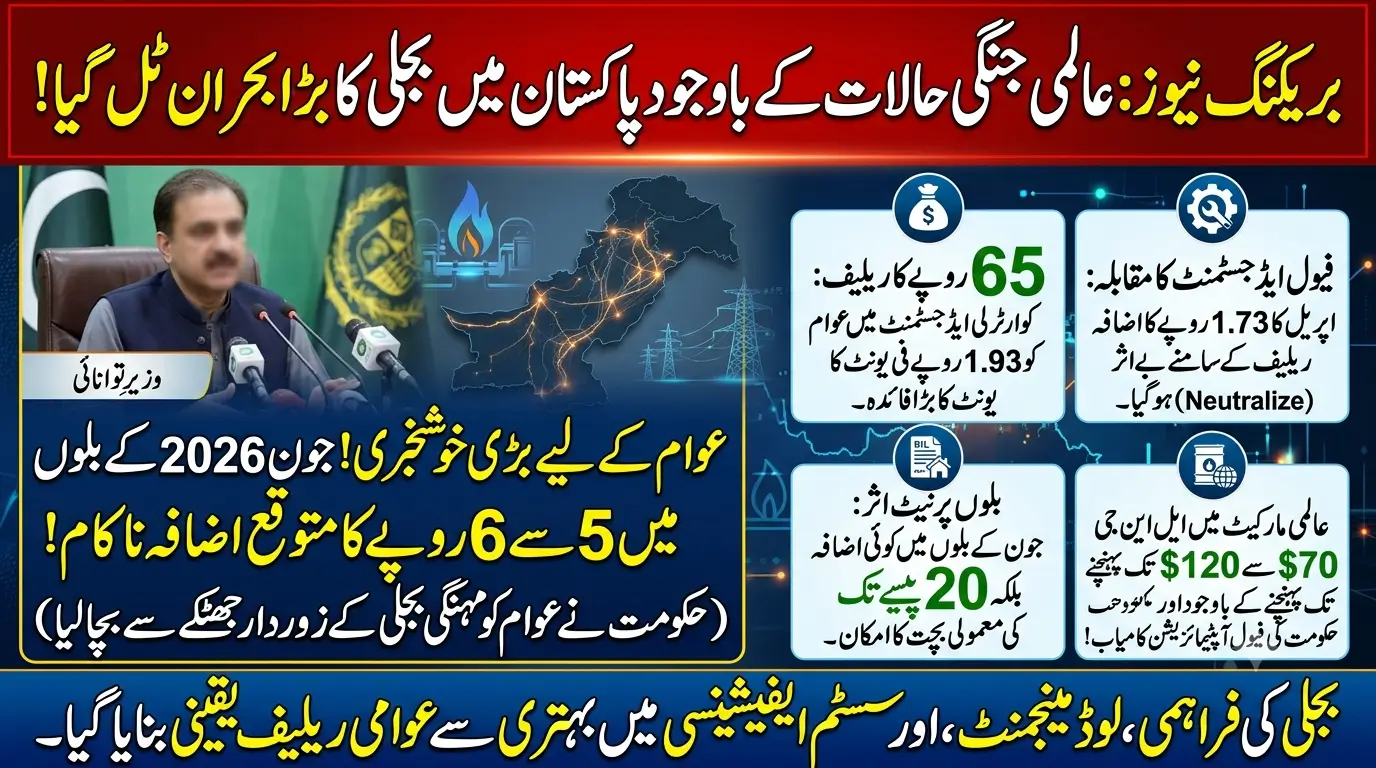
The Ministry of Energy (Power Division) has claimed that timely policy interventions and operational measures helped prevent a significant increase in electricity prices in Pakistan, despite rising global energy pressures linked to ongoing regional tensions, including the US-Iran conflict.
Oil Crosses $111 After Mysterious Drone Attacks on UAE and Saudi Arabia
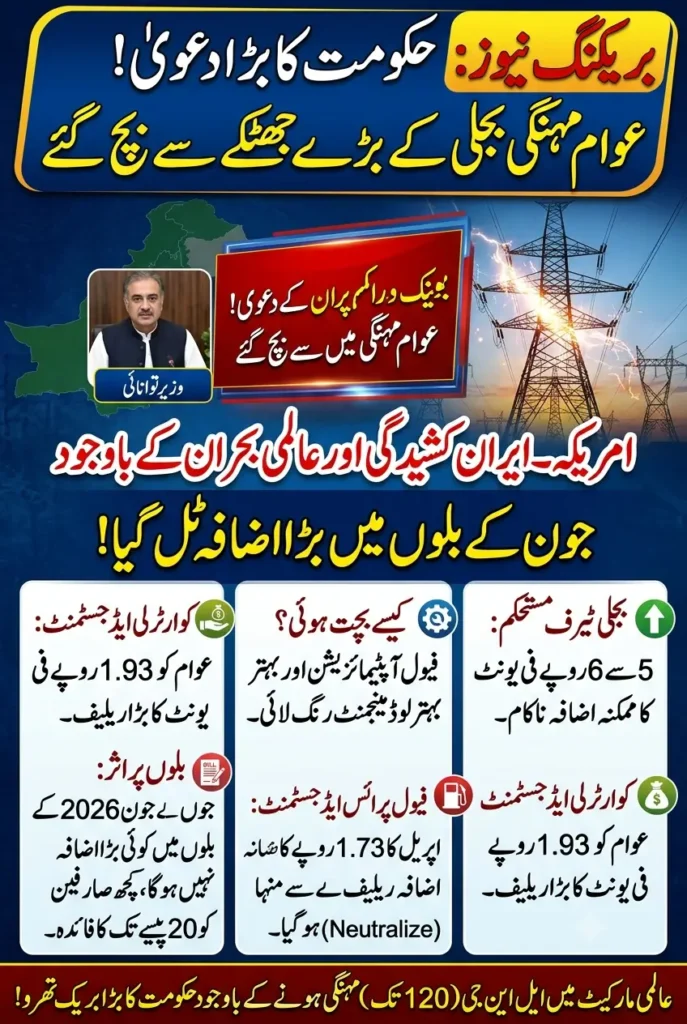
According to officials, consumers were at risk of facing a sharp increase of Rs. 5 to Rs. 6 per unit in electricity tariffs in June 2026. However, the government maintains that through load management, fuel optimization, and system efficiency improvements, this potential shock was largely avoided, keeping electricity rates relatively stable.
Electricity Tariffs Kept Stable Despite External Pressure
The Power Division stated that electricity pricing in recent months was influenced heavily by international fuel volatility, exchange rate fluctuations, and increased reliance on imported energy sources. Normally, such conditions would have resulted in a major upward adjustment in consumer bills.
However, officials said that the impact was contained through a combination of quarterly adjustments and fuel cost management mechanisms. A quarterly adjustment for January–March 2026 is expected to provide relief of around Rs. 1.93 per unit over three months, translating into an estimated Rs. 65 billion benefit to consumers.
At the same time, a monthly fuel adjustment for April 2026 introduced an increase of Rs. 1.73 per unit. According to the ministry, these two opposing adjustments have effectively neutralized each other, resulting in minimal net change in electricity bills.
How the Government Says It Avoided a Tariff Shock
Officials explained that without intervention, the April fuel adjustment alone could have triggered a significant price hike across the country. The estimated impact of such an adjustment was around Rs. 38 billion, which would have translated into a much higher per-unit increase for consumers.
To prevent this outcome, the government reportedly adopted multiple strategies, including:
- Improved fuel allocation between power plants
- Increased utilization of domestic gas resources
- Higher output from furnace oil and imported coal-based plants
- Better demand-side management during peak hours
- Reduction in transmission and distribution losses
These measures, according to the ministry, helped absorb part of the cost pressure and prevent it from being passed fully onto consumers.
Pakistan Struggles to Unlock Rs. 1.2 Trillion Circular Debt Facility
Global Energy Crisis and Its Impact on Pakistan
The ministry linked the pressure on electricity tariffs to broader geopolitical developments, particularly disruptions in global energy markets caused by the US-Iran conflict and regional instability in the Middle East.
Officials noted that RLNG (Re-gasified Liquefied Natural Gas) prices, which were initially estimated based on a Brent equivalent of around $70 per barrel, surged to nearly $120 per barrel in April 2026. This sudden increase significantly raised the cost of electricity generation.
Under normal circumstances, such a spike would have resulted in a steep increase in monthly fuel charges, directly affecting consumer electricity bills nationwide.
NEPRA Assumptions and Changing Market Realities
However, these assumptions were disrupted due to rapid changes in global energy markets. Rising oil prices, currency pressure, and supply chain constraints altered the cost structure of electricity generation in Pakistan.
Despite this, officials said that ongoing policy adjustments and operational reforms helped maintain relative stability in the tariff structure. While some monthly variations were unavoidable, the overall impact on consumers remained limited compared to worst-case projections.
Efficiency Improvements and System Reforms
In addition to fuel management, the ministry credited system improvements for helping reduce financial pressure in the power sector. These included:
- Better grid management and dispatch optimization
- Reduced technical losses in transmission
- Improved recovery of electricity bills
- Encouragement of higher consumption efficiency
- Incremental tariff reforms to balance demand and supply
Officials claimed that these steps contributed to stabilizing the sector and preventing further accumulation of circular debt pressure.
They also stated that improved coordination between power generation companies and distribution companies played a role in managing peak demand more efficiently, especially during high-cost fuel periods.
Consumer Impact: What Will Bills Look Like?
Despite the fluctuations in fuel adjustment charges, the Power Division insists that consumers will not see a major increase in their electricity bills for June 2026.
According to projections, the combined effect of quarterly relief and monthly fuel adjustments results in a near-neutral impact. In some scenarios, a slight net relief of up to 20 paisa per unit is even expected.
This means that household electricity bills are likely to remain close to previous months, with only minor variations depending on consumption patterns and regional distribution charges.
IMF Pushes Pakistan Toward Major Sales Tax Reforms
Critics and Public Concern
While the government has presented the situation as a success in crisis management, energy experts and consumer advocates often argue that tariff stability remains fragile and heavily dependent on external fuel prices.
Critics point out that reliance on imported fuels such as RLNG and furnace oil makes the system vulnerable to global shocks. They argue that without a long-term shift toward cheaper domestic energy sources and renewable energy, such “temporary stability” may not be sustainable.
Final Thoughts
The Power Division’s claim highlights a recurring challenge in Pakistan’s energy sector: balancing global fuel volatility with domestic affordability. While the government credits its interventions for preventing a sharp tariff hike, the underlying exposure to international energy markets remains a structural issue.
Short-term measures such as fuel optimization and load management can reduce immediate pressure, but long-term stability will depend on deeper reforms. These include diversifying energy sources, reducing import dependence, improving grid efficiency, and investing in renewable infrastructure.
For now, electricity prices may appear stable on paper, but the system continues to operate in a high-cost, high-risk global environment where sudden shocks remain a constant possibility.
FAQs
1. Did electricity prices actually increase in June 2026?
According to the Power Division, no major increase occurred. Any potential hike was offset by adjustments, keeping tariffs mostly stable.
2. How much relief was announced in the quarterly adjustment?
The January–March 2026 quarterly adjustment is expected to provide Rs. 1.93 per unit relief over three months, equal to around Rs. 65 billion.
3. Why did fuel adjustment charges increase?
The April 2026 fuel adjustment rose by Rs. 1.73 per unit due to higher RLNG and global fuel prices.
4. What caused the rise in energy costs?
Officials cite global geopolitical tensions, especially the US-Iran conflict, which pushed international oil and gas prices sharply higher.
5. Will electricity bills go down in the future?
The government expects minor relief in the short term, but future bills depend heavily on global fuel prices, exchange rates, and energy demand trends.
Govt Officially Relaxes Market Timings