
Oil Prices Start Falling
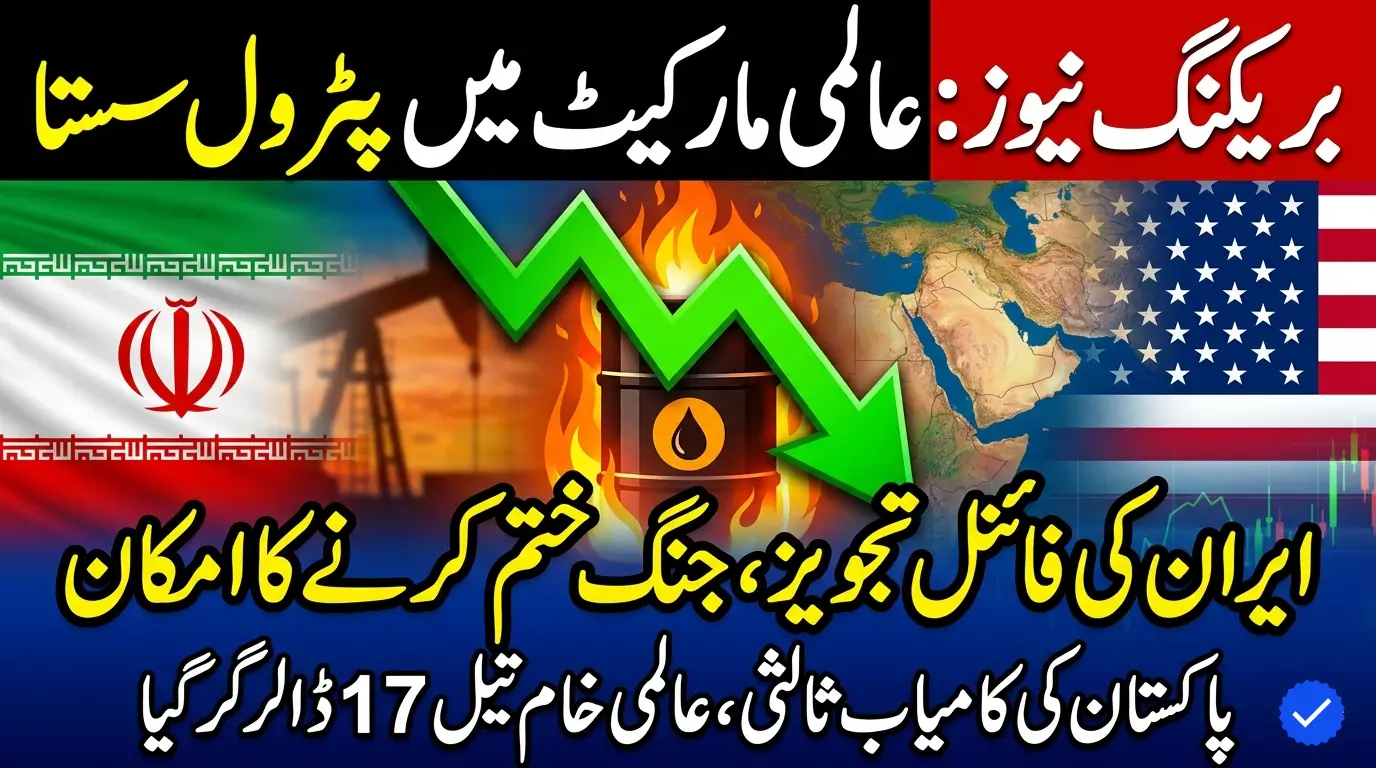
Global oil markets witnessed a sharp and immediate reaction after reports emerged that Iran had sent its final proposal aimed at ending tensions with the United States through Pakistani mediators. Within minutes of the news breaking, international oil prices began to fall, signaling how sensitive energy markets remain to geopolitical developments, particularly in the Middle East.
Power Minister Announces End of Load shedding After April Torture
Earlier in the day, oil prices had been trading at significantly elevated levels due to rising fears of escalation between Iran and the United States. Brent crude had surged as high as $116 per barrel, while concerns were mounting that the situation could worsen further. However, the announcement of a possible diplomatic breakthrough quickly reversed market sentiment, bringing prices down to around $108–110 for Brent crude, while West Texas Intermediate (WTI) slipped below $103 per barrel.
Impact of Geopolitical Tensions on Oil Markets
This sudden shift highlights the powerful influence of geopolitical risk on global commodity markets. Oil prices are not driven solely by supply and demand fundamentals; they are also heavily affected by political uncertainty, especially when it involves major oil-producing regions. Iran, being a key player in the global energy landscape, has long been at the center of such volatility.
The recent tensions had escalated following rumors that the United States was preparing a strategic response involving Israel, which raised fears of a broader regional conflict. These concerns pushed oil prices above $125 per barrel just a day earlier, marking a significant spike that alarmed both governments and investors worldwide. However, the latest diplomatic move appears to have eased immediate fears, at least temporarily.
Relief Dead As Pakistan Inflation Shoots Up to Highest Level in Almost
Pakistan’s Role as a Key Mediator
Pakistan’s role as a mediator in this situation is also noteworthy. Acting as a communication bridge between Iran and the United States, Pakistan has once again demonstrated its diplomatic relevance in regional and global affairs. While details of the proposal remain undisclosed, its mere existence has been enough to calm markets and trigger a decline in oil prices.
From an economic perspective, falling oil prices can bring relief to many countries, particularly oil-importing nations like Pakistan. High fuel prices often lead to increased inflation, higher transportation costs, and economic strain on households and industries. Therefore, any development that stabilizes or reduces oil prices is generally welcomed by such economies.
Market Uncertainty and Future Outlook
However, it is important to note that market reactions are often driven by expectations rather than confirmed outcomes. While the proposal has sparked optimism, the actual resolution of tensions will depend on how the United States responds and whether both sides are willing to engage in meaningful negotiations. Until a formal agreement is reached, uncertainty will likely persist.
Investors and analysts are now closely monitoring the situation for further updates. If the proposal leads to a ceasefire or de-escalation, oil prices could continue to stabilize or even decline further. On the other hand, if negotiations fail or tensions rise again, the market could quickly reverse course, pushing prices back up.
Govt Increases Petrol Price Yet Again
Broader Economic Implications
Another key factor influencing oil prices is the global supply chain. Any disruption in the Middle East, which is a major hub for oil production and transportation, can have immediate consequences for global supply. This is why even the possibility of conflict can lead to price spikes, as traders anticipate potential shortages.
The recent drop of nearly $17 per barrel from the previous high demonstrates just how volatile the market can be. Such fluctuations can have wide-ranging impacts, from government budgets to consumer fuel prices. For businesses, especially those reliant on transportation and logistics, these changes can significantly affect operating costs.
FAQs
1. Why did oil prices suddenly fall?
Oil prices dropped because Iran sent a proposal aimed at reducing tensions with the United States, which eased fears of a potential conflict.
2. How much did oil prices decrease?
Brent crude fell from around $116 to $108–110, while WTI dropped below $103 per barrel.
3. What caused oil prices to rise earlier?
Prices surged due to rumors of a possible escalation involving the United States and Israel, raising concerns about regional conflict.
4. What role is Pakistan playing in this situation?
Pakistan is acting as a mediator, helping to communicate proposals between Iran and the United States.
5. Will fuel prices decrease in Pakistan as well?
It is possible, but local fuel prices depend on government policies, taxes, and exchange rates, so the impact may vary.
Tax on Diesel Increased By Rs. 28.7/Litre in Late Night Surprise
Final Words
The sharp movement in oil prices following Iran’s proposal highlights how quickly global markets respond to political developments. While the current decline offers temporary relief, the future direction of oil prices will depend on whether diplomacy succeeds or tensions resurface. For now, the world remains cautiously optimistic as it awaits the next move in this evolving situation.