
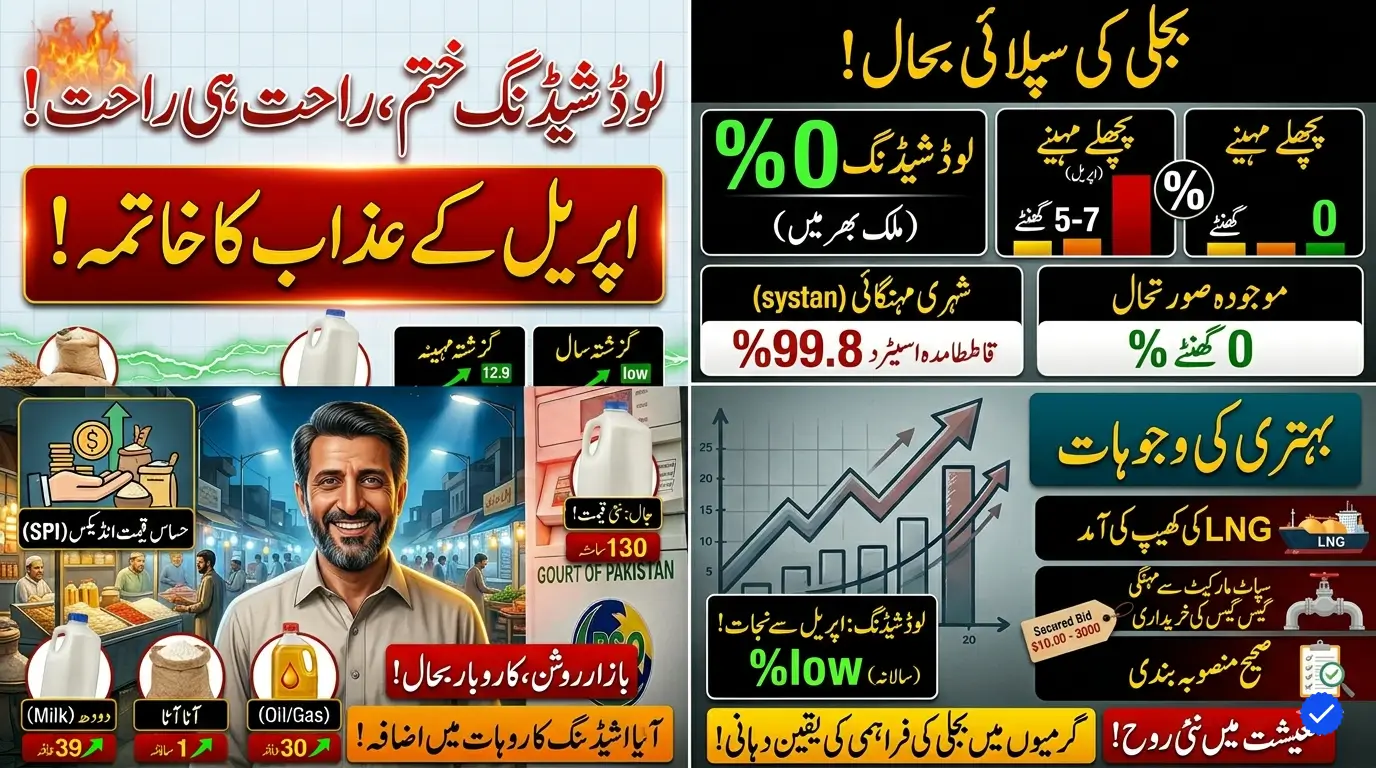
Power Minister Announces
Pakistan’s energy situation has taken a positive turn as the federal power minister, Awais Leghari, announced the official end of load-shedding following a difficult period in April 2026. After weeks of prolonged electricity outages across the country, the arrival of a liquefied natural gas shipment has helped stabilize power generation and restore supply.
Relief Dead As Pakistan Inflation Shoots Up to Highest Level in Almost
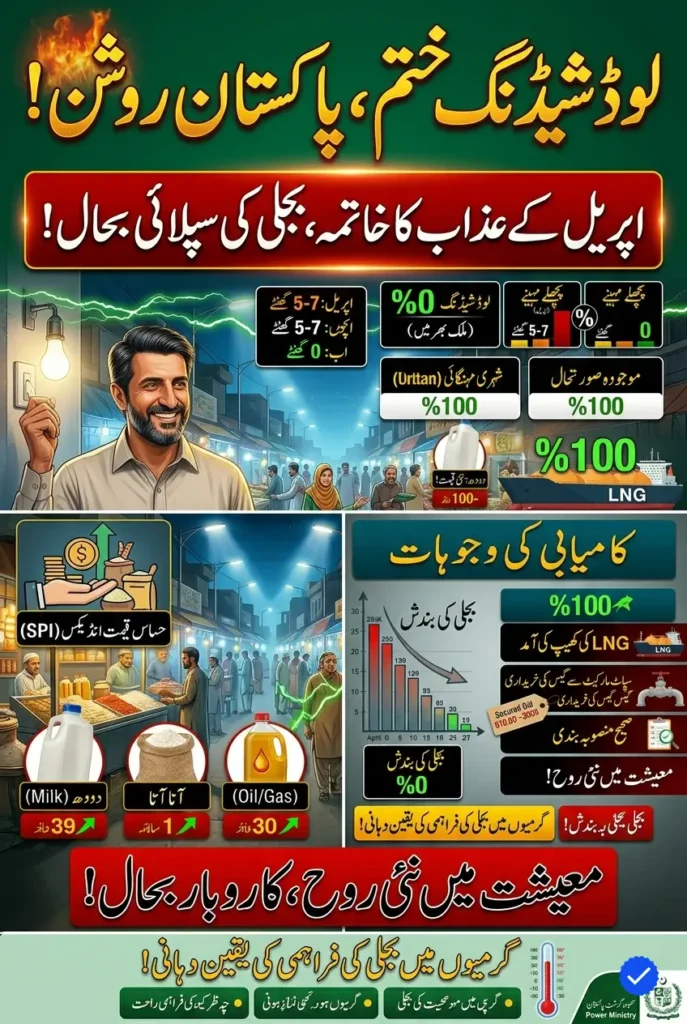
The announcement comes as a relief for millions of citizens who endured frequent and extended power cuts during the peak of the crisis. Households, businesses, and industries were all affected, with many areas experiencing outages lasting several hours each day. The return to normal electricity supply is expected to ease daily life and support economic activity.
Causes Behind the Loadshedding Crisis
According to the power minister, the primary reason for the recent load-shedding was a temporary shortage of natural gas. This shortage disrupted electricity generation, particularly for power plants that rely heavily on gas as fuel. The issue was further complicated by international developments, specifically tensions linked to the US-Iran situation, which affected energy supply chains.
The minister emphasized that the crisis was not caused by any structural failure in Pakistan’s power infrastructure. Instead, it was described as a short-term supply issue that temporarily reduced the availability of fuel needed to generate electricity. This clarification aims to address concerns about the reliability of the country’s energy system.
Timeline of Power Outages in April
The severity of load-shedding varied throughout the month of April. On April 13 and 14, many areas experienced power outages lasting up to five hours. However, the situation worsened on April 15 and 16, when outages extended to around seven hours in some regions, creating significant challenges for residents and businesses.
Following these peak days, the situation began to improve gradually. For several days, load-shedding dropped close to zero in many areas, offering temporary relief. However, intermittent outages of around two to two and a half hours per day continued until April 29. This gradual recovery indicated that efforts were being made to stabilize the energy supply.
Govt Increases Petrol Price Yet Again
Role of LNG Imports in Stabilizing Power Supply
A key factor in resolving the crisis was the arrival of a liquefied natural gas shipment. The minister confirmed that the first LNG cargo reached Pakistan just a day before the announcement, helping to bridge the supply gap that had been affecting power generation.
In addition to this shipment, the government had also turned to the international spot market to purchase expensive gas in order to manage the shortfall. Pakistan LNG Limited secured cargo bids priced between 17.997 and 18.88 dollars per million British thermal units, reflecting the high cost of emergency energy procurement.
These measures highlight the government’s efforts to ensure continuity of electricity supply despite challenging global energy conditions. However, the reliance on costly imports also raises concerns about the financial burden on the national economy.
Government Assurance and Future Outlook
The power minister has assured the public that no further load-shedding is planned in the near future. He expressed confidence that the country’s transmission and distribution system is capable of handling the expected rise in electricity demand during the summer season.
This assurance is particularly important as Pakistan typically experiences higher electricity consumption during the hotter months due to increased use of cooling appliances. A stable power supply during this period is essential for both public comfort and economic stability.
While the current situation appears to be under control, experts believe that long-term solutions are necessary to prevent similar crises in the future. These may include diversifying energy sources, increasing local gas production, and investing in renewable energy projects such as solar and wind power.
Tax on Diesel Increased By Rs. 28.7/Litre in Late Night Surprise
Economic and Social Impact of Loadshedding
The recent load-shedding crisis had a noticeable impact on daily life and economic activities. Businesses faced disruptions in operations, leading to reduced productivity and financial losses. Small enterprises, in particular, struggled to cope with the uncertainty of power supply.
For households, prolonged outages created significant inconvenience, especially during warm weather. Issues such as food spoilage, lack of cooling, and disruptions in daily routines added to public frustration. Students and remote workers were also affected, highlighting the widespread consequences of energy shortages.
The end of load-shedding is therefore not just a technical improvement but a significant relief for society as a whole. It restores a sense of normalcy and allows both individuals and businesses to function more efficiently.
FAQs
What caused the recent load-shedding in Pakistan?
The load-shedding was mainly caused by a temporary shortage of natural gas, which disrupted electricity generation at power plants.
How long did the power outages last during the peak period?
During mid-April, outages lasted up to seven hours in some areas before gradually improving.
What role did LNG imports play in ending the crisis?
The arrival of LNG shipments helped restore fuel supply for power plants, enabling the government to stabilize electricity generation.
Will load-shedding return in the near future?
According to the power minister, no further load-shedding is planned, and the system is expected to handle summer demand.
Why were gas purchases from the spot market expensive?
Emergency purchases from the international spot market are typically costly due to high global demand and limited supply.
Miftah Ismail Reveals Shocking Trick Govt Uses to Drop Petrol Bombs
Final Words
The end of load-shedding marks a significant improvement in Pakistan’s energy situation after a challenging month. While the arrival of LNG has provided immediate relief, the crisis serves as a reminder of the country’s dependence on imported fuel and the vulnerabilities in its energy supply chain. Moving forward, sustainable and long-term energy solutions will be essential to ensure stability and prevent future disruptions.