
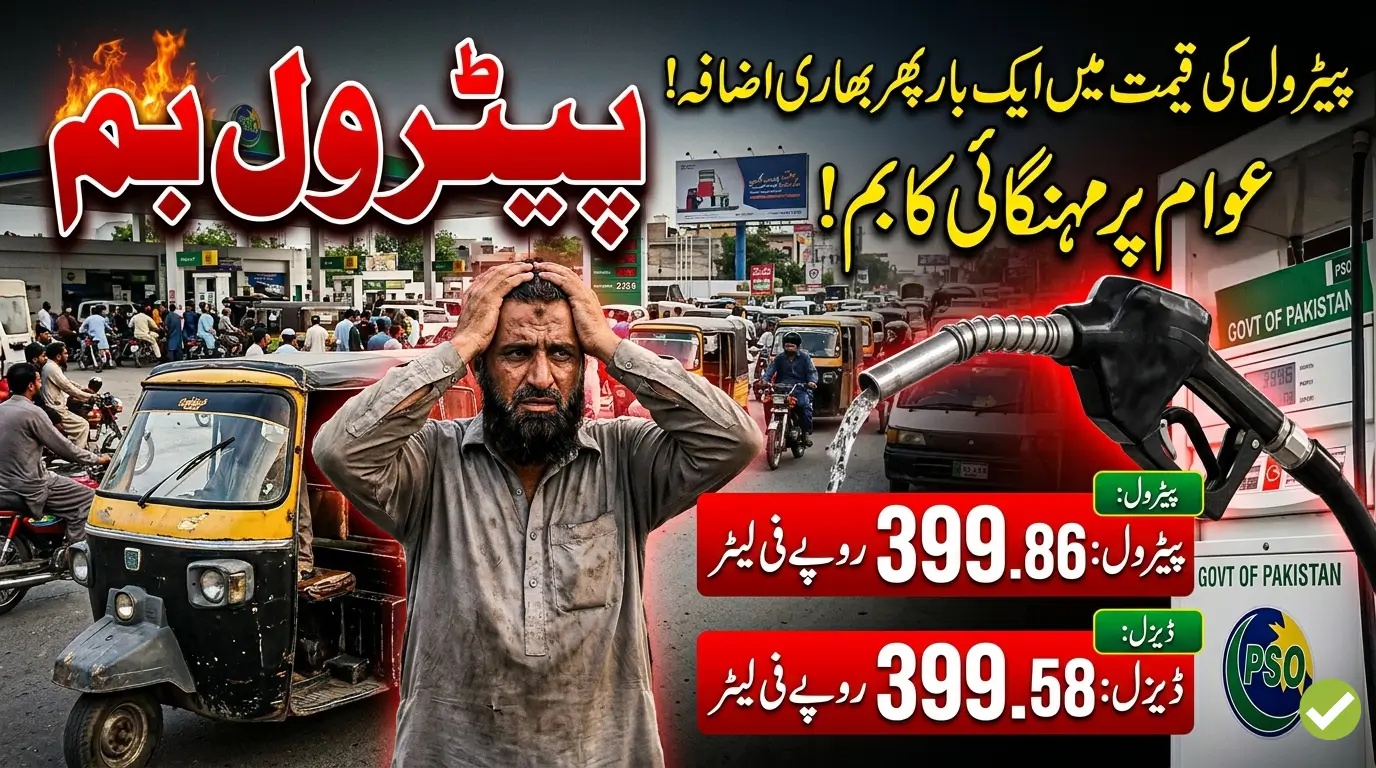
The federal government has once again approved a significant increase in the prices of petroleum products, adding further pressure on already inflation-hit consumers across the country. According to an official notification issued on Thursday, the Prime Minister has sanctioned an increase in the prices of both petrol and diesel, which will remain effective for the next eight days starting Friday, May 1, 2026.
Miftah Ismail Reveals Shocking Trick Govt Uses to Drop Petrol Bombs on Citizens
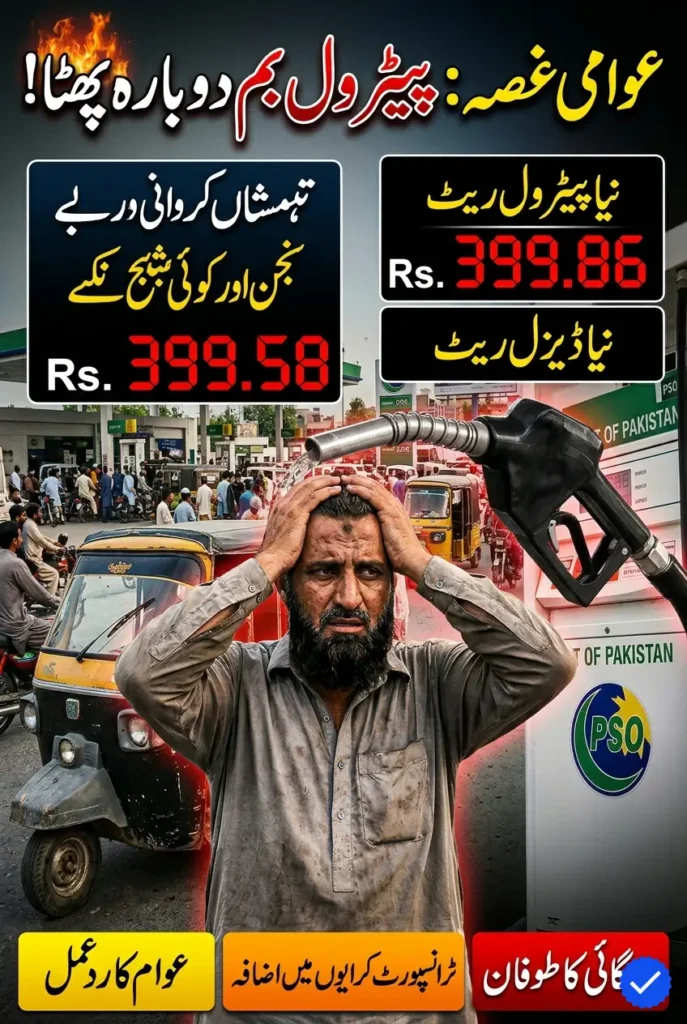
The latest revision has sparked widespread concern among the public, transporters, and business communities, who fear that the continuous rise in fuel prices will further accelerate inflation and increase the cost of living in Pakistan.
New Petrol and Diesel Prices Announced
Under the latest price adjustment, diesel has witnessed a sharp increase of Rs. 19.39 per litre, while petrol prices have gone up by Rs. 6.51 per litre. After the approval, the new prices have been set as follows:
- Diesel: Rs. 399.58 per litre
- Petrol: Rs. 399.86 per litre
The implementation of these revised prices has taken effect immediately from Friday, May 1, 2026. This decision comes just days after a previous hike, where diesel and petrol prices were increased by Rs. 26.77 per litre each, reflecting a continued upward trend in fuel costs.
No Load Shedding During Peak Hours as Hydropower Local Gas Boost Supply Power Division
Reasons Behind the Price Increase
Officials suggest that the latest increase is primarily linked to fluctuations in global oil markets, currency depreciation, and import-related costs. Pakistan, being heavily dependent on imported fuel, is particularly vulnerable to changes in international crude oil prices.
The government also faces pressure from international financial institutions to adjust petroleum prices in line with market conditions rather than providing heavy subsidies. As a result, domestic fuel prices are frequently revised, often leading to short-term relief followed by sudden increases.
Unauthorized Access to IRIS Profile Triggers Rs. 74.8 Million Tax Fraud
Impact on Inflation and Public Life
The latest fuel price hike is expected to have a direct impact on inflation across multiple sectors. Transport fares are likely to increase, which will subsequently raise the cost of essential goods such as food items, vegetables, and daily commodities.
Small businesses and low-income households are expected to be the most affected. Transporters have already hinted at possible fare revisions due to rising operational costs. Similarly, logistics companies may also increase freight charges, which will further push retail prices upward.
Economists warn that continuous fuel price increases can create a ripple effect throughout the economy, leading to a broader inflationary cycle that becomes difficult to control.
Oil Blasts Past $120 After Shock UAE Exit While Trump Keeps Hormuz Choked
Reaction from the Public and Market
The announcement has triggered mixed reactions from the public. Many citizens have expressed frustration over the frequent price hikes, arguing that their incomes have not increased in proportion to rising expenses.
Transport unions have also voiced concerns, stating that operating costs have become unsustainable. Some groups are considering negotiations with the government for fare adjustments.
On the other hand, financial analysts believe that the government has limited options due to external economic pressures. They argue that without structural reforms in the energy sector, such price adjustments will continue in the future.
SBP Introduces New Measures to Make Housing Loans More Accessible in Pakistan
Government’s Position
Government officials maintain that these adjustments are necessary to stabilize the economy and meet fiscal requirements. They emphasize that fuel pricing is directly linked to international oil rates and exchange rate fluctuations, which are beyond domestic control.
Authorities have also indicated that any attempt to artificially control fuel prices could lead to shortages or increased pressure on national reserves. Therefore, periodic price revisions are seen as a necessary measure to maintain supply stability.
Previous Price Adjustments
This is not the first major increase in recent weeks. Just last week, the government raised diesel and petrol prices by Rs. 26.77 per litre each, marking one of the highest single adjustments in recent months.
Such frequent changes have created uncertainty in the market, making it difficult for businesses and consumers to plan expenses effectively. Analysts note that the repeated hikes reflect ongoing instability in global oil markets combined with domestic fiscal constraints.
TCS Welcomes New B737 Freighter in Karachi Expanding Air Cargo Operations
Future Outlook
Experts believe that fuel prices may continue to fluctuate in the coming months depending on global crude oil trends and the value of the Pakistani rupee. If international oil prices remain high, further increases cannot be ruled out.
However, some economists suggest that if global markets stabilize and the rupee strengthens, there may be room for price relief in the future. The government is also reportedly exploring long-term energy strategies, including renewable energy expansion and improved fuel efficiency measures, to reduce dependency on imported oil.
Tax Bar Gives FBR 12 Proposals to Fix Digital Tax System
FAQs
1. Why did the government increase petrol and diesel prices again?
The increase is mainly due to rising international oil prices, currency depreciation, and import costs.
2. What is the new price of petrol in Pakistan?
After the latest increase, petrol is now priced at Rs. 399.86 per litre.
3. What is the new price of diesel?
Diesel has been increased to Rs. 399.58 per litre.
4. When will the new prices be effective?
The new prices are effective immediately from Friday, May 1, 2026.
5. How often are fuel prices revised in Pakistan?
Fuel prices are typically revised every 15 days, depending on global oil market conditions.
Major Pakistani Airport is Getting a New Terminal
Final Word
The latest increase in petrol and diesel prices reflects the ongoing economic challenges faced by Pakistan, particularly its dependence on imported energy and exposure to global market fluctuations. While the government argues that such adjustments are necessary for economic stability, the burden ultimately falls on the common citizen, who continues to face rising living costs.
Without long-term energy reforms and greater stability in global oil markets, fuel price volatility is likely to remain a persistent issue.