
Relief Dead As Pakistan Inflation Shoots
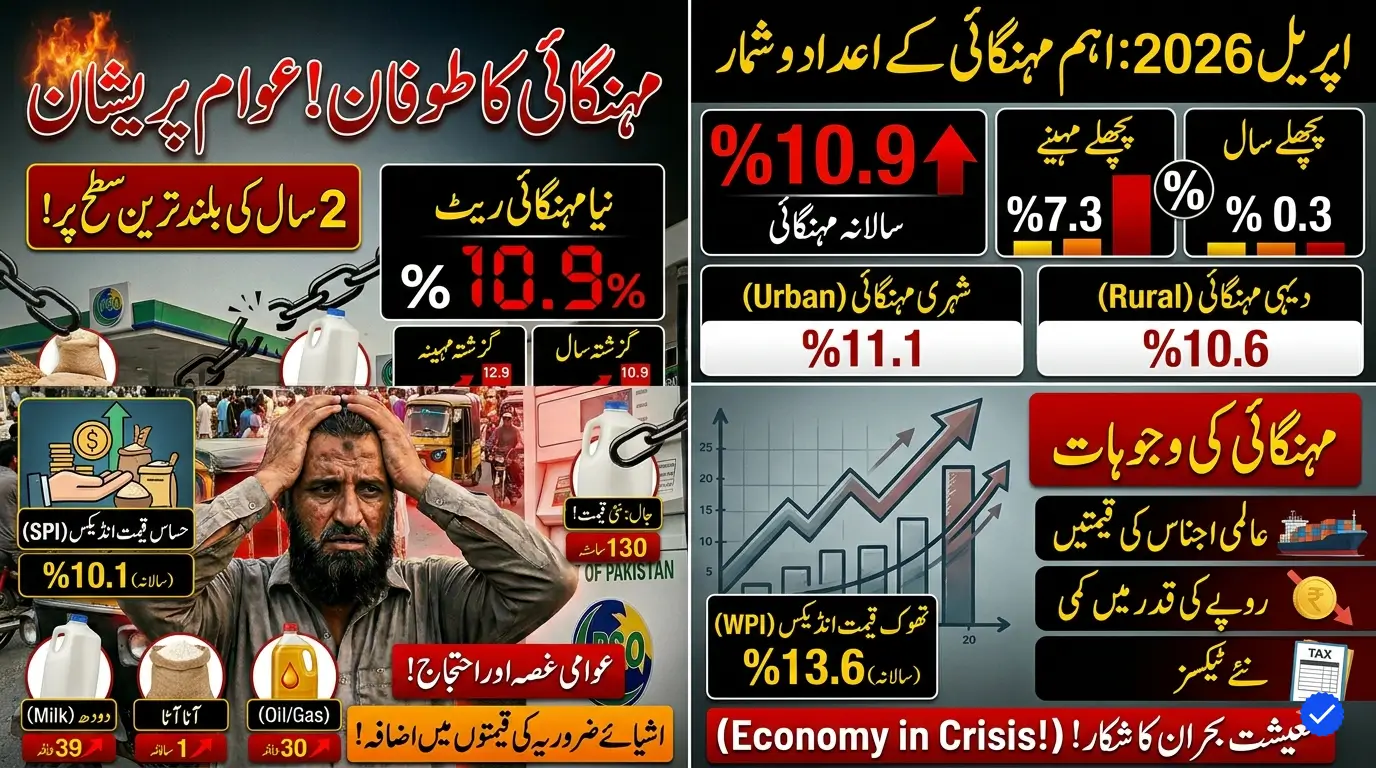
Pakistan’s inflation has surged once again, erasing hopes of economic relief for citizens already burdened by rising living costs. In April 2026, the country recorded a significant increase in inflation, reaching 10.9 percent year-on-year. This marks the highest level in nearly two years and signals renewed pressure on household budgets, businesses, and the broader economy.
Govt Increases Petrol Price Yet Again

The latest figures show a sharp acceleration compared to previous months. In March 2026, inflation stood at 7.3 percent, while in April 2025, it was recorded at just 0.3 percent. This dramatic shift highlights how quickly price levels have escalated within a short period. On a month-on-month basis, inflation rose by 2.5 percent, further indicating that prices are not only high but increasing at a faster pace than before.
Urban and Rural Inflation Trends
One of the most notable aspects of the current inflation trend is its widespread impact across both urban and rural areas. Urban inflation climbed to 11.1 percent year-on-year, slightly higher than the national average. This suggests that city dwellers are facing stronger price pressures, particularly in sectors such as housing, utilities, and transportation. On a monthly basis, urban inflation increased by 2.7 percent, showing a steady upward trajectory.
Rural areas have not been spared either. Inflation in rural regions reached 10.6 percent year-on-year in April 2026, up from 7.2 percent in March. Month-on-month rural inflation rose by 2.1 percent, indicating that rising prices are affecting agricultural communities and smaller towns as well. This broad-based increase in inflation suggests systemic economic pressures rather than isolated price hikes.
Tax on Diesel Increased By Rs. 28.7/Litre in Late Night Surprise
Essential Commodities and Wholesale Price Pressure
Another important indicator, the Sensitive Price Indicator, which tracks essential commodities, also recorded a significant rise. It increased by 10.1 percent year-on-year, a notable jump from 5.6 percent in March. This is particularly concerning because SPI focuses on everyday items such as food and basic necessities, directly impacting lower and middle-income households. The monthly increase of 2.0 percent further emphasizes how quickly essential goods are becoming more expensive.
Wholesale prices have risen even more sharply, with the Wholesale Price Index showing a 13.6 percent year-on-year increase. This is a key signal for future inflation trends because higher wholesale costs often translate into increased retail prices. Although the monthly rise of 5.1 percent was slightly lower than March’s 5.9 percent, it still reflects strong inflationary pressure in supply chains and production costs.
Core and Trimmed Inflation Indicators
Core inflation, which excludes food and energy prices, also moved upward. In urban areas, core inflation reached 8.0 percent year-on-year, while rural core inflation stood at 8.5 percent. These figures indicate that inflation is not limited to volatile items like food and fuel but is spreading across the broader economy. Month-on-month increases in core inflation further confirm that underlying price pressures are building.
Trimmed core inflation, which removes extreme price changes to provide a clearer picture of trends, also showed notable increases. Urban trimmed inflation rose to 9.2 percent year-on-year, while rural trimmed inflation reached 8.9 percent. These figures reinforce the view that inflation is becoming deeply embedded in the economy rather than being driven by temporary factors.
Miftah Ismail Reveals Shocking Trick Govt Uses to Drop Petrol Bombs
Causes Behind Rising Inflation
Several factors may be contributing to this surge in inflation. Rising global commodity prices, currency depreciation, and increased taxation on fuel and energy are likely playing a role. Additionally, supply chain disruptions and higher transportation costs can further push prices upward. Government fiscal policies and adjustments in subsidies may also be influencing the current inflation trend.
The impact of rising inflation is being felt across all segments of society. For households, it means reduced purchasing power and difficulty in managing daily expenses. For businesses, higher input costs can lead to reduced profitability or increased prices for consumers. For the economy as a whole, persistent inflation can slow down growth and create uncertainty in financial markets.
FAQs
What is the current inflation rate in Pakistan as of April 2026?
The inflation rate in Pakistan reached 10.9 percent year-on-year in April 2026, the highest level in nearly two years.
Why has inflation increased so rapidly?
Inflation has risen due to a combination of factors including higher fuel prices, global commodity trends, currency depreciation, and increased production and transportation costs.
How does inflation affect ordinary citizens?
Rising inflation reduces purchasing power, making everyday goods and services more expensive and harder to afford for households.
What is the difference between CPI, SPI, and WPI?
CPI measures overall consumer prices, SPI tracks essential commodities, and WPI reflects wholesale market prices, often indicating future retail price trends.
Can inflation be controlled in the near future?
Inflation can be managed through policy measures such as interest rate adjustments, subsidies, and economic reforms, but it may take time to stabilize fully.
No Load Shedding During Peak Hours as Hydropower Local Gas Boost Supply Power Division
Final Words
The sharp rise in inflation in April 2026 has raised serious concerns about Pakistan’s economic stability and the financial well-being of its citizens. With price pressures intensifying across all sectors, immediate and long-term measures are essential to bring inflation under control. Without effective intervention, the burden on households and businesses is likely to grow, making economic recovery more challenging in the months ahead.