
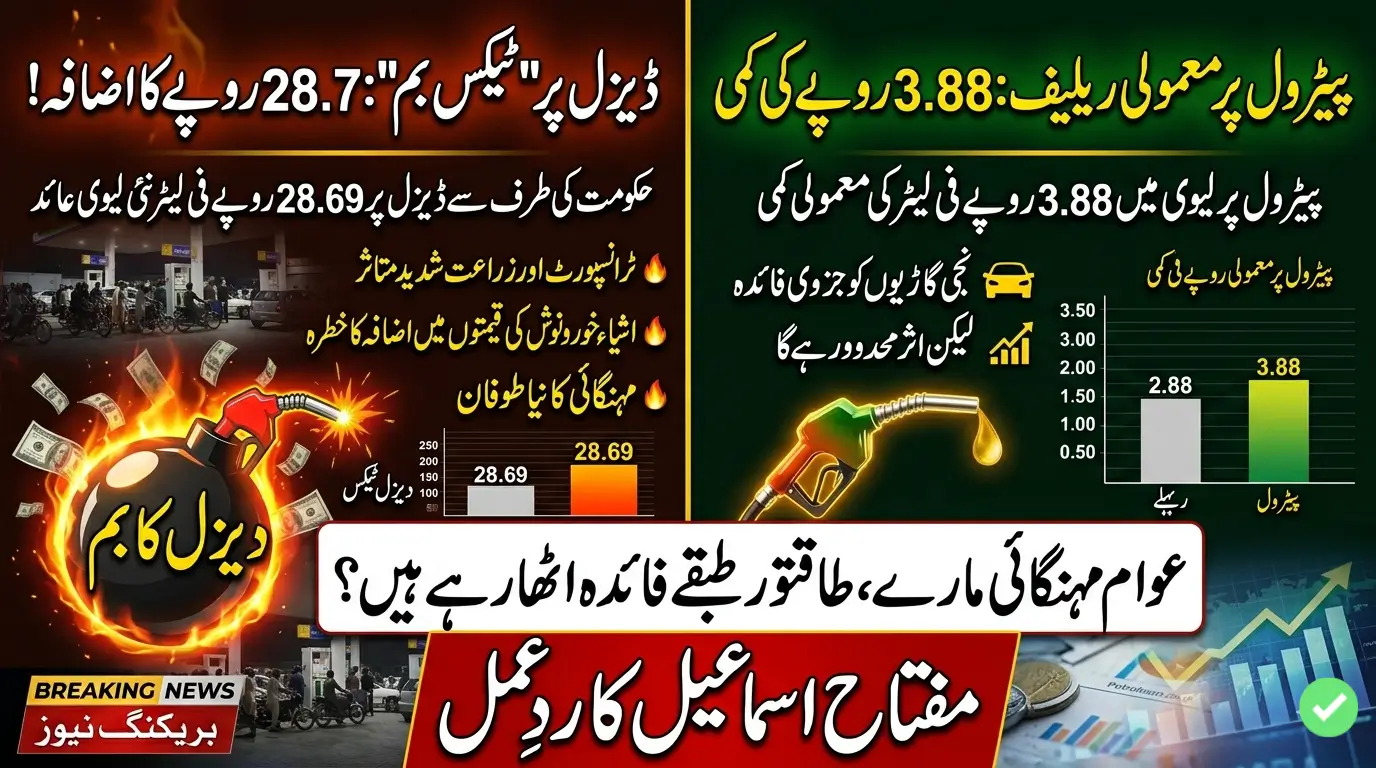
The federal government has introduced a significant change in petroleum taxation through a late-night notification issued by the Petroleum Division, effective May 1, 2026. In this move, a new petroleum levy of Rs. 28.69 per litre has been imposed on high-speed diesel (HSD), while the levy on petrol has been slightly reduced. The decision reflects the government’s continued reliance on fuel-based taxation to generate revenue amid ongoing fiscal challenges.
Miftah Ismail Reveals Shocking Trick Govt Uses to Drop Petrol Bombs

According to the revised structure, high-speed diesel, which previously carried no petroleum levy, is now subject to a substantial tax. On the other hand, the petroleum levy on petrol has been reduced by Rs. 3.88 per litre, bringing it down from Rs. 107.38 to Rs. 103.50 per litre. While this reduction may appear as a relief measure, its overall impact is expected to be limited compared to the broader implications of the diesel tax increase.
Understanding the New Petroleum Levy Structure
The updated levy framework covers multiple petroleum products beyond petrol and diesel. High-speed diesel now carries a levy of Rs. 28.69 per litre along with a climate support levy of Rs. 2.50. Petrol, although slightly reduced, still carries a high levy exceeding Rs. 100 per litre, along with the same climate charge.
Other fuels such as high-octane blending components (HOBC), kerosene oil, light diesel oil, and furnace oil also fall under revised levy rates. These adjustments highlight the government’s comprehensive approach to fuel taxation, ensuring that revenue is collected across a wide range of petroleum products.
Why the Government Relies on Fuel Levies
One of the key reasons behind the increase in diesel levy is the government’s dependence on petroleum taxes as a stable source of income. Unlike traditional taxes, which depend on compliance and enforcement, fuel levies are collected directly at the point of pricing. This makes them easier to administer and ensures consistent revenue generation.
The Federal Board of Revenue has faced persistent challenges in meeting tax collection targets. As a result, policymakers often turn to petroleum levies as a reliable alternative to bridge fiscal gaps. This approach allows the government to secure funds quickly without expanding the formal tax net.
No Load Shedding During Peak Hours as Hydropower Local Gas Boost
Economic Impact of Diesel Price Increase
The increase in diesel levy is expected to have far-reaching economic consequences. Diesel plays a critical role in Pakistan’s economy as it is widely used in freight transport, agricultural machinery, and industrial operations. Any increase in diesel costs directly affects the cost of moving goods across the country.
Higher transportation costs typically lead to increased prices for essential commodities, including food items. Farmers, who rely on diesel-powered equipment for irrigation and harvesting, will also face higher production costs. These additional expenses are often passed on to consumers, contributing to rising inflation.
Moreover, industries that depend on diesel for logistics and energy will experience higher operational costs. This could lead to reduced profit margins or increased prices for manufactured goods, further adding to the economic burden on households.
Limited Relief from Petrol Levy Reduction
While the government has reduced the petroleum levy on petrol, the relief is relatively small compared to the diesel tax increase. Petrol is primarily used by private vehicle owners, meaning that the benefit of this reduction will largely be limited to urban middle- and upper-income groups.
In contrast, diesel affects a much broader segment of the population, including farmers, transporters, and businesses. As a result, the overall impact of the policy is likely to be inflationary, despite the minor relief provided on petrol prices.
Broader Fiscal Context
The decision to adjust fuel levies comes at a time when Pakistan is facing significant fiscal pressure. The government is striving to manage budget deficits, meet international financial obligations, and stabilize the economy. In such circumstances, petroleum levies serve as a quick and effective tool for revenue generation.
However, this strategy also raises concerns about its long-term sustainability. Over-reliance on indirect taxes like fuel levies can disproportionately affect lower- and middle-income groups, as they spend a larger portion of their income on essential goods and services.
Unauthorized Access to IRIS Profile Triggers Rs. 74.8 Million Tax Fraud
Climate Support Levy and Environmental Considerations
The notification also confirms the continuation of the climate support levy on selected petroleum products. This additional charge is intended to generate funds for environmental initiatives and to encourage more sustainable energy consumption.
While the concept of a climate levy aligns with global efforts to reduce carbon emissions, its effectiveness depends on how the collected funds are utilized. Without clear policies and transparency, such measures may be viewed primarily as revenue-generating tools rather than genuine environmental initiatives.
Public Reaction and Policy Debate
The latest fuel levy adjustments are likely to spark public debate and criticism. In Pakistan, fuel prices are a sensitive issue due to their direct impact on inflation and daily living costs. Any increase, particularly in diesel prices, often leads to concerns about rising food prices and transportation fares.
Economists and policy analysts have long debated the balance between revenue generation and public welfare. While the government must ensure fiscal stability, there is also a need to protect citizens from excessive financial strain.
Oil Blasts Past $120 After Shock UAE Exit While Trump Keeps Hormuz
Need for Long-Term Solutions
Experts suggest that Pakistan needs to explore long-term solutions to reduce its dependence on fuel levies. This could include expanding the tax base, improving tax compliance, and investing in alternative energy sources such as solar and wind power.
Reducing reliance on imported fuel and promoting energy efficiency could also help stabilize prices in the future. Structural reforms in the taxation system would provide a more sustainable approach to revenue generation without placing undue pressure on the public.
SBP Introduces New Measures to Make Housing Loans More
FAQs
Why did the government increase the diesel levy?
The government increased the diesel levy to generate additional revenue, as fuel taxes are easier to collect and provide a stable income source.
How much has the diesel levy increased?
A new levy of Rs. 28.69 per litre has been imposed on high-speed diesel, which previously had no petroleum levy.
Did petrol prices decrease as well?
The levy on petrol was reduced by Rs. 3.88 per litre, but the overall relief is relatively small.
How will this affect inflation?
Higher diesel costs are expected to increase transportation and production expenses, leading to higher prices for goods and services.
What is the climate support levy?
It is an additional charge on certain fuels aimed at supporting environmental initiatives and promoting sustainable energy use.
Final Words
The government’s decision to impose a significant levy on diesel while slightly reducing the petrol levy reflects its ongoing struggle to balance fiscal needs with public welfare. While fuel levies provide a reliable source of revenue, they also place a considerable burden on the economy, particularly through rising inflation. Moving forward, a more balanced and sustainable approach to taxation and energy policy will be essential to ensure economic stability without compromising the well-being of citizens.
TCS Welcomes New B737 Freighter in Karachi Expanding Air Cargo