
Govt Officially Relaxes Market
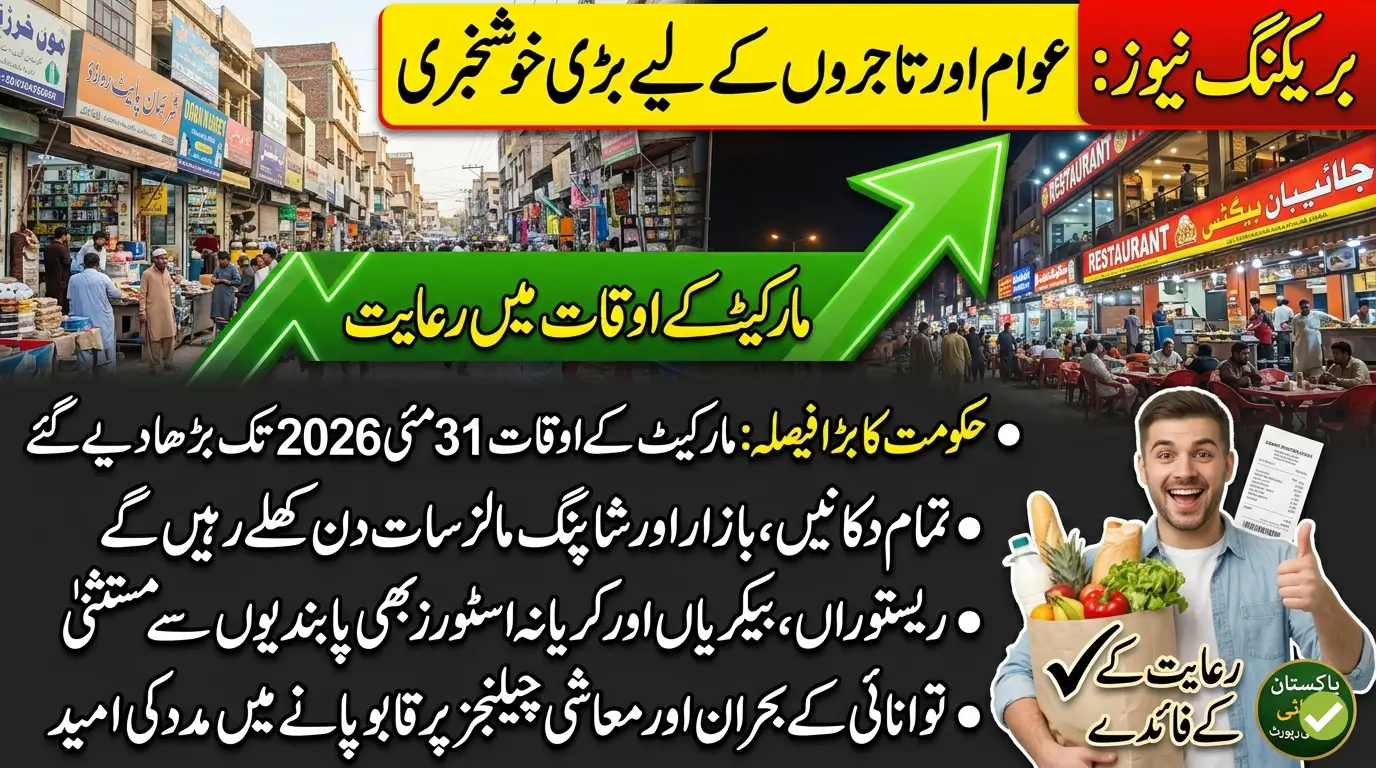
The federal government of Pakistan has officially announced a major relaxation in market operating hours, bringing relief to traders shopkeepers restaurant owners and millions of consumers across the country. According to a notification issued by the Cabinet Division on May 18, 2026 Prime Minister Shehbaz Sharif approved the exemption of several business sectors from the previously imposed market closure timings. This decision will remain effective immediately and continue until May 31, 2026.
Gold Rate Slips Further Away From Rs. 5 Lac per Tola in Pakistan
The latest move is being seen as a positive development for the business community, especially during a time when economic activity needs support and flexibility. Markets shopping malls restaurants, bakeries tandoors grocery stores, and departmental stores can now operate with fewer restrictions throughout the week. The government’s decision reflects its effort to balance economic growth with public convenience.
Background of the Earlier Restrictions
Earlier, the federal government had imposed strict market closing hours under a notification issued on April 6, 2026. Those restrictions were part of broader energy conservation measures aimed at reducing electricity consumption and managing the country’s economic challenges. Businesses in several cities were directed to close early at night in order to save power and reduce unnecessary commercial activity during late hours.
The earlier policy created mixed reactions among traders and citizens. While government officials defended the move as necessary for national economic stability, many business owners argued that restricted operating hours negatively affected sales and reduced customer traffic. Restaurants, shopping malls, and retail stores especially reported financial losses because peak customer activity often occurs during evening and nighttime hours.
Details of the New Government Notification
According to the official notification issued by the Cabinet Division, all shops, bazaars, markets, shopping malls, and departmental stores have been exempted from the previously enforced closure timings. The exemption applies seven days a week and will remain valid until May 31, 2026.
In addition, restaurants, bakeries, grocery stores, and traditional tandoors have also received permission to continue operations without the earlier timing limitations. The notification confirmed that the decision was approved directly by Prime Minister Shehbaz Sharif and would be published in the Gazette of Pakistan Extraordinary.
Government Cuts Petrol, Diesel Prices by Rs. 5 Per Litre
Relief for the Business Community
The relaxation of market timings has been welcomed by traders and business owners nationwide. Many shopkeepers believe the decision will help improve sales and customer engagement, especially in urban areas where people prefer shopping during evening hours after office work.
Restaurant owners and food businesses are among the biggest beneficiaries of the new policy. Dining activity in Pakistan often increases late in the evening, particularly in major cities such as Lahore, Karachi, Islamabad, Faisalabad, and Rawalpindi. The previous restrictions limited their earning potential and reduced employment opportunities for workers in the hospitality sector.
Impact on Daily Consumers
The decision is not only beneficial for businesses but also for ordinary citizens. Many people, especially office workers and students, find it difficult to shop during daytime hours due to busy schedules. The relaxation allows consumers to visit markets and restaurants more conveniently during evenings and weekends.
Grocery stores remaining open for longer periods can also improve public convenience, especially in densely populated urban areas. Families can purchase essential items without worrying about strict closing times.
UAE Missile Interceptions Gulf Security Alert Middle East Tensions Rise
Economic Importance of Extended Business Hours
Pakistan’s economy has faced significant challenges over the past few years, including inflation, energy shortages, currency fluctuations, and declining business confidence. In such conditions, encouraging commercial activity becomes highly important.
Extended market hours can increase overall economic circulation by allowing businesses to generate higher revenue. Increased commercial activity may also contribute to higher tax collection and improved employment opportunities. Small businesses, in particular, depend heavily on evening customers for profitability.
Energy Conservation Concerns Remain
Despite the relaxation, energy conservation remains an important national issue. Pakistan continues to face electricity shortages and rising fuel import costs. Critics of the decision argue that allowing businesses to operate for longer hours may increase power consumption and place additional pressure on the national grid.
However, supporters believe that modern energy management solutions, efficient lighting systems, and responsible business practices can help balance economic activity with conservation goals. Some experts suggest that instead of strict closure timings, the government should encourage energy-efficient technologies and smarter power management strategies.
Iran Claims to Have Seized ‘Offending’ Oil Tanker in Gulf of Oman
Public and Political Reactions
The announcement has generated strong reactions across social media and political circles. Trade associations and market unions largely praised the decision, describing it as practical and business-friendly. Many traders thanked the government for listening to the concerns of the business community.
On the other hand, some critics questioned why the restrictions were imposed in the first place if they could be relaxed within a short period. Political opponents argued that inconsistent policies create uncertainty for businesses and investors.
Despite differing opinions, the overall public response appears positive because the decision directly affects daily life, shopping convenience, and employment opportunities.
Future Possibilities After May 31
One important question now is what will happen after May 31, 2026. The current relaxation is temporary, but many business owners hope it will become permanent. The government may review the economic and energy-related impact before making a final decision.
If the extended timings lead to better economic performance without causing major energy problems, authorities could consider maintaining the relaxed policy for a longer period. However, if electricity demand rises significantly, some restrictions may return in modified form.
Hackers Inside Banking Systems Says Court as Bank Told to Pay Rs. 15 Lac to Victim
FAQS
1. What has the government announced regarding market timings?
The government has relaxed restrictions on market operating hours, allowing businesses to remain open with fewer limitations until May 31, 2026.
2. Which businesses are included in the relaxation?
Shops, bazaars, shopping malls, departmental stores, restaurants, bakeries, grocery stores, and tandoors are included in the exemption.
3. Who approved the decision?
The decision was approved by Prime Minister Shehbaz Sharif and officially notified by the Cabinet Division.
4. Why were restrictions imposed earlier?
The earlier restrictions were introduced mainly for energy conservation and electricity-saving purposes.
5. Will the relaxed timings continue after May 31?
The government has not yet announced any extension. Authorities are expected to review the situation before making a future decision.
Final Words
The relaxation of market timings is a major development for Pakistan’s business sector and general public. It reflects the government’s attempt to support economic activity while responding to the concerns of traders and consumers. Whether this policy continues beyond May 31 will depend on its impact on the economy and energy sector. For now, businesses across the country have received an important opportunity to recover sales, improve operations, and serve customers with greater flexibility.
Gold Rate Slips to Rs. 4.7 Lac in Pakistan After Third Consecutive Decline