
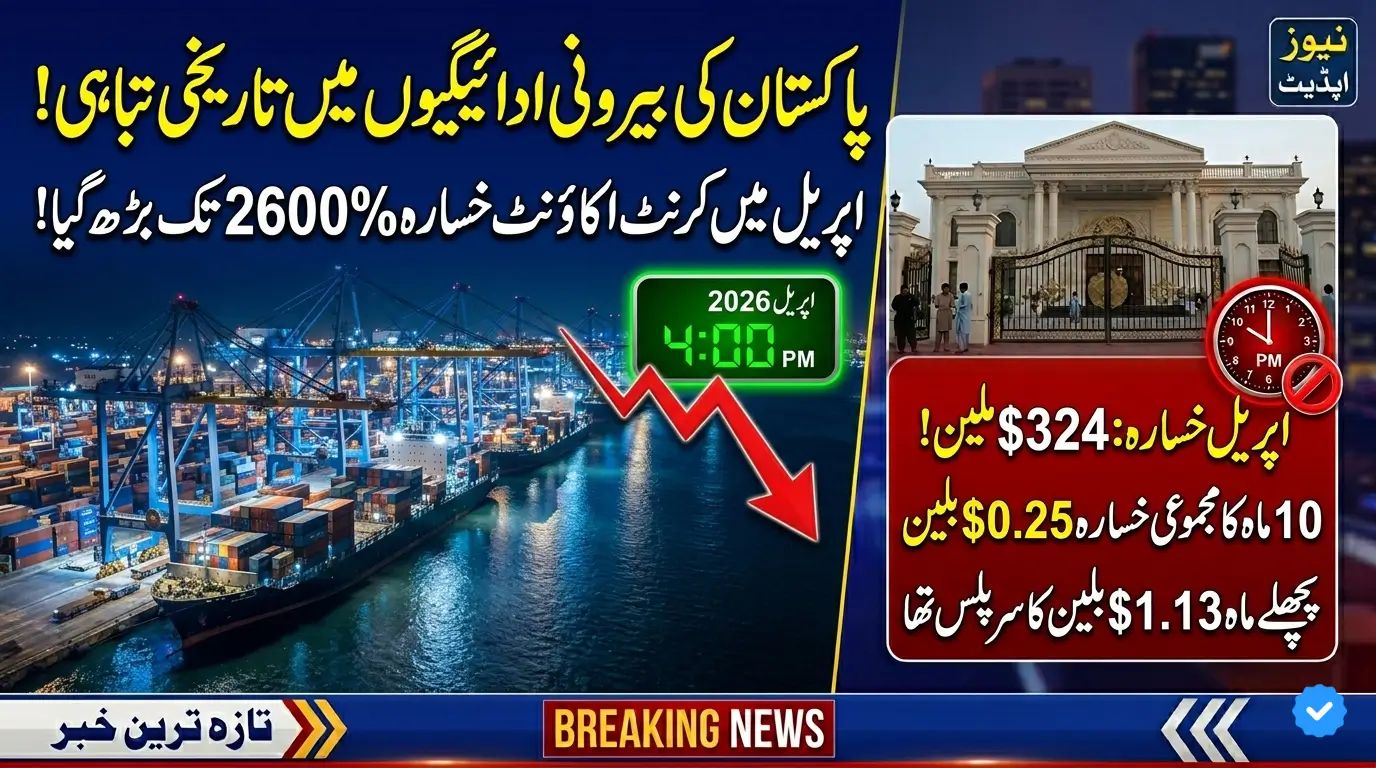
Pakistan’s external account position came under renewed pressure in April 2026, as the country recorded a current account deficit of $324 million, reversing the strong surplus seen in the previous month. According to data released by the State Bank of Pakistan (SBP), the latest figures highlight a sharp deterioration in external balances driven mainly by higher imports and weaker inflows.
Oil Crosses $111 After Mysterious Drone Attacks on UAE and Saudi Arabia
مالی سال 2025-26 کے پہلے 10 ماہ کے لیے، پاکستان کے کرنٹ اکاؤنٹ نے $0.25 بلین کا مجموعی خسارہ پوسٹ کیا۔ یہ پچھلے سال کی اسی مدت (10MFY25) کے دوران ریکارڈ کیے گئے $1.66 بلین سرپلس کے مقابلے میں ایک اہم الٹ پھیر کی نشاندہی کرتا ہے۔ اس تبدیلی سے ملک کی بیرونی مالیاتی پوزیشن پر بڑھتے ہوئے دباؤ کا اشارہ ملتا ہے، اس کے باوجود کہ ابتدائی مہینوں میں نسبتاً استحکام ظاہر ہوتا ہے۔
Monthly Shift From Surplus to Deficit
The most striking change is visible in the month-to-month performance. In March 2026, Pakistan had recorded a strong current account surplus of $1.13 billion, reflecting improved inflows and relatively controlled imports. However, this positive momentum was short-lived, as April saw the balance turn sharply negative.
In April 2026, the current account posted a deficit of $324 million, compared to a surplus of $1.13 billion in March. On a year-on-year basis, the situation appears even more severe, with the deficit rising by approximately 2,600 percent compared to just $12 million recorded in April 2025.
What Drove the Deficit Increase?
Imports increased due to rising demand for energy, raw materials, and industrial inputs. Pakistan’s reliance on imported fuel and machinery continues to exert pressure on the external account, especially when global commodity prices remain volatile.
At the same time, remittances, which are a crucial source of foreign exchange for Pakistan, showed signs of weakening compared to the previous month. This combination of higher outflows and reduced inflows created a widening gap in the external balance.
Contrast Between March and April Performance
The sharp contrast between March and April underscores the fragile nature of Pakistan’s external account stability. In March 2026, the country benefited from strong inflows that pushed the current account into a surplus of $1.13 billion. This was seen as a positive sign for macroeconomic stability at the time.
However, the situation reversed quickly in April, indicating that the surplus was not sustained. Such volatility is not unusual for developing economies like Pakistan, where external accounts are highly sensitive to trade cycles, seasonal remittances, and global price movements.
Role of Imports in External Pressure
Imports remain one of the most significant contributors to Pakistan’s current account pressure. The country imports a large share of its energy needs, including LNG, crude oil, and refined petroleum products. In addition, machinery, industrial raw materials, and consumer goods also form a major portion of import bills.
When global energy prices rise, Pakistan’s import bill increases automatically, putting pressure on foreign reserves and the current account. Even when export performance remains stable, rising import costs can offset any gains.
Pakistan Struggles to Unlock Rs. 1.2 Trillion Circular Debt Facility
Remittances and Their Impact on Stability
Remittances from overseas Pakistanis play a crucial role in supporting the country’s external account. They provide a steady flow of foreign currency that helps offset the trade deficit and stabilize the balance of payments.
However, fluctuations in remittance inflows can significantly impact monthly current account results. In April 2026, remittance inflows reportedly slowed compared to March, contributing to the overall deficit.
Economists suggest that remittances are often influenced by seasonal trends, global labor market conditions, and exchange rate expectations. Any slowdown in these inflows can quickly affect Pakistan’s external stability.
Broader Economic Implications
کرنٹ اکاونٹ کا بڑھتا ہوا خسارہ پاکستان کے بیرونی خطرات بالخصوص زرمبادلہ کے ذخائر اور کرنسی کے استحکام کے حوالے سے خدشات کو جنم دیتا ہے۔ مسلسل خسارہ روپے پر دباؤ بڑھا سکتا ہے اور توازن برقرار رکھنے کے لیے اضافی بیرونی فنانسنگ کی ضرورت ہوتی ہے۔
تاہم، تجزیہ کار یہ بھی احتیاط کرتے ہیں کہ ایک ماہ کے ڈیٹا کو تنہائی میں نہیں دیکھا جانا چاہیے۔ جبکہ اپریل نے خسارہ ظاہر کیا، مجموعی طور پر 10 ماہ کی مدت اب بھی پچھلے سالوں کے مقابلے میں نسبتاً چھوٹے مجموعی فرق کو ظاہر کرتی ہے۔
Policy Considerations and Outlook
To manage external pressures, Pakistan typically relies on a combination of import management, export promotion, and remittance incentives. Policymakers also focus on stabilizing energy imports, as fuel remains one of the largest components of the import bill.
Improving export competitiveness, particularly in textiles and IT services, is considered essential for reducing long-term current account pressure. At the same time, attracting stable remittance inflows through banking channels remains a key priority.
IMF Pushes Pakistan Toward Major Sales Tax Reforms
Conclusion
The latest data from the State Bank of Pakistan highlights a sharp reversal in external account performance, with April 2026 recording a significant current account deficit after a strong surplus in March. While the overall 10-month position still reflects a relatively contained deficit, the month-to-month volatility signals ongoing challenges.
Higher imports and weaker remittances remain the key drivers behind this shift. Moving forward, Pakistan’s external stability will depend on its ability to manage import growth, sustain remittance inflows, and strengthen export earnings in a highly uncertain global environment.
FAQs
1. What is Pakistan’s current account balance for April 2026?
Pakistan recorded a current account deficit of $324 million in April 2026.
2. How did the 10-month FY2025-26 performance look overall?
The country posted a cumulative current account deficit of $0.25 billion for the first 10 months.
3. What was the situation in March 2026?
In March 2026, Pakistan recorded a strong surplus of $1.13 billion.
4. What caused the April deficit?
The deficit was mainly caused by higher imports and lower remittance inflows.
5. Why is the current account important for Pakistan?
It reflects the country’s external financial health, including trade balance, remittances, and foreign currency stability.
Govt Officially Relaxes Market Timings