
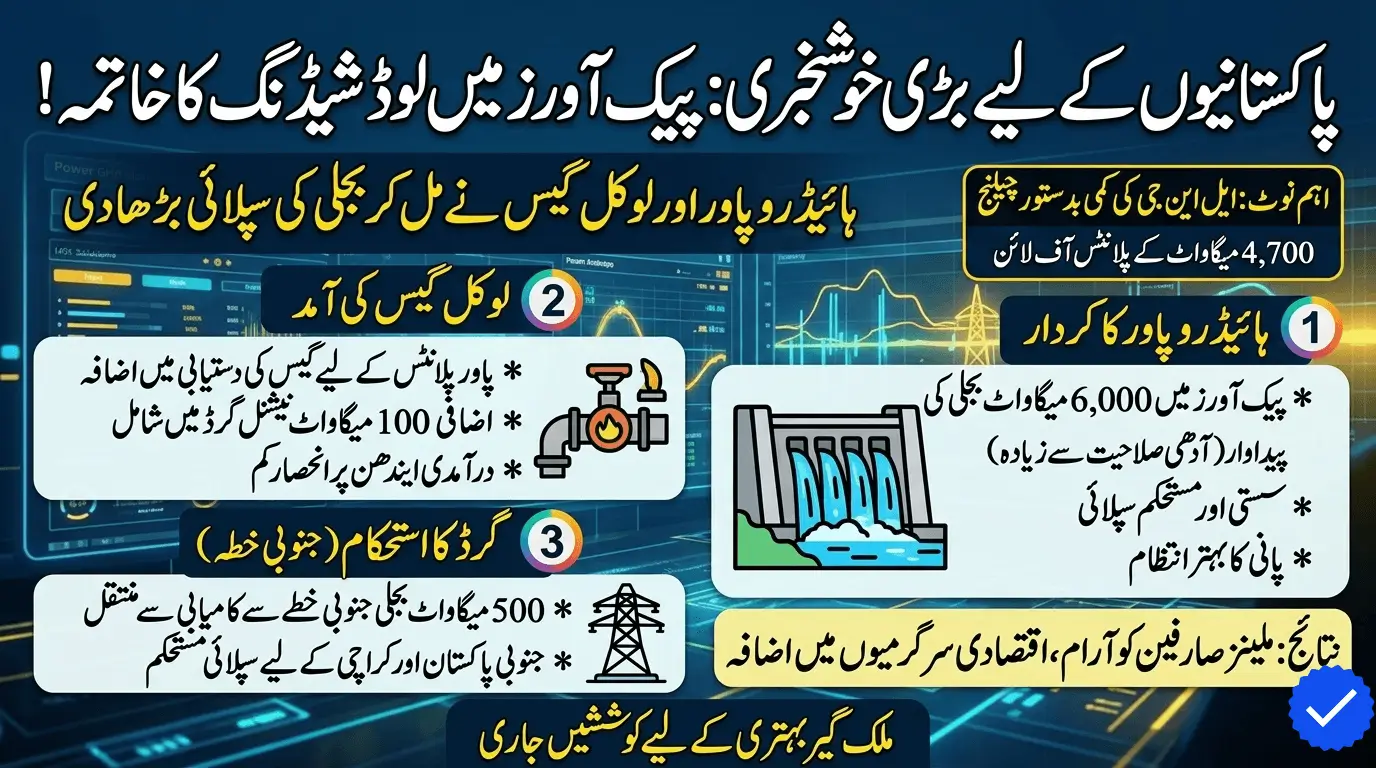
No Load Shedding During Peak Hours
Pakistan witnessed a significant improvement in its electricity situation on the night of April 29, as the country managed to avoid load shedding during peak hours. This development came as a relief for millions of consumers, especially in major cities like Karachi, where power outages have long been a persistent issue. According to the Power Division, better coordination in energy resources and improved supply played a key role in stabilizing the national grid.
Unauthorized Access to IRIS Profile Triggers Rs. 74.8 Million Tax Fraud

The main factors behind this improvement were increased hydropower generation and enhanced availability of local gas. These two energy sources helped boost electricity production at a critical time when demand typically rises during evening hours. As a result, the country was able to maintain a smoother and more reliable power supply without resorting to widespread outages.
Role of Hydropower in Reducing Load Shedding
Hydropower played a central role in achieving this milestone. Officials reported that hydropower generation reached around 6,000 megawatts during the night, which is a substantial portion of the country’s total installed capacity of 11,500 megawatts. This increase in output significantly eased pressure on the national grid.
Hydropower is considered one of the most efficient and cost-effective energy sources in Pakistan. It not only reduces reliance on imported fuels but also helps lower the overall cost of electricity generation. The recent surge in hydropower output indicates better water management and favorable conditions for electricity production.
In addition, hydropower contributes to grid stability by providing a consistent and reliable energy supply. This stability is crucial during peak hours when electricity demand is at its highest. The improved performance of hydropower plants has therefore played a vital role in minimizing disruptions.
Increased Local Gas Supply and Its Impact
Another important factor behind the improved power situation was the increased supply of local gas to power plants. With more gas available, several power generation units were able to operate at higher capacity, contributing additional electricity to the system.
The use of local gas is particularly beneficial because it reduces dependence on imported fuels such as liquefied natural gas. This not only lowers costs but also shields the country from fluctuations in global energy markets. By prioritizing local resources, the government has been able to enhance energy security and improve supply reliability.
The additional gas supply also enabled the system to incorporate an extra 100 megawatts of electricity into the national grid. This may seem like a small increase, but during peak hours, even a modest boost can make a significant difference in preventing outages.
Oil Blasts Past $120 After Shock UAE Exit While Trump Keeps Hormuz
Improved Grid Stability in the Southern Region
The southern region of Pakistan, including Karachi, has historically faced challenges related to power supply and grid stability. However, recent improvements in energy generation and transmission have helped address some of these issues.
According to officials, around 500 megawatts of electricity was successfully transmitted from the southern part of the country. This indicates better coordination between generation units and transmission infrastructure. Improved grid stability in this region has made it easier to distribute electricity more efficiently and reduce the risk of sudden outages.
These developments are particularly important for Karachi, which is the country’s largest economic hub. A stable power supply is essential for businesses, industries, and daily life in the city. The recent progress suggests that targeted efforts are beginning to yield positive results.
Economic Load Management Still in Place
Despite the improvement in peak-hour electricity supply, the Power Division clarified that economic load management is still being implemented. This type of load management is applied to high-loss feeders, where electricity theft and inefficiencies are more common.
It is important to note that economic load management is different from peak-hour load shedding. While peak-hour load shedding is aimed at balancing supply and demand during high usage periods, economic load management is focused on reducing losses and improving system efficiency.
This means that some areas may still experience outages, but these are not due to a shortage of electricity. Instead, they are part of ongoing efforts to address structural issues within the power distribution system.
SBP Introduces New Measures to Make Housing Loans More Accessible
Challenges Due to LNG Shortages
While the recent improvements are encouraging, challenges remain. One of the major issues highlighted by the Power Division is the shortage of liquefied natural gas. Currently, power plants with a combined capacity of 4,700 megawatts are offline due to limited LNG availability.
These shortages are linked to global market conditions, including high prices and supply constraints. As a result, Pakistan has been unable to fully utilize its LNG-based power generation capacity. This has created a gap in the overall energy mix and limited the country’s ability to meet demand consistently.
The absence of these power plants means that the system is still vulnerable to fluctuations in supply. If demand increases suddenly or if hydropower output declines, the risk of load shedding could return.
Future Outlook for Power Supply in Pakistan
Looking ahead, the Power Division remains optimistic about further improvements in the electricity situation. Officials believe that the nighttime shortfall can be eliminated once LNG supplies stabilize and water releases for hydropower generation increase.
Efforts are also being made to diversify the energy mix and reduce reliance on imported fuels. This includes expanding renewable energy sources such as solar and wind power. These initiatives are expected to enhance long-term energy security and reduce the likelihood of future crises.
However, achieving a stable and reliable power supply will require continued investment in infrastructure, better management of resources, and effective policy implementation. The recent success in avoiding peak-hour load shedding is a positive step, but it is only part of a larger effort to reform the energy sector.
TCS Welcomes New B737 Freighter in Karachi Expanding Air Cargo
FAQs
1. Why was there no load shedding during peak hours?
There was no load shedding due to increased hydropower generation and higher supply of local gas, which boosted overall electricity production.
2. How much hydropower was generated?
Hydropower generation reached around 6,000 megawatts, helping stabilize the national grid during peak hours.
3. What is economic load management?
Economic load management targets high-loss feeders to reduce electricity theft and inefficiencies, and it is separate from peak-hour load shedding.
4. Why are some power plants still not operating?
Power plants with a capacity of 4,700 megawatts are offline بسبب shortages of liquefied natural gas linked to global supply issues.
5. Will load shedding return in the future?
It is possible if LNG shortages continue or demand increases, but improvements in supply and resource management may help prevent it.
Final Words
The recent absence of load shedding during peak hours marks a significant achievement for Pakistan’s power sector. It reflects the positive impact of better resource management, increased hydropower generation, and improved gas supply. However, challenges such as LNG shortages and system inefficiencies still need to be addressed. Sustained progress will depend on long-term planning, investment, and a balanced energy strategy to ensure reliable electricity for all.
Tax Bar Gives FBR 12 Proposals to Fix Digital Tax System