

The Government of Pakistan is currently reviewing regulations that could significantly impact small-scale solar users across the country. At the center of this discussion is a proposal to eliminate application fees and licensing requirements for solar systems up to 25 kilowatts (kW). This move comes after directives from Sardar Awais Leghari, urging authorities to make solar adoption easier and more accessible for the public.
8171 Web Portal CNIC Verification 2026 – Complete Guide to Check BISP and Ehsaas Payment Status
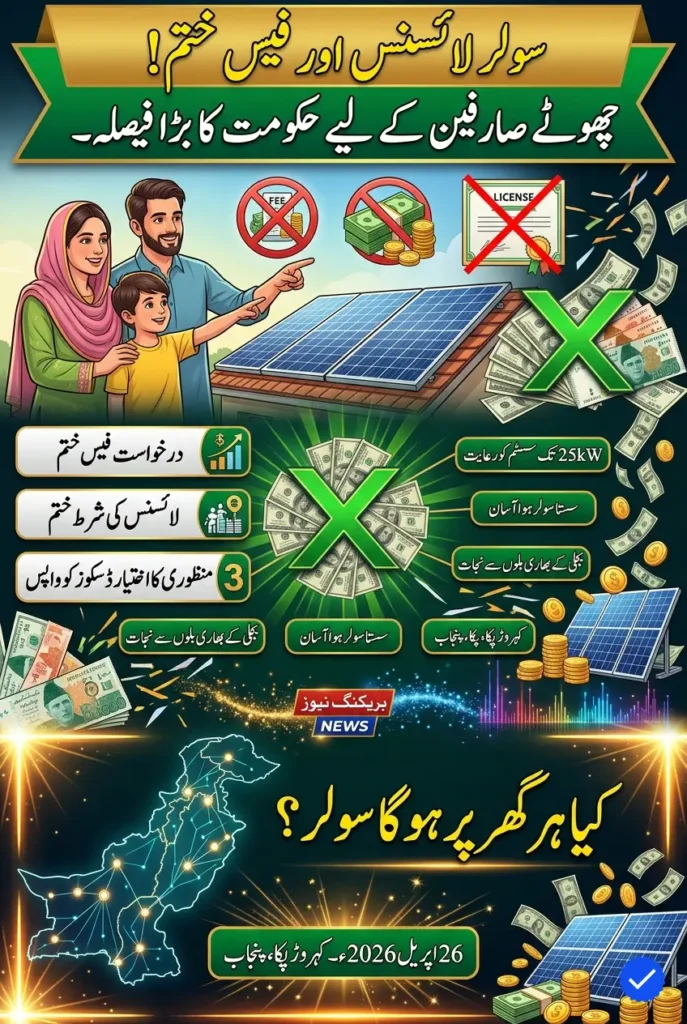
The Power Division has formally approached the National Electric Power Regulatory Authority (NEPRA) to reconsider its current policies. The request emphasizes returning to earlier, more flexible regulations that encouraged households and small businesses to install solar systems without complex procedures or additional costs.
Background: Earlier Solar-Friendly Policies
In 2015, Pakistan introduced the Distributed Generation and Net Metering Regulations, which were widely appreciated for promoting renewable energy. Under these rules, solar systems with a capacity of up to 25kW were exempt from licensing requirements. This meant that individuals could install solar panels without needing approval from NEPRA.
Instead, applications were handled directly by electricity distribution companies (DISCOs), and no application fees were charged. This streamlined process acted as a strong financial and administrative incentive for residential consumers. As a result, many households began shifting towards solar energy, reducing dependence on the national grid and lowering electricity bills.
US Delegation’s Pakistan Trip Cancelled as Iranian Foreign Minister Departs
What Changed in the New Regulations?
Recently, NEPRA introduced updated Prosumer Regulations that altered the approval process for solar installations. Under these new rules, even small-scale solar users must seek approval directly from NEPRA. Additionally, application fees were introduced, adding a financial burden to the process.
These changes raised concerns among industry experts and renewable energy advocates. Many believe that the added bureaucracy and costs could discourage potential users from adopting solar energy, particularly those in the residential sector who are most sensitive to upfront costs.
From Airports to Districts Govt Announces New Facilities for Overseas Pakistanis
Concerns from Industry Stakeholders
Several organizations within Pakistan’s renewable energy sector have voiced strong opposition to the revised regulations. Groups such as the Pakistan Solar Association and other private renewable firms argue that removing approval authority from DISCOs has created unnecessary delays.
They highlight that the earlier system was not only efficient but also encouraged faster deployment of solar solutions. By contrast, the new centralized approval process is seen as cumbersome, potentially slowing down the country’s transition toward clean energy.
Moreover, the Private Power and Infrastructure Board (PPIB) had previously warned about these issues. It recommended maintaining the earlier framework for smaller systems to ensure continued growth in the solar sector.
Pakistan Panic Buys LNG at 140% Higher Price to Keep Lights On
Government’s Proposed Solution
In response to these concerns, the Power Division has proposed reinstating the previous policy structure. This includes:
- Removing application fees for systems up to 25kW
- Eliminating licensing requirements for small users
- Returning approval authority to DISCOs
The goal is to simplify the process once again and remove barriers that could discourage adoption. If approved by NEPRA, this change could revive interest in residential solar installations and support Pakistan’s broader renewable energy targets.
Punjab Announces 175% Increase in Domicile Fee
Impact on Consumers
If the proposed changes are implemented, small-scale solar users will benefit in several ways. First, the removal of fees will reduce the upfront cost of installing solar systems. Second, eliminating licensing requirements will make the process quicker and less complicated.
This is especially important in a country like Pakistan, where rising electricity prices and frequent power outages have already pushed many consumers toward alternative energy solutions. Easier access to solar power could significantly improve energy independence for households and small businesses.
IMF Asks Pakistan to Ban Non-Filers From Importing Cars in Next Budget
Impact on the Renewable Energy Sector
The renewable energy sector is likely to see positive growth if the government reverts to its earlier policies. Simplified regulations will encourage more installations, leading to increased demand for solar equipment and services.
Additionally, faster adoption of solar energy will contribute to reducing pressure on the national grid and lowering reliance on fossil fuels. This aligns with global trends toward sustainability and climate responsibility.
NADRA Introduces Self-Service Kiosks to Transform ID Card Services
Challenges Ahead
While the proposal is promising, it still requires approval from NEPRA. Regulatory processes can take time, and there may be debates حول balancing ease of access with proper oversight.
There is also a need to ensure that quality standards are maintained, even if licensing requirements are removed. Without proper checks, there is a risk of substandard installations that could affect safety and efficiency.
Pakistan Beats US, UK and Japan in Global Outsourcing Rankings
Future Outlook
The government’s move signals a strong commitment to promoting renewable energy and supporting small-scale solar users. If implemented effectively, the revised policy could mark a turning point in Pakistan’s energy landscape.
Encouraging solar adoption at the household level not only benefits individual consumers but also contributes to national energy security. It reduces dependency on imported fuels and supports a cleaner, greener future.
Government Announces Another Sharp Increase in Petrol and Diesel Prices
FAQs
1. Is the government removing NEPRA charges for solar users?
The government has proposed removing application fees for solar systems up to 25kW, but final approval from NEPRA is still pending.
2. Will small solar users still need a license?
If the proposal is approved, licensing requirements for systems up to 25kW will be eliminated.
3. Why were the rules changed earlier?
New Prosumer Regulations shifted approval authority to NEPRA and introduced fees, aiming for more centralized control.
4. Who benefits the most from this change?
Residential consumers and small businesses will benefit the most due to reduced costs and simplified procedures.
5. What is the role of DISCOs in this proposal?
The government wants DISCOs to regain authority for processing small-scale solar applications.
Revival of Student Unions in KP A Step Toward Democratic Engagement and Youth Empowerment
Final Words
Pakistan’s push to remove NEPRA charges and licensing for small solar users reflects a broader effort to make renewable energy more accessible. By addressing industry concerns and simplifying regulations, the government aims to accelerate solar adoption and support sustainable development.
If approved, this policy shift could empower millions of Pakistanis to take control of their energy needs, reduce electricity costs, and contribute to a cleaner environment.
Revival of Student Unions in KP A Step Toward Democratic Engagement and Youth Empowerment