
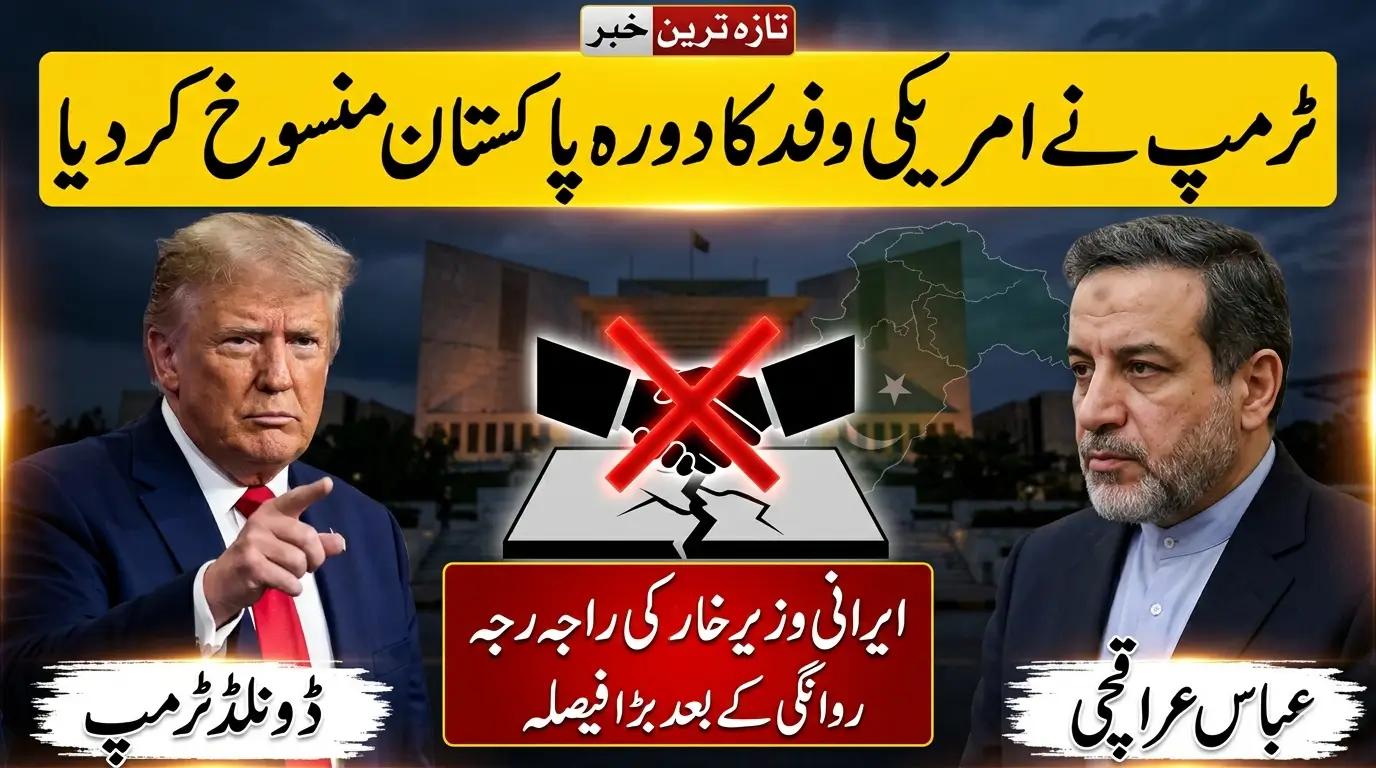
The cancellation of a planned United States delegation visit to Pakistan has underscored the fragile nature of ongoing diplomatic efforts involving Washington and Tehran. The visit, which was expected to play a role in facilitating indirect dialogue, was called off shortly after Iran’s Foreign Minister, Abbas Araghchi departed Islamabad without participating in a second round of peace talks with American officials.
Pakistan Panic Buys LNG at 140% Higher Price to Keep Lights On

During his visit, Araghchi engaged in high-level meetings with Pakistani leadership, signaling the importance of regional diplomacy. However, Iran maintained a consistent position that it was not interested in direct negotiations with the United States. This stance was reiterated publicly by Tehran, even as speculation grew about a possible diplomatic breakthrough.
Why the US Delegation Visit Was Cancelled
The situation took a decisive turn when US President Donald Trump announced that he had personally cancelled the planned visit. The delegation, which was expected to include Steve Witkoff and Jared Kushner, had initially been scheduled to travel to Pakistan as part of a broader diplomatic effort.
According to Trump, the visit would have resulted in a waste of time given the prevailing circumstances. He suggested that without clear prospects for productive engagement, there was little justification for proceeding with the trip. His decision effectively ended hopes of a second round of diplomacy linked to Pakistan, at least for the time being.
Earlier in the day, conflicting signals had emerged from Washington. The White House had indicated that the visit would go ahead, raising expectations that discussions might still take place. However, Iran’s continued insistence on avoiding direct engagement created an impasse that ultimately led to the cancellation. Araghchi’s departure without meeting American officials confirmed that no progress had been achieved.
Punjab Announces 175% Increase in Domicile Fee
Iran’s Firm Stance Against Direct Talks
Iran’s refusal to participate in direct negotiations has been a central factor in the breakdown of these diplomatic efforts. Tehran has consistently argued that current conditions are not conducive to face-to-face talks with the United States. This position reflects longstanding tensions between the two countries, including disagreements over sanctions, regional policies, and mutual trust deficits.
By maintaining this stance, Iran effectively limited the possibilities for any diplomatic breakthrough in Islamabad. Even the idea of backchannel engagement became difficult to sustain without at least a willingness from both sides to explore indirect communication. The absence of such flexibility has reinforced the perception that relations between Washington and Tehran remain deeply strained.
Pakistan’s Role as a Potential Mediator
Pakistan’s involvement in this episode highlights its ongoing efforts to act as a bridge between major global powers. Islamabad has often leveraged its strategic relationships to facilitate dialogue in complex geopolitical situations. In this case, Pakistan was seen as a neutral venue where indirect engagement between the United States and Iran could potentially take place.
However, the recent developments demonstrate the limitations of such efforts. While Pakistan can provide a platform for dialogue, it cannot compel parties to engage if they are unwilling to do so. The failure of these talks does not diminish Pakistan’s diplomatic relevance, but it does illustrate the challenges faced by countries attempting to mediate between deeply divided adversaries.
IMF Asks Pakistan to Ban Non-Filers From Importing Cars in Next Budget
Broader Regional Implications
The cancellation of the US delegation’s visit carries implications that extend beyond bilateral relations. Tensions between the United States and Iran have historically influenced stability across the Middle East and South Asia. Any deterioration in relations can have ripple effects, impacting economic conditions, security dynamics, and political alignments in the region.
For Pakistan, the situation adds another layer of complexity to its foreign policy. The country must balance its relationships with both Washington and Tehran while also addressing its own domestic challenges. Increased regional uncertainty could place additional pressure on policymakers as they navigate an increasingly volatile environment.
The Future of Diplomatic Engagement
Despite the current setback, the possibility of future diplomatic engagement cannot be entirely dismissed. International relations are often shaped by changing circumstances, and new opportunities for dialogue may emerge over time. However, meaningful progress will require a shift in approach from both the United States and Iran.
At present, the lack of trust and unwillingness to compromise remain significant barriers. Observers will continue to monitor developments closely, particularly any signals that indicate a willingness to re-engage. Until then, efforts like those seen in Islamabad are likely to remain on hold.
NADRA Introduces Self-Service Kiosks to Transform ID Card Services
FAQs
Why was the US delegation’s visit to Pakistan cancelled?
The visit was cancelled by Donald Trump, who believed it would not be productive due to Iran’s refusal to engage in talks.
Who were expected to be part of the US delegation?
The delegation was expected to include Steve Witkoff and Jared Kushner.
Why did Iran refuse to meet US officials?
Iran maintained that it was not interested in direct negotiations with the United States under current conditions.
What role was Pakistan expected to play?
Pakistan was seen as a neutral venue for potential backchannel diplomacy between the US and Iran.
What impact could this development have on the region?
The situation may increase tensions and uncertainty in both the Middle East and South Asia.
Final Words
The cancellation of the US delegation’s visit and the lack of progress during the Iranian foreign minister’s trip reflect the uncertain state of global diplomacy. Pakistan’s efforts to facilitate dialogue have encountered a temporary setback, but its strategic importance ensures it remains a key player in regional affairs. Future diplomatic breakthroughs will depend largely on the willingness of major powers to move beyond rigid positions and engage in constructive dialogue.
Pakistan Beats US, UK and Japan in Global Outsourcing Rankings