
Pakistan Rupee Overvalued
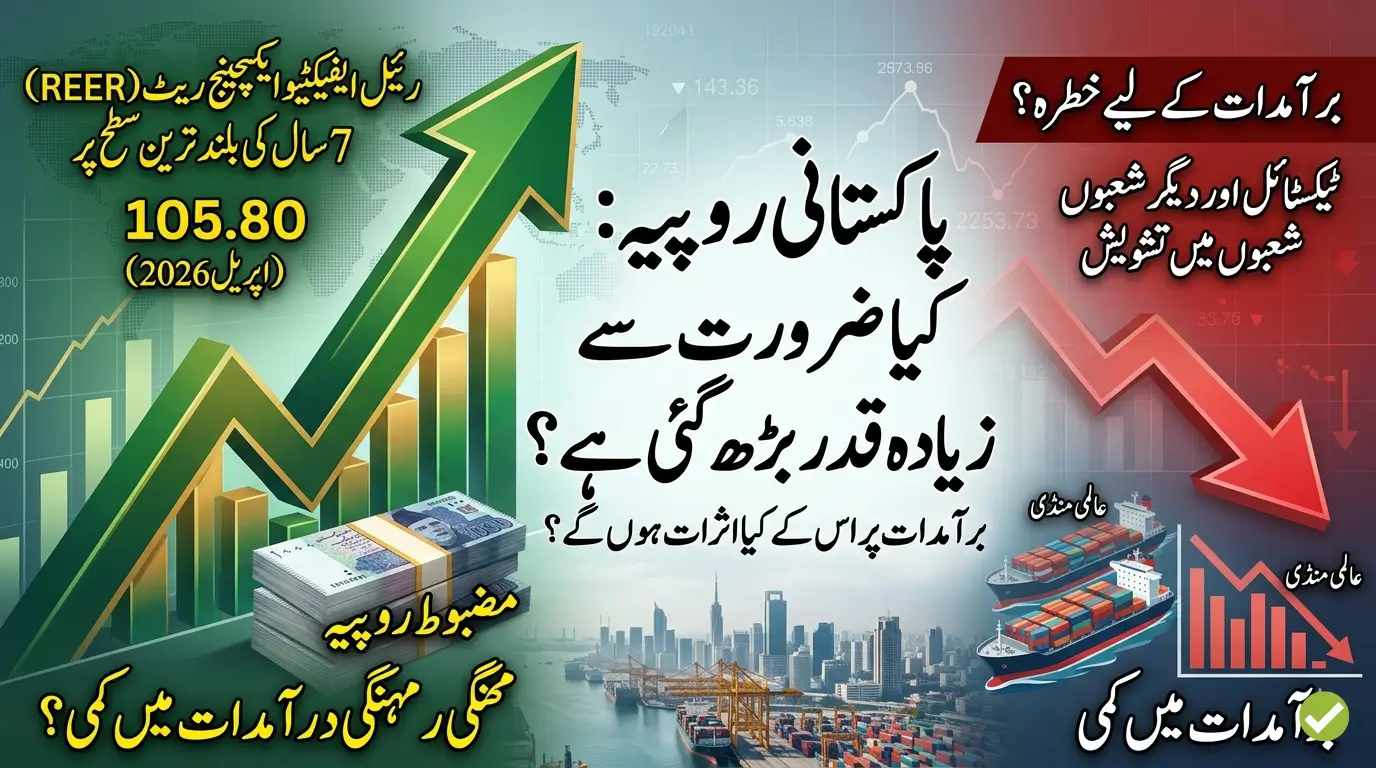
Pakistan’s Real Effective Exchange Rate (REER) reached 105.80 in April 2026, marking its highest level in seven years. According to financial data released by the State Bank of Pakistan and market analysts, the figure increased from 104.29 in March 2026, showing a continued rise in the rupee’s inflation-adjusted value. This increase has created concerns about Pakistan’s export performance in global markets.
Pakistan’s Current Account Deficit Worsens by 2,600% in April
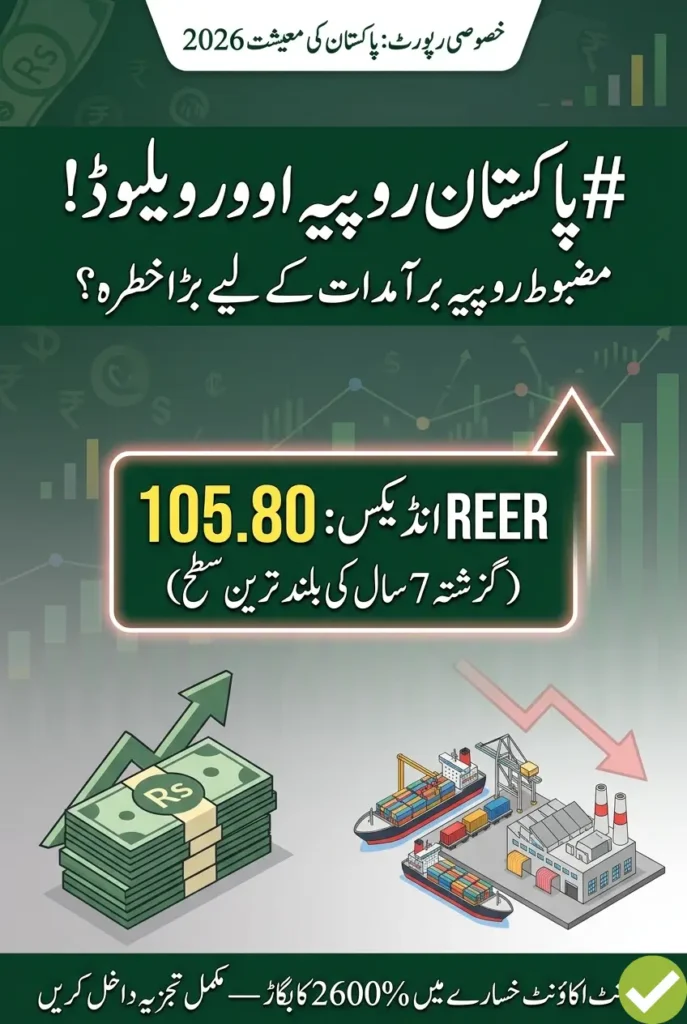
The Pakistan Rupee Overvalued 2026 situation means the rupee is becoming stronger compared to the currencies of major trading partners. While a stable currency may look positive at first, economists warn that an overly strong rupee can make Pakistani exports more expensive for international buyers, reducing competitiveness.
Understanding What REER Means
The Real Effective Exchange Rate (REER) is a financial indicator used to measure the value of a country’s currency compared to the currencies of its major trading partners after adjusting for inflation. A REER level above 100 generally shows that a country’s currency is relatively stronger than average.
Pakistan’s latest REER figure of 105.80 suggests that the rupee is now stronger than its historical benchmark. Experts say this may create difficulties for exporters because foreign buyers may find Pakistani goods more expensive compared to products from competing countries.
Why an Overvalued Rupee Can Hurt Exports
A stronger rupee may reduce export competitiveness because Pakistani products become costlier in international markets. Countries competing with Pakistan in textiles, agriculture, and manufacturing often benefit from weaker currencies that make exports cheaper and more attractive to buyers.
When exports become expensive, international demand may decline, affecting industries that depend heavily on foreign sales. Pakistan’s textile sector, one of the country’s largest export industries, may particularly feel pressure if export costs continue increasing.
Govt Readies Next-Level Math to Increase Then Decrease Electricity Prices
Rupee’s Steady Rise Since 2023
Data shows that Pakistan’s REER has steadily increased over the past two years after reaching lows near 86 in early 2023. Since then, the rupee’s inflation-adjusted value has gradually strengthened, eventually reaching the highest point since 2018.
The latest reading also stands above Pakistan’s 10-year average of 102.68, suggesting the rupee may currently be stronger than what economists consider balanced for export growth. This trend has increased debate about whether exchange rate adjustments may be needed.
Positive Effects of a Strong Rupee
Although a stronger currency may create challenges for exporters, it can also offer some benefits to the economy. One major advantage is reduced imported inflation because imported goods, fuel, and raw materials may become relatively cheaper.
Lower import costs may help reduce pressure on inflation and stabilize prices for some products. Businesses relying on imported machinery or industrial inputs may also benefit from lower expenses due to a stronger currency.
Risks for Pakistan’s Economy
Despite some advantages, an overvalued rupee may increase pressure on Pakistan’s external accounts if exports weaken while imports remain high. Lower export earnings could affect foreign exchange reserves and trade balance performance.
Economists often warn that maintaining a currency that is too strong for too long can create long-term economic risks. If export growth slows significantly, Pakistan may face difficulties maintaining economic stability and improving foreign exchange earnings.\
Govt Praises Itself for Shielding Public From Costly Electricity During US-Iran War
What Experts May Watch Next
Financial analysts are expected to closely monitor future movements in Pakistan’s REER and export performance. Policymakers may need to balance inflation control with the need to maintain export competitiveness in global markets.
Future economic decisions may depend on trade performance, inflation levels, and international market conditions. Authorities will likely continue reviewing exchange rate policies to support both economic stability and export growth.
FAQs
1. What is REER?
REER stands for Real Effective Exchange Rate, which measures currency strength after adjusting for inflation.
2. What is Pakistan’s current REER level?
Pakistan’s REER reached 105.80 in April 2026, the highest level in seven years.
3. Why is a strong rupee hurting exports?
A stronger rupee makes Pakistani products more expensive in international markets.
4. Does a strong rupee have benefits?
Yes, it may reduce imported inflation and lower costs of imported goods.
5. Why are economists concerned?
Experts worry that weaker exports may increase pressure on Pakistan’s economy and trade balance.
Final Word
The Pakistan Rupee Overvalued 2026 debate highlights the challenges of balancing currency stability with export competitiveness. While a stronger rupee may reduce inflation and lower import costs, it can also make Pakistani exports less attractive globally. As Pakistan works to improve economic performance, policymakers may need to carefully manage exchange rate trends to protect both exporters and economic stability.
Schools Directed to Remove Controversial O Level Book