
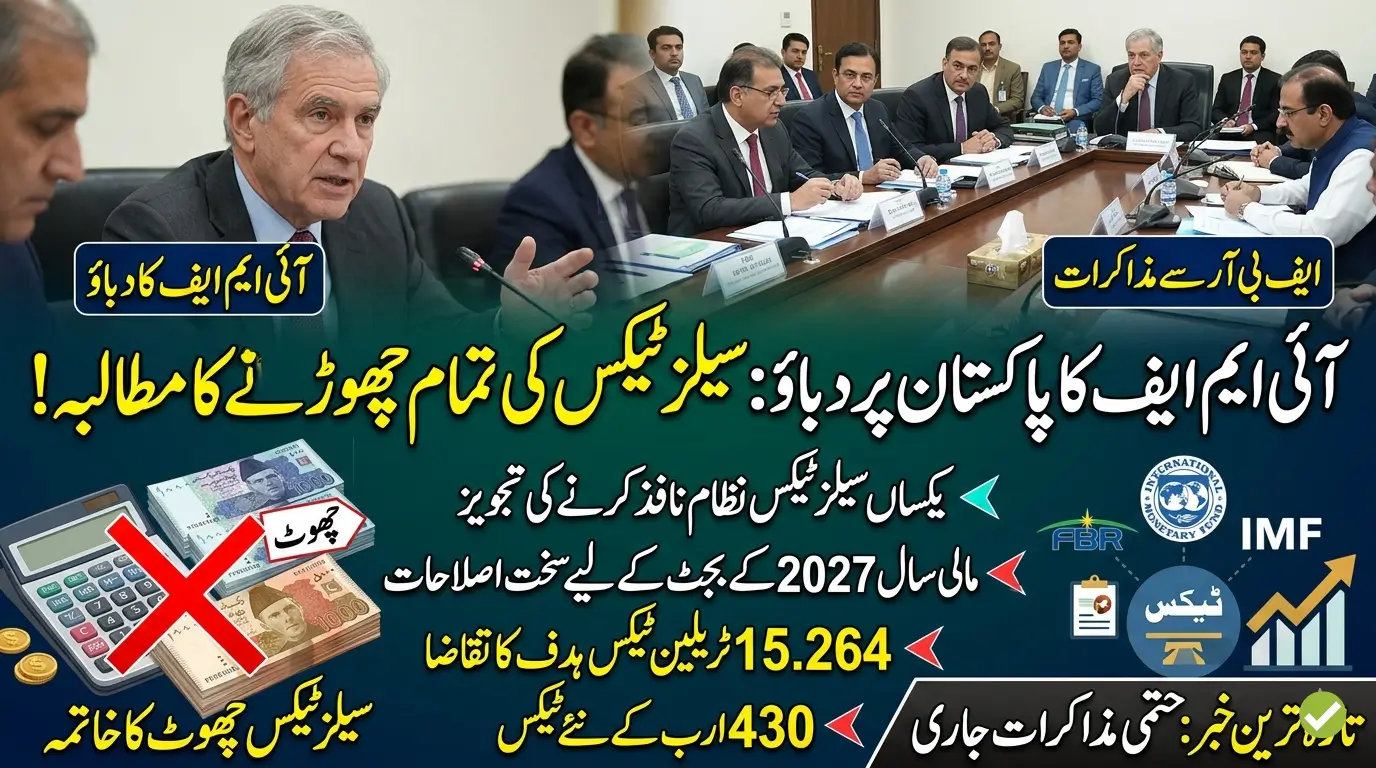
IMF Pushes Pakistan to End
The International Monetary Fund (IMF) has reportedly asked Pakistan to abolish all sales tax exemptions and adopt a uniform sales tax system as part of fiscal reforms for the upcoming budget. These discussions are taking place during ongoing negotiations between the IMF mission and the Federal Board of Revenue (FBR). The proposed reforms are aimed at increasing government revenue and improving Pakistan’s financial stability.
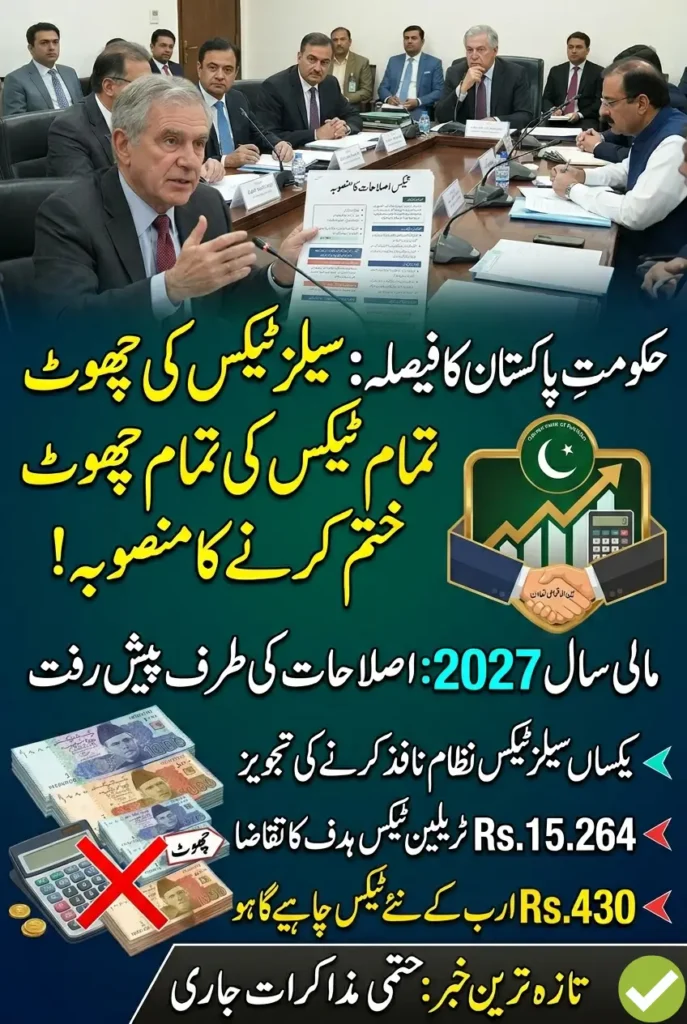
According to reports, the IMF believes Pakistan’s current tax structure is too complex because different sectors receive special exemptions and tax relief. The Fund reportedly wants all industries and businesses to follow one standard tax system to improve transparency and fairness in taxation. Officials believe this approach may help reduce tax leakages and improve collection.
Final Budget Talks Between IMF and FBR
The discussions between Pakistan and the IMF have entered the final stage as officials work to finalize budget targets for the fiscal year 2027. Reports suggest that multiple meetings have already taken place between IMF representatives and FBR officials regarding taxation reforms and revenue goals. Both sides are reportedly discussing strategies to strengthen Pakistan’s financial position.
One major issue in these discussions is the country’s tax collection target. The IMF is reportedly insisting on a collection target of around Rs. 15.264 trillion for FY2027, while Pakistani officials are trying to negotiate a slightly lower target. Authorities believe achieving such a large target may become difficult without major tax reforms and improved enforcement.
Additional Taxes and Stronger Enforcement
Apart from ending tax exemptions, the IMF is reportedly asking Pakistan to generate Rs. 430 billion in new taxes during the next fiscal year. In addition, the government may also be required to implement Rs. 778 billion in enforcement-related revenue measures. These actions are aimed at improving tax collection and reducing tax evasion.
The Federal Board of Revenue is expected to identify sectors where new taxation measures may be introduced. Officials may target industries that currently pay lower taxes or receive exemptions. Authorities believe expanding the tax base could improve financial discipline and help Pakistan meet economic reform commitments.
Uniform Sales Tax System Under Consideration
One of the key proposals being discussed is replacing different tax rates with a uniform sales tax system. The IMF reportedly wants Pakistan to end preferential treatment given to certain industries and instead apply the same tax structure across all sectors. Officials believe this could create a fairer taxation environment.
Reports suggest the IMF has proposed reducing the higher sales tax rate from 22.8 percent to 18 percent. However, this reduction would come with the removal of exemptions currently available to different sectors. This means businesses benefiting from lower taxes today may eventually pay standard tax rates.
Industries Could Face Financial Pressure
If tax exemptions are removed, many industries may experience financial pressure because they would lose special tax benefits. Businesses in sectors currently enjoying reduced tax rates may face higher operational costs. Some companies may need to revise pricing structures or reduce expenses to adjust to the new system.
Industries that heavily depend on tax relief could particularly feel the impact of these reforms. Manufacturers, retailers, and service providers may need to make financial changes if exemptions are completely abolished. Business groups may also push the government to introduce reforms gradually instead of immediately.
Consumers May Feel Indirect Effects
Ordinary consumers could also feel the impact if businesses transfer additional costs into product prices. When taxes increase, companies often pass higher expenses to customers through more expensive goods and services. This may create additional financial pressure on households already dealing with inflation.
However, supporters of tax reform argue that a fair tax system may improve economic stability in the long run. Better tax collection may help the government improve public spending and reduce dependence on loans. The challenge will be balancing revenue growth with affordability for citizens.
Government and IMF Reach Broad Understanding
Reports suggest that Pakistan and the IMF have broadly agreed to maintain the tax-to-GDP ratio at around 11.2 percent during FY2027. This ratio measures how much tax revenue the government collects compared to the country’s total economic output. Improving this ratio is considered important for economic sustainability.
Pakistan has historically struggled with low tax collection compared to the size of its economy. Authorities believe stronger enforcement and broader taxation may help improve financial performance. However, economists warn that aggressive tax policies could also slow economic activity if not implemented carefully.
Importance of Fiscal Discipline
The IMF reportedly wants Pakistan to continue fiscal reforms to reduce financial deficits and improve long-term stability. Authorities are under pressure to maintain financial discipline while also supporting economic growth. Stronger tax collection is being seen as one of the most important tools for achieving these goals.
The government may also need to avoid policies that weaken existing reform commitments under IMF agreements. Officials believe successful reforms could improve investor confidence and reduce economic uncertainty over time.
Resistance from Businesses Possible
Ending all tax exemptions may not be easy because some industries strongly depend on special tax benefits. Businesses benefiting from reduced taxes may resist reforms and argue that higher taxation could hurt profits and investment opportunities. Authorities may face pressure from different sectors during implementation.
Experts believe policymakers may need to introduce gradual reforms to avoid economic disruption. Sudden tax changes may create uncertainty in markets and affect industrial growth. Proper planning and consultation may help reduce resistance.
Need for Strong Monitoring System
A stronger monitoring and enforcement system may also be required to ensure successful implementation. Without effective tax administration, ending exemptions alone may not significantly improve revenue collection. Authorities may need digital systems and better coordination to identify tax evasion.
The FBR is reportedly working to improve enforcement through better tax tracking and coordination with provincial authorities. These efforts may help improve transparency and expand the country’s tax base.
FAQs
1. Why does the IMF want Pakistan to remove sales tax exemptions?
The IMF believes removing exemptions may improve tax collection and create a fairer taxation system.
2. What is the proposed tax target for FY2027?
The IMF reportedly wants Pakistan to collect around Rs. 15.264 trillion in taxes.
3. Will new taxes be introduced?
Yes, reports suggest around Rs. 430 billion in new taxes may be introduced.
4. What sales tax rate is being discussed?
The IMF has reportedly proposed reducing the higher tax rate from 22.8 percent to 18 percent while removing exemptions.
5. How may citizens be affected?
Consumers may experience higher prices if businesses transfer additional tax costs into products and services.
Final Word
The IMF Sales Tax Exemptions Pakistan proposal could become one of the biggest tax reforms in recent years. By ending exemptions and introducing a uniform sales tax system, the government hopes to improve revenue collection and strengthen economic stability. However, businesses and consumers may also face challenges if reforms increase operational costs and inflation. The success of these changes will largely depend on balanced implementation, strong monitoring, and policies that protect economic growth while meeting IMF commitments.