

Pakistan continues to face mounting economic pressure as the federal government has once again increased fuel prices, adding further strain on already burdened citizens. The latest decision has sparked concern across the country, as fuel costs directly impact nearly every aspect of daily life, from transportation to basic commodities.
Usman Khan Creates PSL History With Record Fourth Century
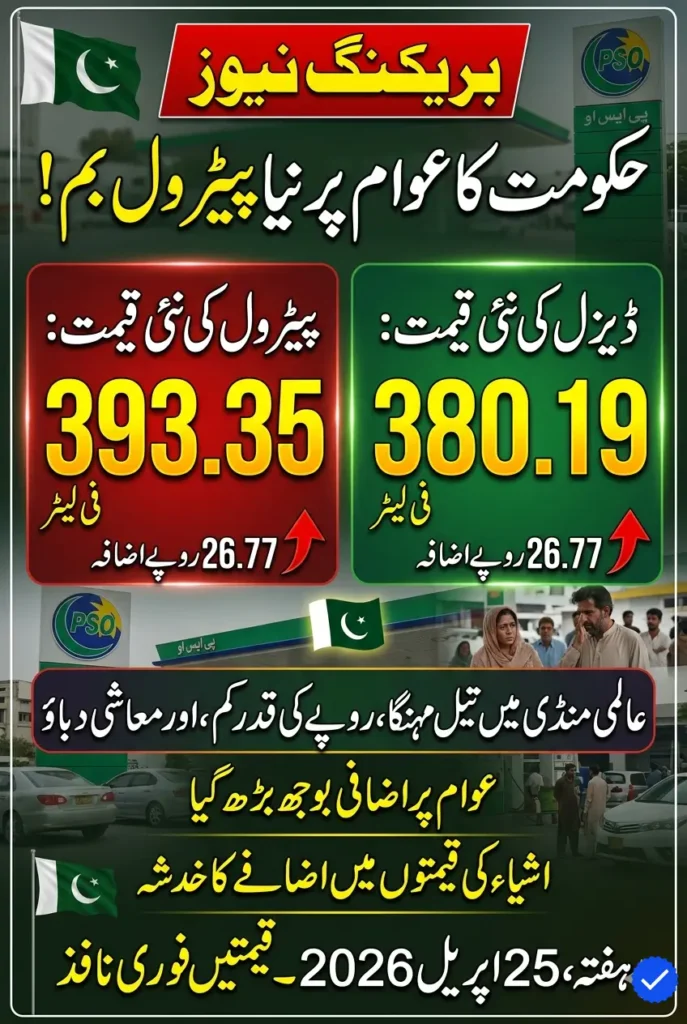
How Much Have Prices Increased?
According to the latest notification, the government has increased both petrol and high-speed diesel prices by Rs. 26.77 per litre. Following this hike, the updated fuel prices are:
- Diesel: Rs. 380.19 per litre
- Petrol: Rs. 393.35 per litre
These new rates came into effect immediately on Saturday, April 25, 2026, leaving little time for consumers to prepare for the financial impact.
Reasons Behind the Price Hike
While the government has not provided a detailed breakdown, several key factors are believed to be responsible for this increase. One of the primary reasons is the rise in global oil prices. Since Pakistan relies heavily on imported fuel, fluctuations in international markets significantly affect local prices.
Additionally, the depreciation of the Pakistani rupee against the US dollar has made imports more expensive. Increased freight and insurance costs also contribute to the overall price escalation. Economic reforms and commitments to international lenders, including reducing subsidies, are further influencing such decisions.
Zong Leads Pakistan’s Mobile Network Performance in 2026 Report
A Contrast With Last Week
Interestingly, just a week ago, the government had reduced diesel prices by Rs. 32.12 per litre while keeping petrol prices unchanged at Rs. 366.58 per litre. That move offered temporary relief to consumers, but the latest increase has effectively reversed those benefits, putting people back under financial pressure.
Impact on the General Public
Fuel price increases have a ripple effect throughout the economy. Higher petrol and diesel costs lead to increased transportation fares, making commuting more expensive for the average citizen. Goods transportation also becomes costlier, which results in rising prices of essential items such as food and household supplies.
Farmers are also affected, as the cost of operating agricultural machinery rises. This can lead to higher production costs and, ultimately, more expensive agricultural products in the market.
Challenges for Businesses
The business community is equally impacted by rising fuel prices. Manufacturing costs increase due to higher energy and transportation expenses. As a result, businesses are often forced to raise product prices, contributing to inflation.
Small and medium enterprises are particularly vulnerable, as they typically operate on limited budgets and may struggle to absorb the additional costs.
No Market Breakdown Seen Despite PSX Decline During US-Iran War SECP
Government’s Position
The government maintains that the price hike is necessary to manage the country’s economic challenges. Officials argue that without adjusting fuel prices, the fiscal deficit could widen further, creating more severe financial instability.
However, public opinion largely disagrees. Many citizens believe the government should explore alternative solutions rather than repeatedly increasing fuel prices and transferring the burden to the public.
What Lies Ahead?
Experts warn that if global oil prices continue to rise and the Pakistani rupee remains weak, fuel prices could increase even further in the coming weeks. Continued adherence to international financial agreements may also limit the government’s ability to provide subsidies.
This suggests that consumers may need to prepare for continued volatility in fuel pricing.
Possible Solutions
To address the ongoing crisis, the government needs to adopt long-term strategies. Promoting renewable energy sources such as solar and wind power could help reduce reliance on imported fuel. Improving public transportation systems could also lower overall fuel consumption.
Encouraging energy efficiency and investing in local energy resources may provide more sustainable solutions over time.
New Survey Exposes Major Cybersecurity Issues in Pakistani
Public Reaction
The announcement has triggered strong reactions on social media and in public discussions. Many people have expressed frustration and anger, calling the decision unfair and difficult to bear, especially amid already high inflation.
For many households, managing daily expenses is becoming increasingly challenging, and further increases in fuel prices only add to their struggles.
FAQs
How much have petrol and diesel prices increased?
The government has increased both petrol and diesel prices by Rs. 26.77 per litre.
What are the new fuel prices?
Diesel is now priced at Rs. 380.19 per litre, while petrol costs Rs. 393.35 per litre.
When did the new prices come into effect?
The new prices were implemented immediately on April 25, 2026.
Why did the government increase fuel prices?
The increase is mainly due to rising global oil prices, currency depreciation, and higher import costs.
How will this affect the public?
It will lead to higher transportation costs, increased prices of goods, and overall inflation.
Karachi Kings Keep Playoff Hopes Alive with Stunning Win
Final Words
The recent surge in petrol and diesel prices adds another layer of difficulty to Pakistan’s economic challenges. While the government considers it a necessary step, the burden on citizens continues to grow. Moving forward, it is crucial for policymakers to focus on sustainable and long-term solutions that can provide real relief to the public instead of temporary fixes that deepen economic hardship.