

The recent announcement by the Khyber Pakhtunkhwa (KP) government regarding the possible revival of student unions has sparked widespread discussion across academic and political circles. Chief Minister Mohammad Sohail Afridi’s remarks during a labour department meeting indicate a renewed commitment to empowering youth and strengthening democratic values within educational institutions. This move, if implemented effectively, could mark a significant turning point in the province’s educational and political landscape.
Government Announces Another Sharp Increase in Petrol and Diesel
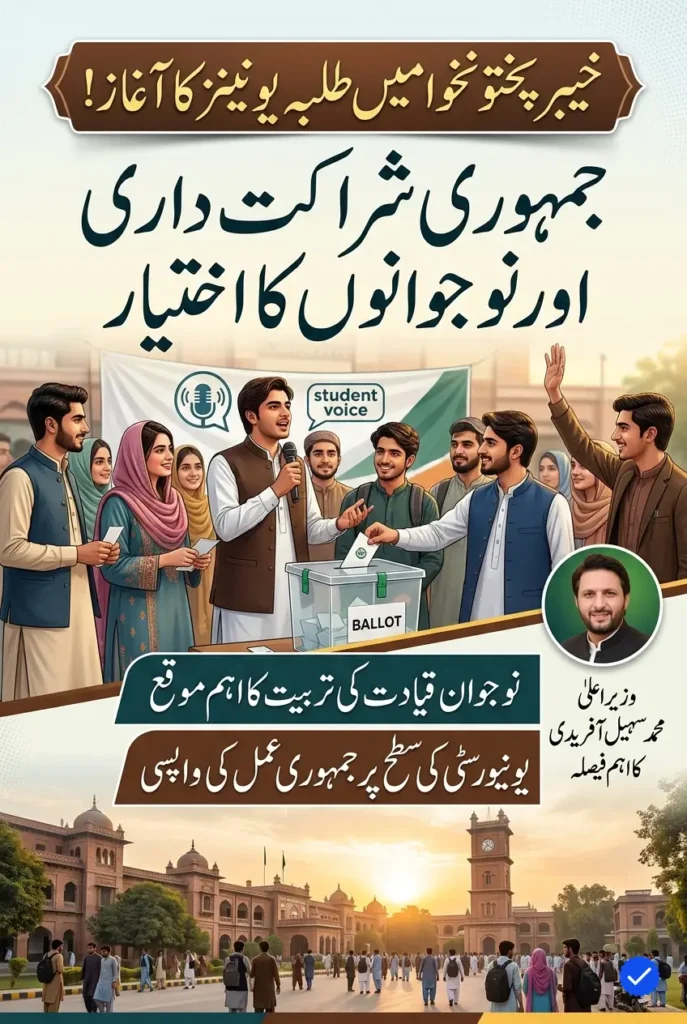
Student unions have historically played a crucial role in nurturing leadership, encouraging civic responsibility, and providing students with a platform to voice their concerns. Their absence over the past decades has created a noticeable gap in student representation and democratic participation. The KP government’s initiative aims to address this gap by reintroducing structured student bodies under a regulated framework.
The Importance of Student Unions
Student unions are not merely political platforms; they are training grounds for future leaders. Through participation in union activities, students learn essential skills such as negotiation, public speaking, organization, and conflict resolution. These experiences contribute significantly to personal development and prepare young individuals for active roles in society.
Moreover, student unions serve as a bridge between students and university administrations. They provide a formal channel through which students can raise issues related to academics, facilities, and campus life. This helps create a more responsive and accountable educational environment.
In democratic societies, early exposure to participatory systems is vital. By engaging in elections and debates within student unions, young people gain firsthand experience of democratic processes. This fosters a culture of tolerance, dialogue, and respect for differing opinions—values that are essential for a stable and progressive society.
Usman Khan Creates PSL History With Record Fourth Century
Government’s Approach to Revival
The KP government appears to be taking a cautious and structured approach toward the restoration of student unions. A dedicated committee has been formed to develop recommendations, ensuring that all stakeholders—including students, educators, and policymakers—are consulted.
One of the key aspects under consideration is the formulation of a comprehensive code of conduct. This is particularly important given the historical concerns associated with student unions, such as political interference and campus violence. By establishing clear rules and accountability mechanisms, the government aims to create a balanced system that promotes constructive engagement while minimizing risks.
Additionally, plans are underway to introduce formal legislation that will define the structure, roles, and responsibilities of student unions. This legal framework will be crucial in ensuring transparency, consistency, and long-term sustainability.
Zong Leads Pakistan’s Mobile Network Performance in 2026 Report
Addressing Past Challenges
The suspension of student unions in Pakistan was largely due to concerns about unrest and the politicization of campuses. Critics often argue that unions can become tools for external political agendas, leading to instability rather than constructive dialogue.
The KP government’s current strategy acknowledges these concerns and seeks to address them proactively. The proposed code of conduct is expected to include strict guidelines on behavior, limitations on political affiliations, and mechanisms for conflict resolution. The goal is to ensure that unions remain focused on student welfare and leadership development rather than partisan politics.
Another important factor is institutional oversight. Universities and colleges will likely play a more active role in monitoring union activities, ensuring compliance with regulations while maintaining student autonomy.
Link to Broader Reforms
The discussion on student unions took place during a meeting primarily focused on labour welfare reforms, highlighting the government’s broader agenda of institutional development and social progress. Initiatives such as strengthening the social security registration system and enforcing minimum wage laws demonstrate a commitment to improving the lives of workers across the province.
The connection between youth engagement and labour reforms is significant. By empowering students today, the government is essentially investing in a more informed and capable workforce for the future. Leadership skills developed through student unions can translate into more effective participation in professional and civic life.
Furthermore, the government’s plans to expand labour courts and provide residential facilities for workers indicate a holistic approach to governance. These measures, combined with educational reforms, reflect an effort to build a more inclusive and equitable society.
No Market Breakdown Seen Despite PSX Decline During US-Iran War SECP
Potential Impact on Society
If implemented successfully, the revival of student unions could have far-reaching effects. It could lead to a more politically aware and socially responsible youth population. Students would have the opportunity to engage in meaningful dialogue, advocate for their rights, and contribute to policy discussions.
This initiative could also help reduce the disconnect between young people and the political system. By providing a platform for participation, the government can foster trust and encourage constructive engagement rather than apathy or frustration.
In the long term, the presence of active student unions could contribute to stronger democratic institutions. Many prominent leaders around the world began their journeys in student politics, and reviving these platforms could help identify and nurture future leaders in Pakistan.
Challenges Ahead
Despite its potential benefits, the revival of student unions is not without challenges. Ensuring discipline and preventing misuse of power will require continuous monitoring and enforcement of rules. Balancing freedom of expression with institutional order is another critical issue.
There is also the question of inclusivity. Efforts must be made to ensure that student unions represent diverse voices, including those from marginalized communities. Equal participation will be key to the success and legitimacy of these bodies.
Additionally, building trust among stakeholders—especially parents and educational institutions—will be essential. Transparent processes and clear communication can help alleviate concerns and build confidence in the system.
Pakistan Returns $3.45 Billion to UAE A Detailed Analysis of Economic Impact
FAQs
1. Why were student unions banned in the first place?
Student unions were banned due to concerns about campus violence, political interference, and disruption of academic activities.
2. What is the main goal of reviving student unions in KP?
The primary goal is to promote democratic participation, develop leadership skills, and provide students with a platform to voice their concerns.
3. How will the government prevent misuse of student unions?
The government plans to introduce a strict code of conduct and a legal framework to regulate union activities and ensure accountability.
4. Will student unions be allowed to engage in politics?
While some level of political awareness is expected, the focus will likely remain on student welfare and leadership development, with restrictions on external political influence.
5. What role will educational institutions play?
Universities and colleges will oversee union activities, ensuring compliance with rules while supporting student engagement.
Final Word
The revival of student unions in KP is more than just a policy decision—it is an investment in the future of the province. By empowering students today, the government is laying the foundation for a more democratic, inclusive, and progressive society tomorrow.
New Survey Exposes Major Cybersecurity Issues in Pakistani