
Everything Pakistan
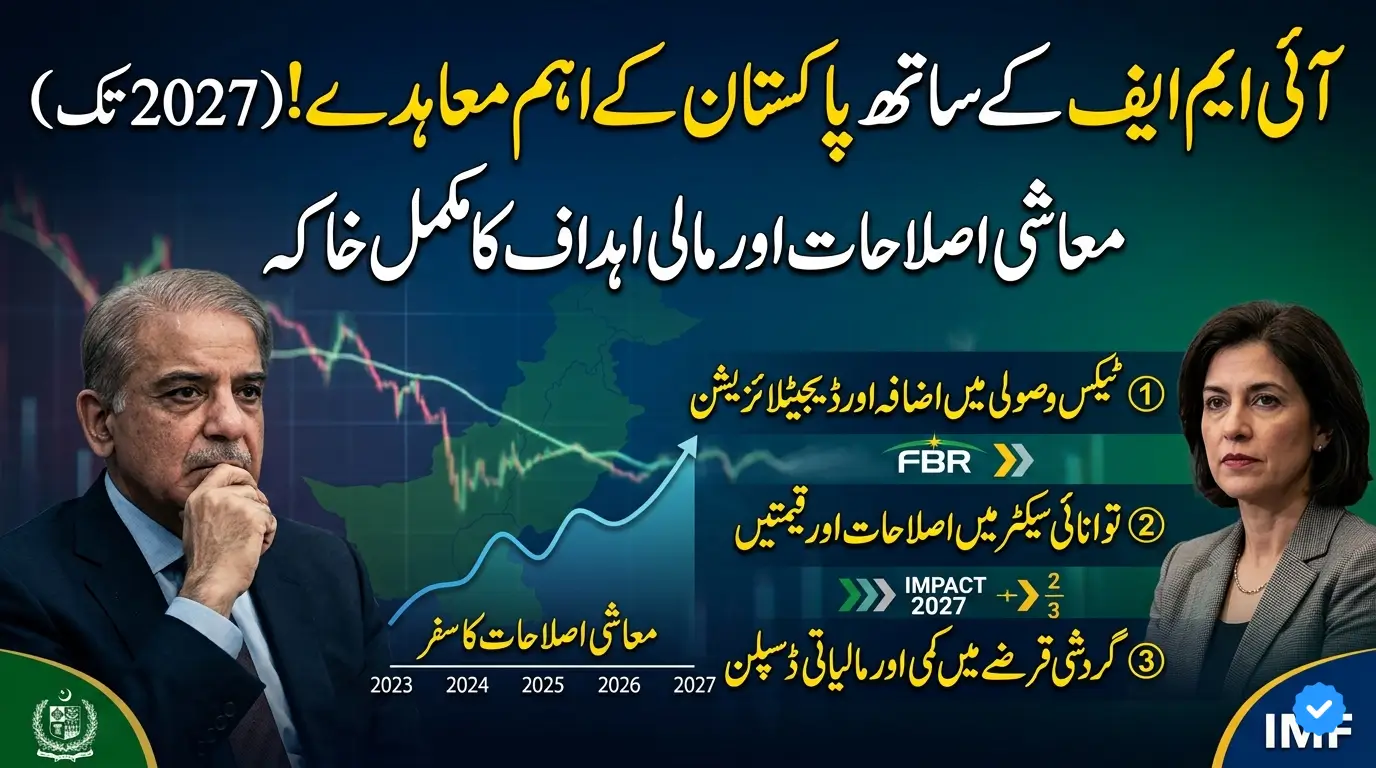
Pakistan and the International Monetary Fund (IMF) have agreed on a new set of economic reforms and financial targets extending until 2027. These commitments are part of Pakistan’s ongoing IMF program aimed at improving financial discipline, increasing tax collection, and stabilizing the country’s economy. The IMF has reportedly asked Pakistan to maintain strict fiscal policies and continue reforms across multiple sectors.
Pakistan Rupee Overvalued 2026 How a Strong Rupee Is Affecting Exports
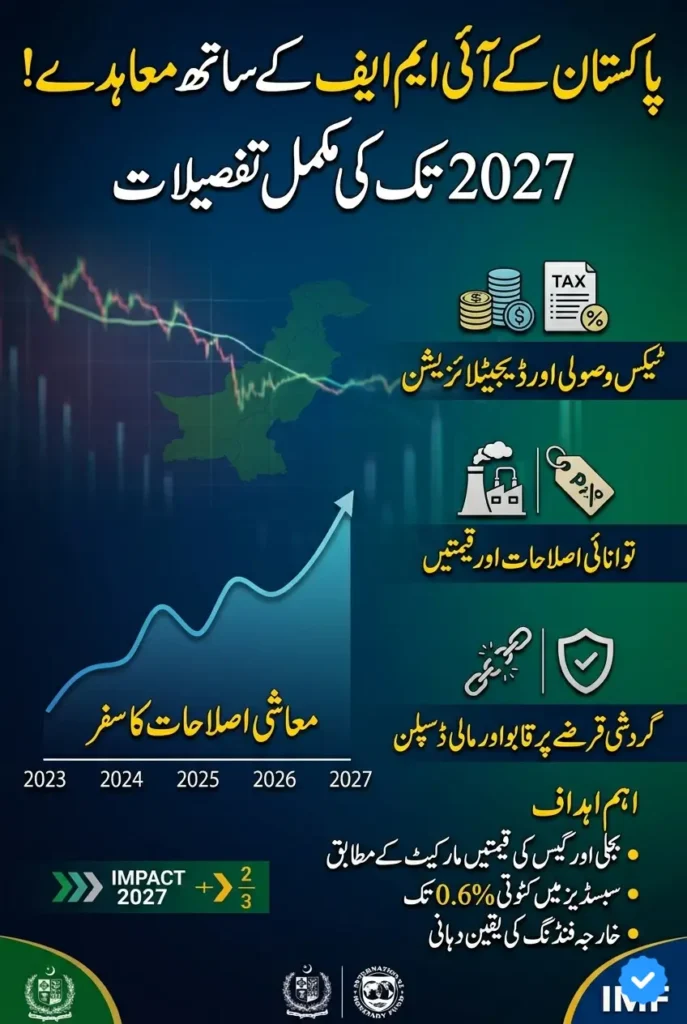
The Pakistan IMF Commitments 2027 framework mainly focuses on taxation, energy reforms, inflation control, and external financing stability. Officials believe these measures are necessary to improve Pakistan’s economic position, strengthen foreign reserves, and reduce financial uncertainty in the coming years.
FBR Given Tougher Responsibilities
One of Pakistan’s biggest commitments to the IMF involves improving tax collection through the Federal Board of Revenue (FBR). Reports suggest the IMF is concerned about repeated tax collection shortfalls and wants stronger enforcement measures to improve performance. Authorities are now expected to work more aggressively to meet revenue targets.
The IMF has reportedly proposed giving FBR tax targets the status of Quantitative Performance Criteria, meaning Pakistan may face stricter monitoring if targets are not achieved. This pressure may result in broader taxation policies, stronger audits, and more measures to expand the country’s tax base.
Digital Tax System and Audit Reforms
Pakistan has also promised to modernize tax administration through digital systems and better monitoring tools. Authorities are reportedly expanding digital invoicing systems, which may eventually become mandatory to improve tax transparency and reduce evasion. Technology is expected to play a major role in future tax collection.
In addition, Pakistan plans to finalize a new audit policy and audit manual by August 2026. Taxpayer audit cases are expected to be selected through centralized systems to improve fairness and efficiency. The IMF believes the impact of these reforms may become more visible during FY2027.
Crypto Investment Bonds for Overseas Pakistanis
Tougher Rules May Be Introduced
The IMF has reportedly encouraged Pakistan to speed up the Retailer Tax Registration Scheme and place restrictions on certain high-value transactions for non-filers. These measures are aimed at increasing documentation of the economy and encouraging more people to enter the formal tax system.
Authorities believe tighter controls may help improve compliance and reduce tax evasion. Future reforms may also include stronger penalties for individuals and businesses avoiding tax registration. Officials are expected to consult stakeholders before implementing major tax-related changes.
Tax Policy Office to Become Operational
Pakistan has also committed to making the Tax Policy Office fully operational by May 2026. This office is expected to help improve future tax planning and support policymaking through better analysis and coordination.
The government hopes this office will help create fairer and more effective taxation policies. Experts believe stronger tax institutions may improve long-term revenue performance and reduce dependency on temporary tax measures.
Electricity and Gas Prices to Follow Market Costs
The IMF has repeatedly emphasized the need for financial sustainability in Pakistan’s energy sector. Under current commitments, Pakistan will continue implementing automatic electricity and gas tariff adjustments to reflect actual market costs and reduce financial losses.
Authorities are expected to regularly revise utility prices instead of delaying adjustments. Since March 2026, Pakistan has also introduced a weekly fuel price adjustment system for petroleum products. This means fuel prices may continue changing according to international market conditions.
Pakistan Solar Adoption 2026 96% of Solar Systems Self-Financed by Consumers
Changes in Tariff System
Under the revised framework, Nepra’s annual electricity rebasing exercise will reportedly shift from July to January, while Ogra will revise gas tariffs twice each year. These changes are aimed at improving financial management within the energy sector.
The IMF noted that industrial electricity tariffs have been reduced to support businesses, while fixed charges for residential consumers have increased. However, low-income consumers classified as lifeline users will continue receiving exemptions from certain fuel surcharges.
Pakistan Must Control Circular Debt
Pakistan has also promised to reduce financial pressure in the power sector by controlling circular debt growth. According to reports, the government has committed to limiting circular debt increases to Rs. 300 billion by FY2027 to avoid further financial instability.
The IMF believes reducing debt in the energy sector is important for long-term sustainability. Authorities are expected to improve bill recovery systems, reduce theft, and strengthen energy sector management to achieve this goal.
Reduction in Government Subsidies
Pakistan has also committed to reducing power sector subsidies from 0.7 percent of GDP to 0.6 percent by FY2027. This means the government may gradually reduce financial support in some areas to lower budget pressure.
At the same time, authorities are continuing efforts to privatize electricity distribution companies and increase private sector involvement in energy generation. However, some projects may still face delays because of technical and political challenges.
Pakistan New Taxes Budget 2027 Pakistanis May Face Over Rs. 1.1 Trillion in New Taxes
Pakistan Secures Financing Assurances
The IMF has reportedly confirmed that Pakistan secured 12 months of financing assurances to support its external financial program. These assurances are considered important for maintaining economic confidence and supporting foreign reserve stability.
However, experts believe Pakistan must continue implementing reforms carefully to maintain international financial support. Failure to meet targets could create economic pressure and weaken investor confidence.
Rising Regional Risks Remain a Concern
The IMF has warned that regional tensions, including issues along the Pakistan-Afghanistan border and conflicts in the Middle East, may increase economic risks for Pakistan. Rising oil prices and security concerns could affect inflation and trade stability.
The Fund also noted that Pakistan’s debt repayment capacity depends heavily on successful reform implementation and continued monetary discipline. Strong policies may be necessary to control inflation and maintain economic stability.
FAQs
1. What are Pakistan’s IMF commitments until 2027?
Pakistan has promised tax reforms, energy sector changes, subsidy reductions, and stronger fiscal discipline.
2. Why is the IMF asking for tax reforms?
The IMF wants Pakistan to improve tax collection and reduce financial deficits.
3. Will electricity and gas prices continue increasing?
Utility prices may continue adjusting according to market costs under IMF agreements.
4. What is circular debt?
Circular debt refers to unpaid financial obligations in Pakistan’s energy sector.
5. Why is the IMF concerned about Pakistan’s economy?
The IMF is monitoring inflation, debt repayment, and regional economic risks affecting Pakistan.
India Petrol and Diesel Price Increase 2026 After Four Years – Full Impact
Final Word
The Pakistan IMF Commitments 2027 agreement reflects one of the country’s most important economic reform plans in recent years. Through tax reforms, energy pricing changes, and stricter financial discipline, Pakistan aims to improve economic stability and maintain international financial support. While these commitments may help strengthen the economy, citizens and businesses may continue facing challenges as reforms gradually take effect.