
Rupee Turns Into Junk Against British
The Pakistani Rupee showed mixed performance in the latest trading session, maintaining its upward streak against the US Dollar while weakening against several other global currencies. On Monday the rupee closed at 278.76 against the dollar marking its 152nd consecutive day of gains although the increase was marginal at just one paisa.
HED to Set Up Counseling Centers in Govt Colleges
Despite this stability against the dollar, the broader picture for the rupee appears less favorable. It faced notable depreciation against major international currencies such as the British Pound, Euro, and Australian Dollar, highlighting underlying pressures in the foreign exchange market.
Market Sentiment and Global Uncertainty
Currency dealers reported a sense of uncertainty in the market, particularly at cash counters where trading activity remained subdued. This cautious sentiment has been influenced by recent geopolitical developments, including tensions involving Iran and the United States.
Reports indicate that Iran has proposed a plan through Pakistan to de-escalate the situation, but no definitive response has yet been provided by Donald Trump. Such global uncertainties tend to impact currency markets by increasing volatility and reducing investor confidence, especially in emerging economies like Pakistan.
The cautious approach adopted by traders reflects concerns about potential economic disruptions that could arise from prolonged geopolitical tensions.
Performance Against Major Currencies
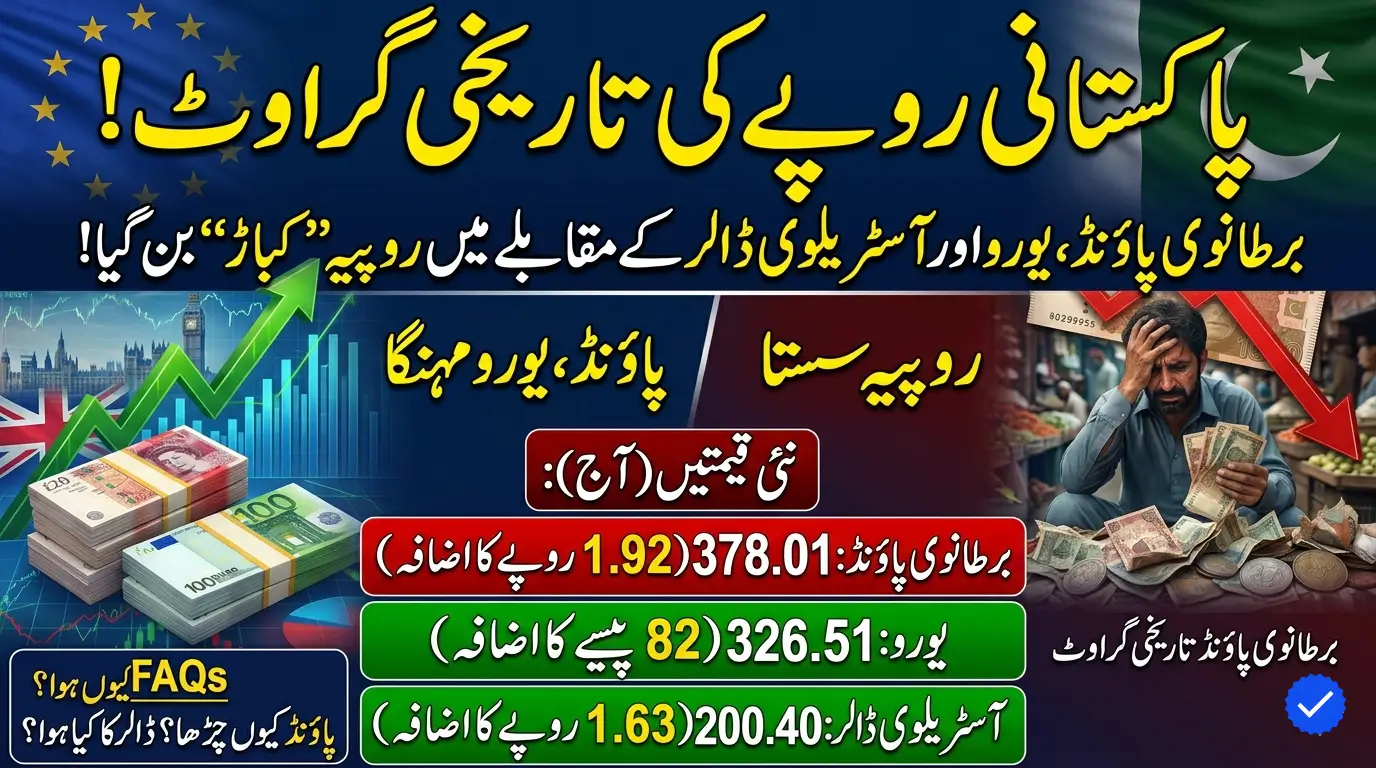
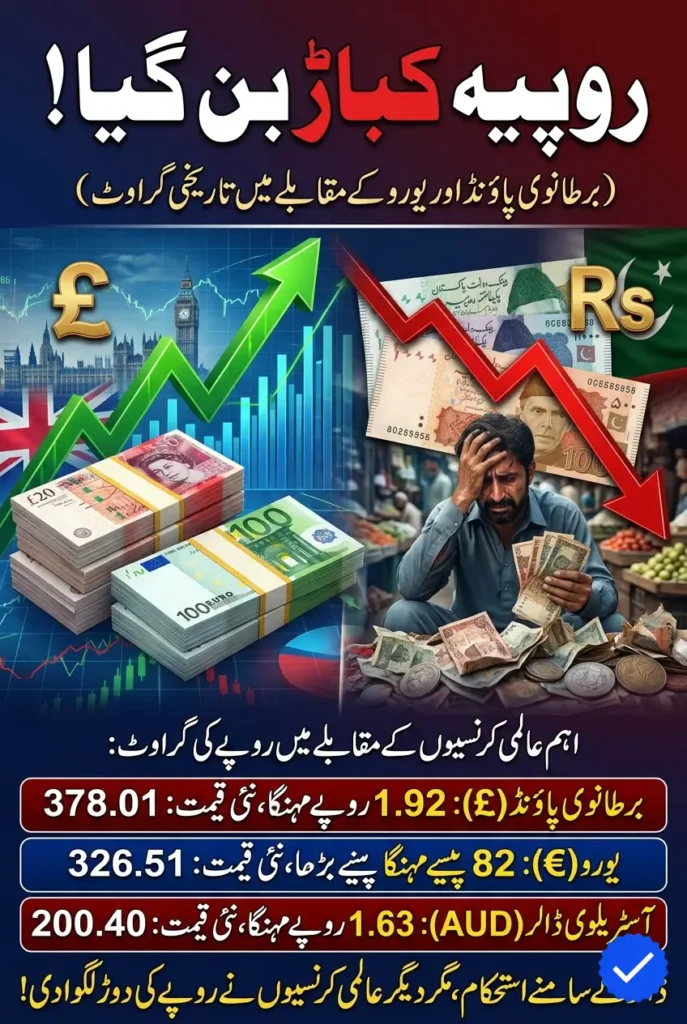
While the rupee held its ground against the dollar, it struggled against several other key currencies. The most significant loss was recorded against the British Pound, where the rupee depreciated by Rs. 1.92, closing at 378.01. This decline reflects strong demand for the pound and relative weakness in the local currency.
Against the euro, the rupee lost 82 paisas, closing at 326.51. The euro’s strength in international markets contributed to this movement, as investors continue to view it as a relatively stable currency.
The rupee also declined against the Australian Dollar, losing Rs. 1.63 to close at 200.40. Similarly, it weakened against the Canadian Dollar by 92 paisas, ending the session at 204.85. These losses indicate broader pressure on the rupee beyond its exchange rate with the dollar.
Other currencies such as the Malaysian Ringgit and Chinese Yuan also saw slight gains against the rupee, although the changes were relatively minor compared to those observed in major currencies.
Punjab Introduces New Rules for Private School Registration
Stability Against Regional Currencies
In contrast to its performance against Western currencies, the rupee remained stable against regional currencies such as the UAE Dirham and the Saudi Riyal. These currencies are closely linked to the US dollar, which helps explain the relative stability.
The rupee’s consistency against these currencies is particularly important for Pakistan, given the strong trade and remittance ties with the United Arab Emirates and Saudi Arabia. Stable exchange rates help maintain predictability in trade transactions and remittance inflows, which are crucial for the country’s economy.
Understanding the Divergence
The divergence in the rupee’s performance against different currencies can be attributed to several factors. One key reason is the dominance of the US dollar in Pakistan’s foreign exchange management. Stability against the dollar is often prioritized, sometimes at the expense of other currency pairs.
Another factor is the global strength of currencies like the pound and euro, which have been supported by economic developments in their respective regions. As these currencies gain strength internationally, weaker currencies such as the rupee tend to lose value against them.
Additionally, Pakistan’s economic fundamentals, including inflation, trade deficits, and foreign exchange reserves, play a role in shaping currency movements. Any perceived weakness in these areas can put pressure on the rupee.
Federal Constitutional Court Gives Staff Huge Pay Raise But IMF Govt Stay Silent
Economic Implications
The rupee’s depreciation against major currencies has several implications for the economy. One immediate effect is the increase in the cost of imports from countries that use these currencies. This can lead to higher prices for imported goods, contributing to inflation.
For businesses, fluctuations in exchange rates can create uncertainty and complicate financial planning. Companies that rely on imports may face higher costs, while exporters could see mixed effects depending on the currencies they deal in.
For consumers, a weaker rupee can translate into higher prices for goods and services, particularly those linked to international markets. This can affect purchasing power and overall living standards.
Outlook for the Rupee
Looking ahead, the performance of the rupee will depend on a combination of domestic and international factors. Stability against the dollar may continue if current policies remain in place, but broader pressures could persist.
Global geopolitical developments, including tensions in the Middle East, will continue to influence market sentiment. Any escalation could lead to further volatility in currency markets.
Domestically, economic reforms, fiscal policies, and foreign exchange management will play a crucial role in determining the rupee’s trajectory. Strengthening economic fundamentals could help stabilize the currency across a wider range of exchange rates.
Heatwave to Intensify Next Week
FAQs
1. Why did the rupee weaken against other currencies but not the US dollar?
The rupee is often managed with a focus on stability against the US dollar, while other currencies fluctuate based on global market conditions.
2. What was the rupee’s closing rate against the US dollar?
The rupee closed at 278.76 against the US dollar, gaining slightly during the session.
3. Which currency saw the biggest gain against the rupee?
The British Pound recorded the largest increase, with the rupee losing Rs. 1.92 against it.
4. Why do geopolitical events affect currency markets?
Geopolitical tensions create uncertainty, which can impact investor confidence and lead to fluctuations in currency values.
5. Is the rupee stable overall?
While it is stable against the US dollar, it is experiencing pressure against several other major currencies.
Final Words
The recent movement of the Pakistani rupee highlights the complexity of currency dynamics in a globalized economy. While stability against the US dollar provides some reassurance, losses against other major currencies reveal underlying challenges. Moving forward, maintaining balance across all exchange rates will be essential for economic stability and growth.
Sindh CM Goes Viral for His Parkour Abilities