
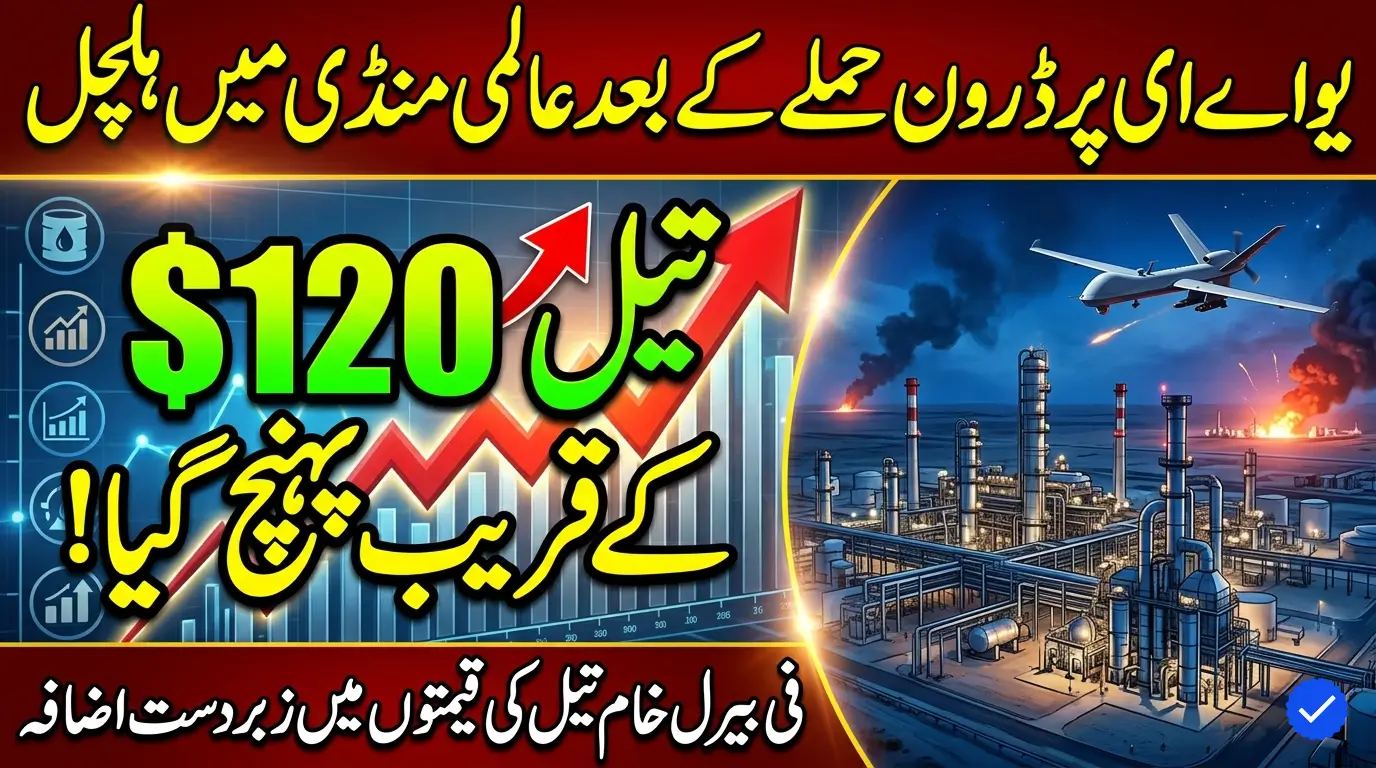
Oil Jumps Near $120 per Barrel
Global oil markets experienced a sharp and immediate reaction following reports of a suspected drone strike on a petroleum facility in the United Arab Emirates. The incident, believed to involve an الإيراني unmanned aerial vehicle, injected fresh uncertainty into already sensitive energy markets and pushed Brent crude prices close to the $120 per barrel mark during volatile trading hours.
Rupee Turns Into Junk Against British Pound Euro AUD After Long Break

The sudden spike highlighted how fragile global oil supply chains remain, especially in regions like the Middle East where geopolitical tensions can escalate rapidly. Within minutes of the news breaking, traders responded by pricing in a significant risk premium, causing spot prices to jump aggressively. Although Brent crude later pulled back to the $113–115 range, analysts warn that continued uncertainty could push prices back toward $120 or even higher in the near term.
Immediate Market Reaction and Price Volatility
The oil market’s initial reaction was swift and intense. Spot prices surged as traders scrambled to assess the potential disruption to supply. Events in the Gulf region are particularly impactful because it is one of the most critical النفط-producing areas in the world, responsible for a substantial portion of global exports.
Interestingly, while spot prices rose sharply, futures markets told a slightly different story. Oil futures contracts showed weaker momentum and even formed lower highs, suggesting a degree of caution among institutional investors. This divergence between spot and futures prices indicates that while short-term panic buying is driving prices up, long-term traders remain uncertain about the دوام of the crisis.
Market participants are now closely monitoring whether the attack was an isolated incident or part of a broader escalation. If tensions increase, the risk premium embedded in oil prices could grow significantly, leading to sustained high prices.
Geopolitical Risk and Its Impact on Energy Markets
Geopolitical tensions have always played a crucial role in shaping global oil prices. The Middle East, in particular, is a hotspot for such risks due to its strategic importance in energy production and transportation. Any disruption in this region—whether real or perceived—can trigger significant price movements.
The reported drone strike has once again reminded investors of the vulnerability of critical energy infrastructure. Even unconfirmed or partially verified incidents can create panic in markets, as traders rush to secure supply in anticipation of potential shortages.
Moreover, this incident comes at a time when global energy markets are already dealing with multiple challenges, including supply constraints, fluctuating demand, and economic uncertainty. The addition of geopolitical instability only amplifies these pressures, making oil prices more unpredictable.
HED to Set Up Counseling Centers in Govt Colleges
Divergence Between Physical and Paper Markets
One of the most notable aspects of this घटना is the growing gap between physical oil prices and paper trading in futures markets. Physical markets reacted strongly, reflecting immediate concerns about supply disruptions. In contrast, futures markets appeared more restrained, signaling skepticism among large institutional players.
This divergence can be interpreted in several ways. On one hand, it may indicate that traders believe the situation will stabilize quickly and that the price spike is temporary. On the other hand, it could reflect uncertainty about the accuracy of the initial reports or the actual impact on production capacity.
Such discrepancies are not uncommon during periods of high uncertainty. They often resolve once more information becomes available, but until then, they contribute to increased volatility and unpredictability in the market.
Role of Market Sentiment and Social Media
In today’s digital age, market sentiment is influenced not only by official reports but also by social media platforms. Traders and analysts frequently turn to platforms like X (formerly Twitter) to share insights, rumors, and real-time updates.
In this case, several prominent voices on social media highlighted the unusual divergence between spot and futures prices. One trader even remarked that such geopolitical reports are among the most powerful drivers of oil volatility, second only to statements made by former U.S. President Donald Trump on his Truth Social platform.
While such comments may seem anecdotal, they reflect a broader reality: sentiment and perception play a significant role in financial markets. The سرعة at which information spreads today means that even unverified reports can have a tangible impact on prices.
Punjab Introduces New Rules for Private School Registration
Implications for Global Economy
Rising oil prices have far-reaching implications for the global economy. Higher energy costs can lead to increased inflation, as transportation and production expenses rise across various industries. For oil-importing countries, this can strain trade balances and put pressure on national currencies.
Developing economies, in particular, are more vulnerable to such shocks. Countries that rely heavily on imported fuel may face rising costs of living, which can impact both businesses and consumers. Governments may also be forced to adjust subsidies or increase fuel prices, potentially leading to public dissatisfaction.
On the other hand, oil-exporting countries may benefit from higher prices, as increased revenues can boost their economies. However, this benefit is often offset by the broader economic uncertainty that accompanies geopolitical tensions.
What Comes Next for Oil Markets
The future direction of oil prices will largely depend on how the situation in the UAE unfolds. If the attack is confirmed and tensions escalate, prices could easily surpass the $120 mark and remain elevated for an extended period.
Conversely, if the situation stabilizes and no further incidents occur, the current price spike may prove to be temporary. Markets could gradually return to normal levels as the risk premium diminishes.
Investors and analysts will be closely watching official statements, satellite data, and other sources of information to assess the واقعی impact of the In the meantime, volatility is likely to remain high, with prices fluctuating in response to new developments.
Federal Constitutional Court Gives Staff Huge Pay Raise But IMF Govt Stay
FAQs
What caused the recent surge in oil prices?
The surge was triggered by reports of a drone attack on a UAE petroleum facility, which raised concerns about potential supply disruptions and increased geopolitical risk.
Why did oil prices initially rise but then fall slightly?
Prices spiked due to panic buying but later eased as traders reassessed the situation and awaited more confirmed information.
What is the difference between spot prices and futures prices?
Spot prices reflect the current market value of oil for immediate delivery, while futures prices represent contracts for delivery at a later date.
How do geopolitical tensions affect oil markets?
They create uncertainty about supply, leading traders to add a risk premium to prices, which can cause sharp increases.
Could oil prices go above $120 again?
Yes, if tensions escalate or further disruptions occur, oil prices could rise above $120 per barrel.
Final Words
The recent spike in oil prices following the reported drone attack on a UAE facility underscores the حساس nature of global energy markets. Even a single incident can trigger widespread reactions, highlighting the أهمية of stability in key النفط-producing regions. As the situation continues to develop, markets are likely to remain on edge, with prices fluctuating in response to new information. For now, the world watches closely, aware that in the oil market, uncertainty often carries a high price.
Heatwave to Intensify Next Week