
Here Are New Prices for Toyota Cars
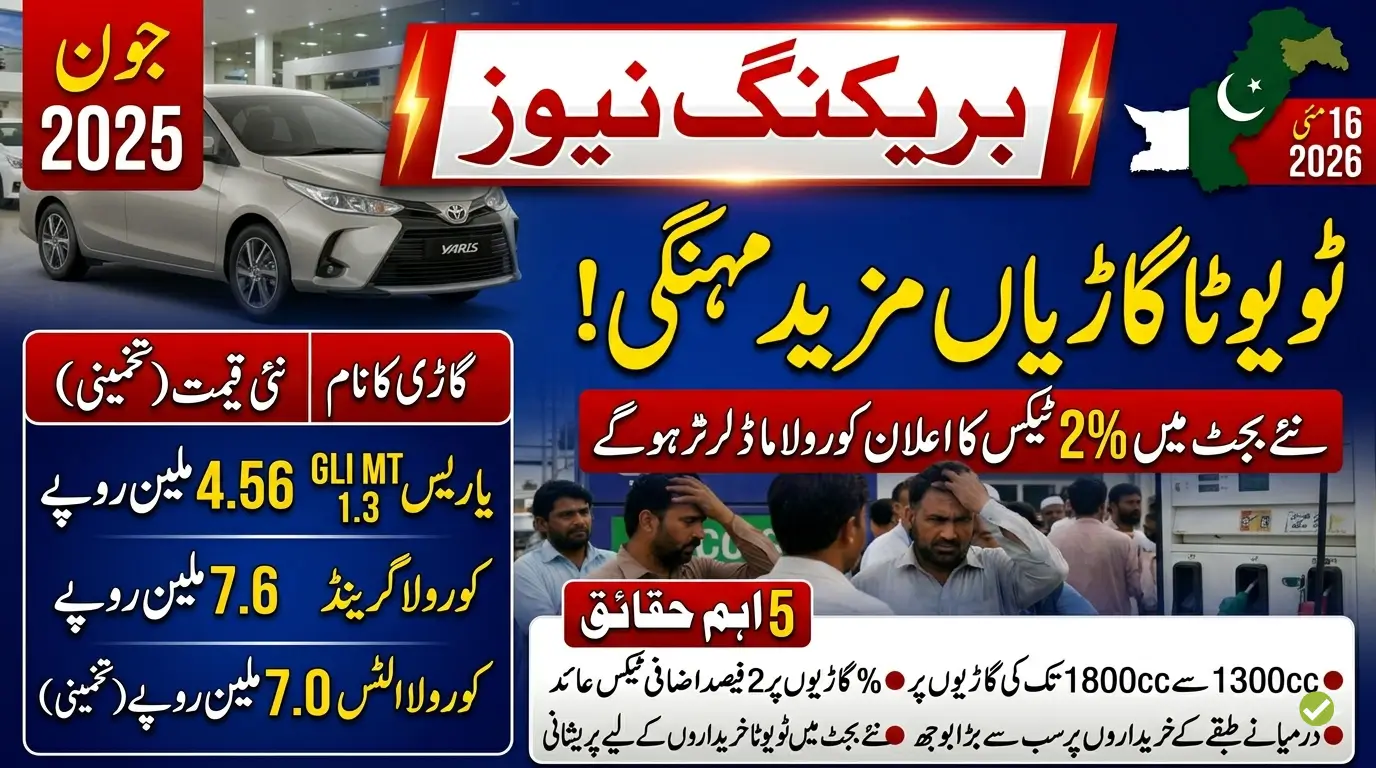
The Government of Pakistan is considering a new tax increase on vehicles as part of the 2025–26 federal budget. This proposal mainly targets cars with engine capacities between 1300cc and 1800cc which are among the most popular choices for middle-class buyers.
Govt Announces Small Relief in Petrol and Diesel Prices
If approved, the tax rate on these vehicles will increase by 2 percent. Although this may seem small it will directly impact car prices making already expensive vehicles even less affordable for many consumers.
Impact of Tax Increase on Toyota Vehicles
Toyota cars are expected to be significantly affected by this proposed tax change. Models like the Toyota Yaris and Toyota Corolla fall within the targeted engine category, which means their prices will increase once the policy is implemented.
Even a 2 percent increase can add tens of thousands of rupees to the final price. For buyers already struggling with high inflation and currency depreciation, this additional cost could delay or cancel their purchase plans.
Expected Price Changes Across Models
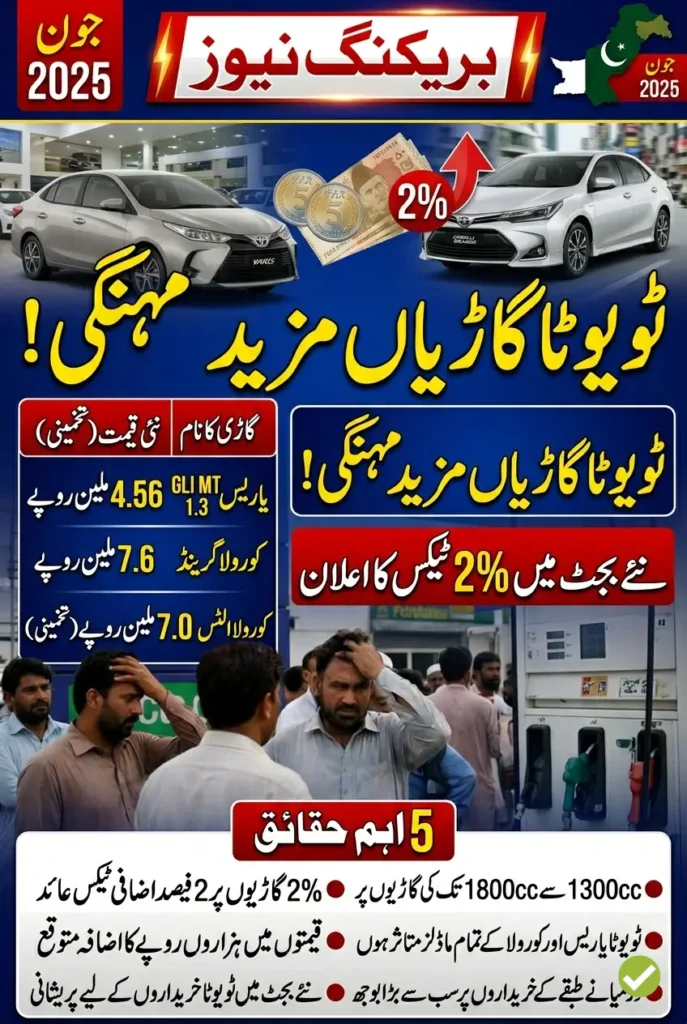
The price revision will apply to multiple Toyota variants. For example, the Yaris GLI MT 1.3 is expected to increase from around Rs. 4.47 million to approximately Rs. 4.56 million.
Similarly, the Corolla Altis variants will also see noticeable increases. Higher-end models like the Corolla Grande could cross Rs. 7.6 million after the tax adjustment. These changes show how even a small percentage increase can significantly affect overall pricing.
Gold Rate Loses Nearly Rs. 16,000 in Pakistan After Massive Crash Today
Growing Pressure on Car Buyers
Over the past few years, car prices in Pakistan have been rising steadily due to inflation, currency fluctuations, and increased taxes. This new proposal is likely to add more pressure on buyers, especially those in the middle-income segment.
Many people who once considered buying a new car may now shift towards used vehicles or delay their decision altogether. This could also impact overall car sales in the market.
Effect on the Automotive Market
The automotive industry may face slower demand if prices continue to rise. Higher costs often lead to reduced sales, which can affect manufacturers, dealers, and related businesses.
However, some experts believe that demand for essential vehicles like the Corolla may remain stable due to their reliability and resale value. Still, growth in the sector may slow down.
Punjab Announces New Fines for 26 Traffic Violations
Consumer Strategy and Buying Decisions
With rising prices, consumers may need to rethink their buying strategies. Some may choose smaller engine vehicles below 1300cc to avoid higher taxes.
Others may explore installment plans or financing options, although high interest rates can also make these options less attractive. Careful financial planning will become more important for buyers.
Long-Term Economic Impact
This tax proposal is part of the government’s effort to increase revenue. While it may help in the short term, it could slow down activity in the auto sector if demand decreases significantly.
Balancing revenue generation with consumer affordability will remain a key challenge for policymakers.
Punjab Announces Free Land Scheme for Homeless Citizens
Key Facts
- A 2% tax increase is proposed for cars between 1300cc and 1800cc.
- Toyota Yaris and Corolla models will be directly affected.
- Prices may increase by tens of thousands of rupees.
- Middle-class buyers will face the biggest impact.
- The policy may slow down overall car sales in Pakistan.
Final Word
The expected increase in Toyota car prices highlights the ongoing challenges in Pakistan’s automotive market. While the government aims to boost revenue, the added financial burden on consumers cannot be ignored. For many buyers, owning a new car is becoming increasingly difficult. Moving forward, both policymakers and manufacturers will need to find ways to balance affordability with economic goals to keep the market stable.
Govt Plans Rs. 215 Billion New Taxes in Upcoming Budget