
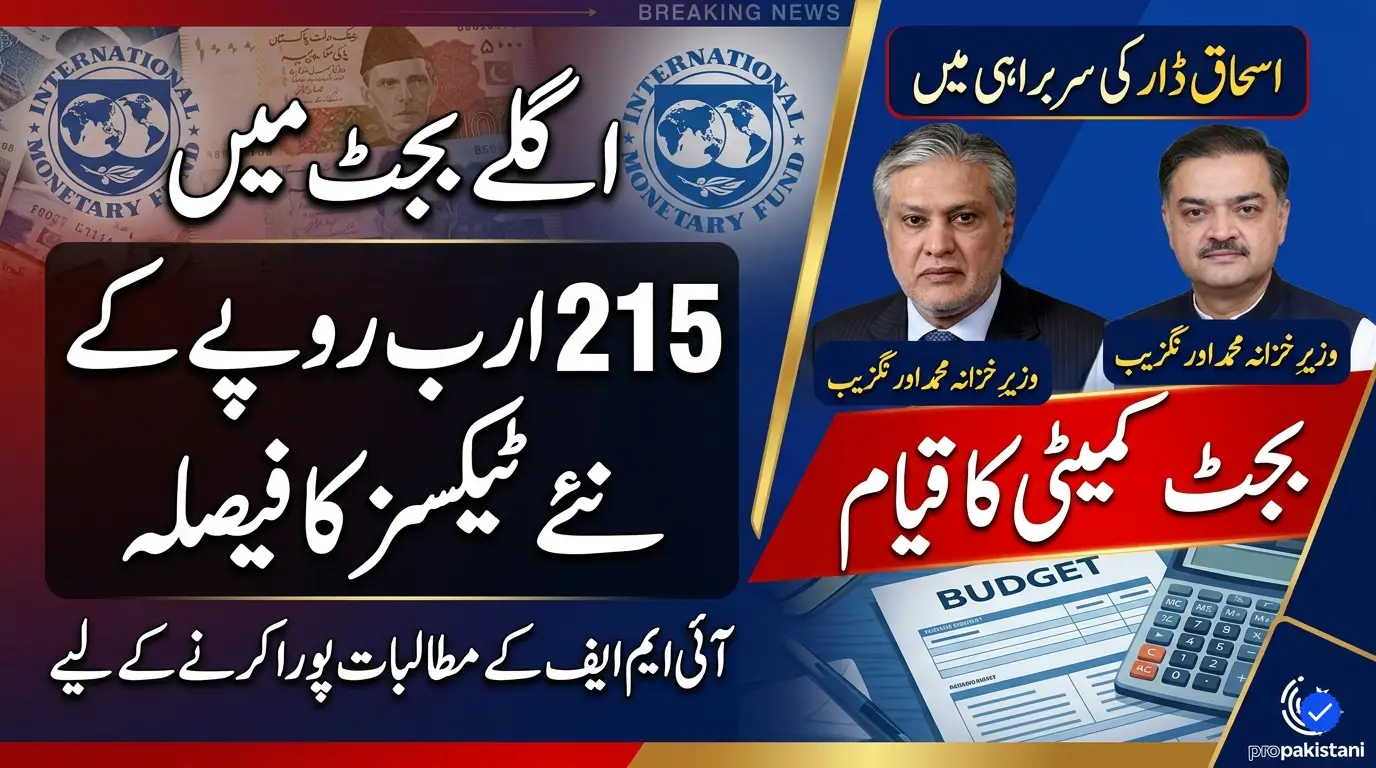
The federal government is preparing to introduce new taxes worth Rs. 215 billion in the next fiscal year as part of its economic reform commitments with the International Monetary Fund (IMF). According to official sources, a high-level budget review committee has been formed to evaluate and finalize new tax proposals before the announcement of the upcoming federal budget.
Govt Eyes Locally Producing 500,000 Cars Per Year And Earn $1 Billion in
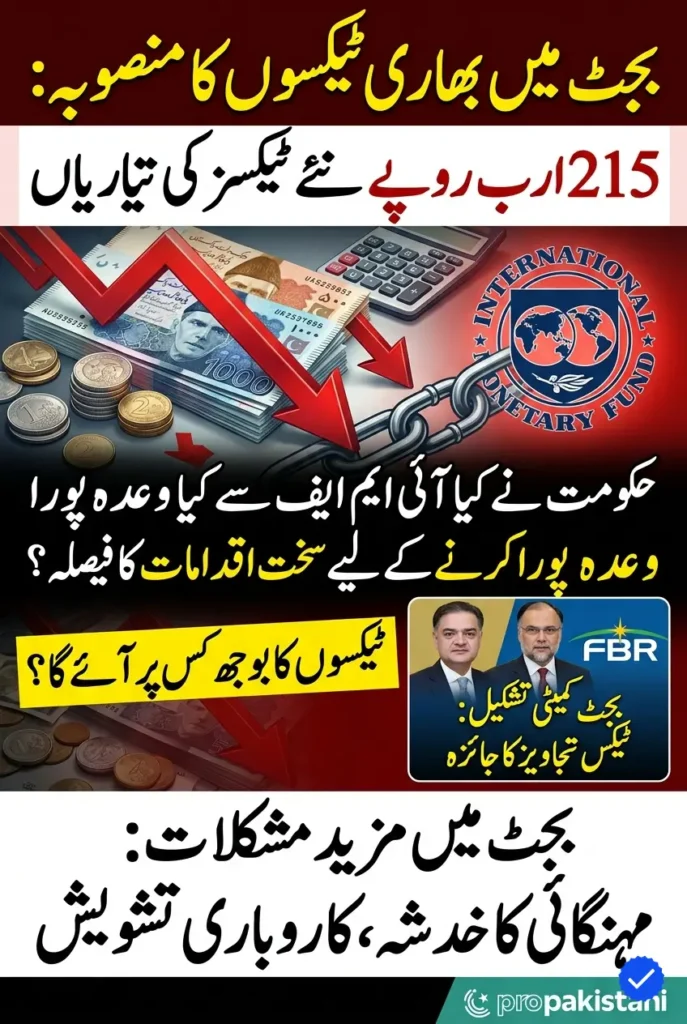
The move comes at a time when Pakistan is facing economic pressure, rising fiscal deficits, and strict conditions linked to IMF financial assistance programs. The government believes that increasing revenue collection is necessary to stabilize the economy and fulfill international obligations.
High-Level Committee Formed for Budget Review
The committee members include Finance Minister Muhammad Aurangzeb, Planning Minister Ahsan Iqbal, Minister of State for Finance Bilal Kiyani, Finance Secretary Imdad Ullah Bodal, Federal Board of Revenue (FBR) Chairman Rashid Langrial, and other tax policy experts.
According to reports, the committee’s primary responsibility is to review measures worth nearly Rs. 430 billion, including Rs. 215 billion in fresh taxes. These measures are aimed at improving revenue generation and ensuring Pakistan remains on track with IMF agreements.
Why the Government Is Introducing New Taxes
Pakistan has been struggling with economic challenges for several years, including inflation, a weak currency, low foreign exchange reserves, and increasing debt obligations. To secure financial support from international lenders like the IMF, the government must meet strict economic targets.
One of the key IMF requirements is increasing tax revenue. Pakistan’s tax-to-GDP ratio remains lower than many developing countries, making it difficult for the government to fund public services and development projects.
IMF Commitments and Economic Pressure
The IMF plays an important role in Pakistan’s economic planning because the country depends heavily on external financing to manage its balance of payments and debt repayments.
Under IMF programs, governments are usually required to introduce reforms such as:
- Increasing tax collection
- Reducing unnecessary subsidies
- Improving transparency
- Expanding the tax base
- Controlling fiscal deficits
The new taxation proposals are part of these broader reforms. Experts believe that without IMF support, Pakistan could face serious economic instability, making these difficult decisions unavoidable.
Concerns Among Businesses and Citizens
The news of additional taxes has raised concerns among businesses, traders, and ordinary citizens who are already dealing with high inflation and rising living costs.
Many people fear that new taxes could increase prices of goods and services, putting more pressure on household budgets. Businesses are also worried about higher operational costs, which may affect investment and economic growth.
Economic analysts argue that while revenue generation is important, the government must ensure that the burden does not fall entirely on salaried individuals and existing taxpayers. Instead, they suggest broadening the tax net by bringing untaxed sectors into the system.
Lenovo Legion Y70 2026 Launch Date and Specs Revealed
Finance Ministry Rejects Budget Transfer Rumors
Recently, media reports claimed that the responsibility for preparing the federal budget had been shifted from the Ministry of Finance to Ishaq Dar. However, the Finance Division strongly denied these reports.
The ministry clarified that the committee is only functioning as a consultative body to review taxation proposals before they are finalized. Officials emphasized that the Ministry of Finance remains fully responsible for preparing the federal budget under Finance Minister Muhammad Aurangzeb.
The statement further explained that inter-ministerial review committees are a normal part of government operations and should not be interpreted as any institutional conflict or transfer of authority.
Role of the Federal Board of Revenue (FBR)
The Federal Board of Revenue is expected to play a central role in implementing the proposed tax reforms. The FBR has been under pressure to improve tax collection and reduce leakages in the system.
In recent years, the government has introduced digital monitoring systems, track-and-trace mechanisms, and stricter enforcement measures to increase compliance. However, achieving ambitious revenue targets remains a major challenge.
Experts believe that improving tax administration and reducing corruption will be equally important alongside introducing new taxes.
Possible Impact on the Economy
The upcoming budget is expected to be one of the most challenging in recent years. On one hand, the government must satisfy IMF conditions and improve financial stability. On the other hand, it must also protect citizens from further economic hardship.
If implemented carefully, the reforms could help stabilize Pakistan’s economy in the long term. However, poorly designed taxes could slow economic activity and increase public dissatisfaction.
Economists recommend that the government focus on balanced reforms, including support for businesses, investment incentives, and relief for lower-income groups.
FAQs
1. Why is the government imposing Rs. 215 billion in new taxes?
The government plans to introduce these taxes to meet IMF commitments, increase revenue collection, and reduce the fiscal deficit in the next fiscal year.
2. Who is heading the budget review committee?
The committee is headed by Foreign Minister Ishaq Dar and includes senior finance officials, FBR representatives, and tax experts.
3. Will the Ministry of Finance still prepare the federal budget?
Yes, the Finance Ministry has clarified that it remains fully responsible for budget preparation. The committee only reviews proposals.
4. How could the new taxes affect ordinary citizens?
New taxes may increase prices of goods and services, adding pressure on households already facing inflation and high living costs.
5. What is the IMF’s role in these tax reforms?
The IMF requires Pakistan to improve tax collection and implement economic reforms as part of financial assistance agreements.
Final Words
Pakistan’s upcoming budget is expected to focus heavily on revenue generation and economic reforms due to IMF commitments and ongoing financial challenges. The proposed Rs. 215 billion in new taxes reflects the government’s attempt to stabilize the economy and secure international financial support.
Government Finalizes New Load Shedding Plan to Improve Bill