
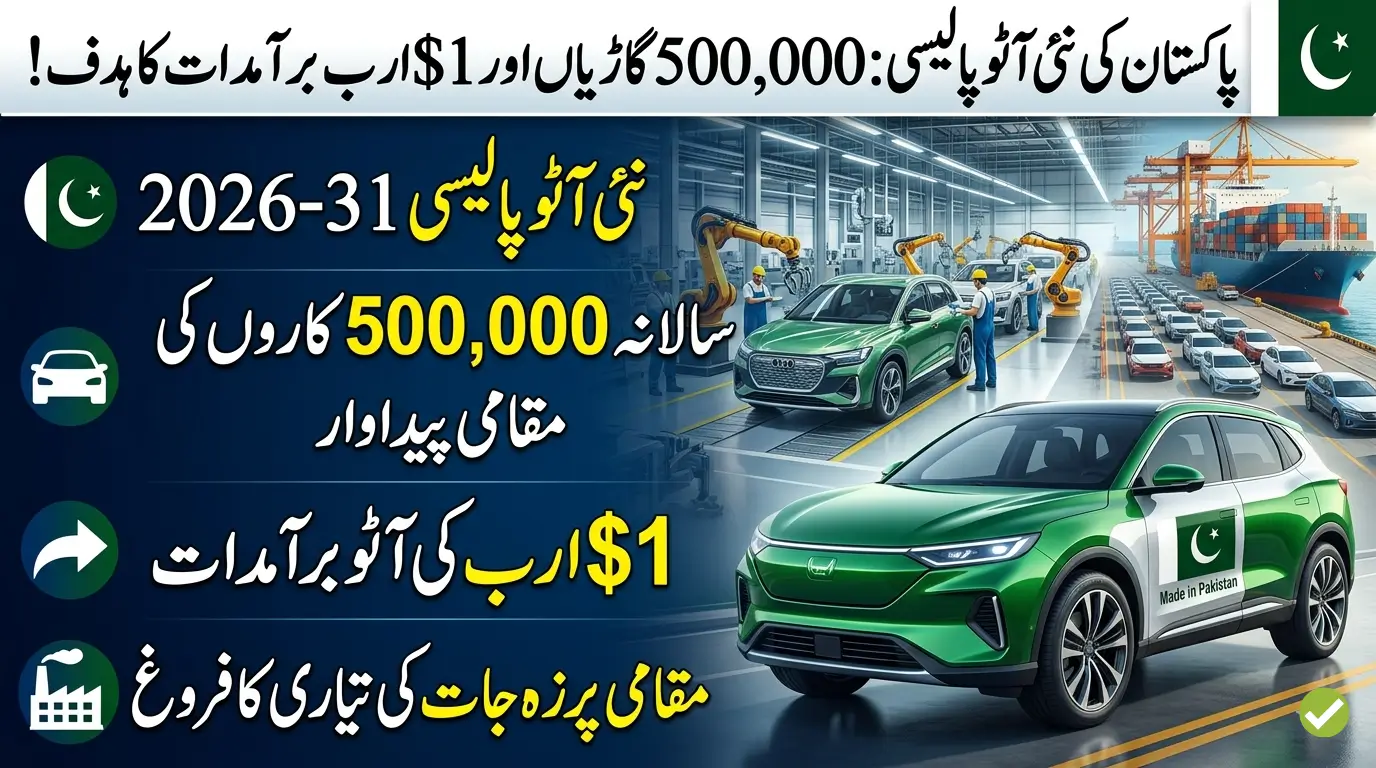
Govt Eyes Locally Producing 500,000 Cars
The federal government is preparing a major plan to revive Pakistan’s struggling automobile industry. Under the proposed Auto Policy 2026–31 authorities aim to boost local car production increase exports and promote modern vehicle technologies.
iPhones Now Support Jazz 5G as Pakistan Expands Next
This plan comes after a sharp decline in the auto sector over the past few years. Production dropped significantly, creating concern for manufacturers, workers, and investors across the country.
Target to Produce 500,000 Cars Annually
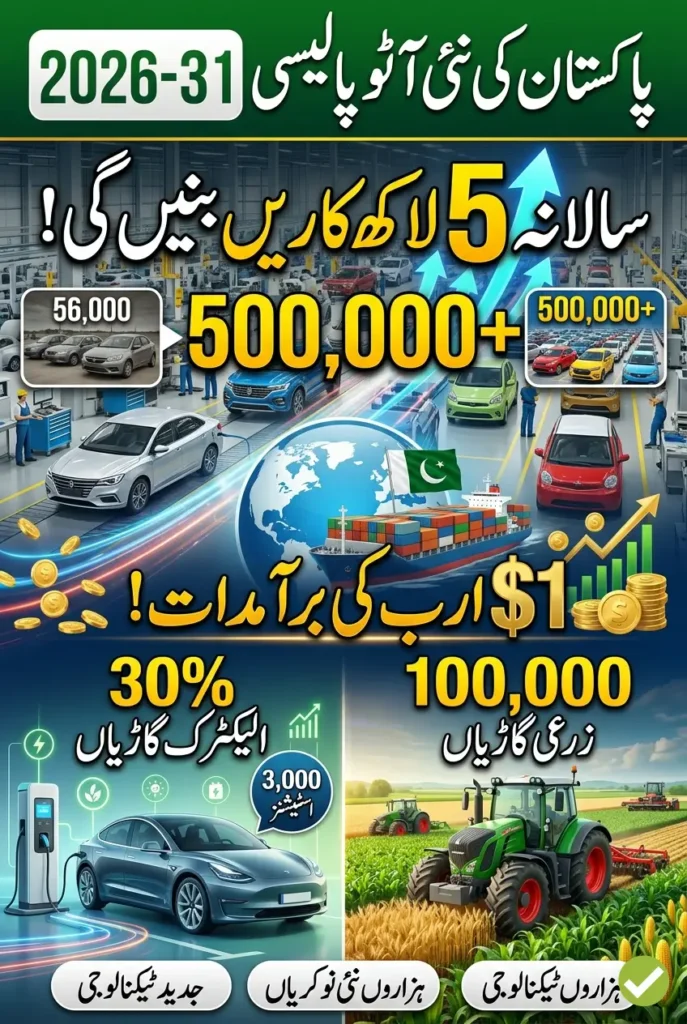
One of the main goals of the new policy is to increase annual car production to over 500,000 units by the year 2031. This is a big jump compared to recent years when production fell to around 56,000 units.
In the past, Pakistan had reached close to 300,000 units, but economic challenges caused a major slowdown. The new target shows the government’s intention to bring the industry back on track.
Focus on Increasing Exports
Another important part of the policy is boosting exports. The government aims to earn around $1 billion from automotive exports in the coming years.
This is a major shift because Pakistan’s auto industry has mostly focused on local sales. Increasing exports will help bring foreign exchange into the country and strengthen the economy.
Investment Potential and Role of Private Sector
The new auto policy also focuses on attracting both local and foreign investment. The government is expected to offer incentives to encourage companies to expand their manufacturing operations within Pakistan. This can bring advanced technology and modern production techniques into the country.
With increased participation from the private sector, competition in the market will grow. This can lead to better quality vehicles and more stable pricing, ultimately benefiting consumers.
IMF Predicts Higher Inflation and Slower GDP Growth
Job Creation and Employment Growth
An increase in vehicle production is likely to generate a large number of job opportunities. From factory workers to engineers and supply chain staff, many sectors will benefit from this expansion.
Young professionals, in particular, may find new career paths in the automotive industry. This growth can strengthen the workforce and reduce unemployment over time.
Boost to Local Auto Parts Industry
Another key aspect of the policy is promoting local manufacturing of auto parts. Producing components within the country can reduce dependence on imports and lower overall production costs.
This will also support small and medium-sized industries, helping them grow and contribute more effectively to the economy. A strong parts industry is essential for a sustainable auto sector.
Shift Toward Environment-Friendly Technology
The promotion of electric and hybrid vehicles is an important step toward a cleaner environment. These vehicles produce less pollution and help reduce fuel consumption.
If charging infrastructure is developed successfully, more people will be encouraged to switch to eco-friendly vehicles. This shift can play a significant role in reducing environmental damage.
Punjab Launches Rs. 79 Billion Faisalabad Metro Project
Challenges and Possible Barriers
Despite its promising goals, the policy may face several challenges. Economic instability, high production costs, and inconsistent policies could slow down progress.
To achieve success, the government will need strong planning and effective implementation. Addressing these challenges early will be key to making the policy work in the long run.
Promotion of Electric and Hybrid Vehicles
The policy also highlights the importance of New Energy Vehicles (NEVs), including electric and hybrid cars. The government wants these vehicles to make up 30% of total car sales by 2031.
To support this goal, around 3,000 EV charging stations are planned across the country. This will make it easier for people to switch to electric vehicles.
Support for Agriculture Sector
The new auto policy also includes plans for the agriculture sector. The government aims to produce 100,000 agricultural vehicles and machines every year.
This step will help farmers improve productivity and reduce manual labor. Better machinery can lead to higher crop yields and stronger rural development.
Pakistan Announces Official 4-Day Eid-ul-Fitr Holidays 2026
Recovery After Industry Decline
Pakistan’s auto industry faced one of its worst downturns in recent history. High costs, import restrictions, and economic instability caused production to fall sharply.
The new policy is designed to rebuild the sector by encouraging investment, improving production capacity, and creating job opportunities.
Opportunities for Local Manufacturing
The government is focusing on strengthening local manufacturing. By producing more vehicles within the country, reliance on imports can be reduced.
This will also create jobs and support local industries such as parts manufacturing, engineering, and services.
Infrastructure Development Plans
To support the growth of the auto sector, infrastructure development is also being considered. EV charging stations and better road networks will play a key role.
These developments will make it easier for people to adopt new technologies and use vehicles more efficiently.
Punjab Rehmat Card Last Date May 2026 Complete Apply
Economic Impact of the Policy
If successfully implemented, the new auto policy can have a strong impact on Pakistan’s economy. Increased production and exports can improve industrial growth.
It can also create employment opportunities and attract foreign investment into the country.
Faqs
- The government aims to produce over 500,000 cars annually by 2031.
- A target of $1 billion in automotive exports has been set.
- Electric and hybrid vehicles will make up 30% of total sales.
- Around 3,000 EV charging stations are planned nationwide.
- The policy includes production of 100,000 agricultural vehicles each year.
Final Word
The Auto Policy 2026–31 presents a strong vision for the future of Pakistan’s automobile industry. By focusing on production growth exports, and modern technology, the government is trying to rebuild a sector that plays a vital role in the economy. While challenges remain successful implementation of this plan could bring long-term benefits including job creation industrial growth and a shift toward sustainable transportation in Pakistan.
Govt Could Raise Petrol Prices Again This Week As Brent