
Ex Finance Minister Blames
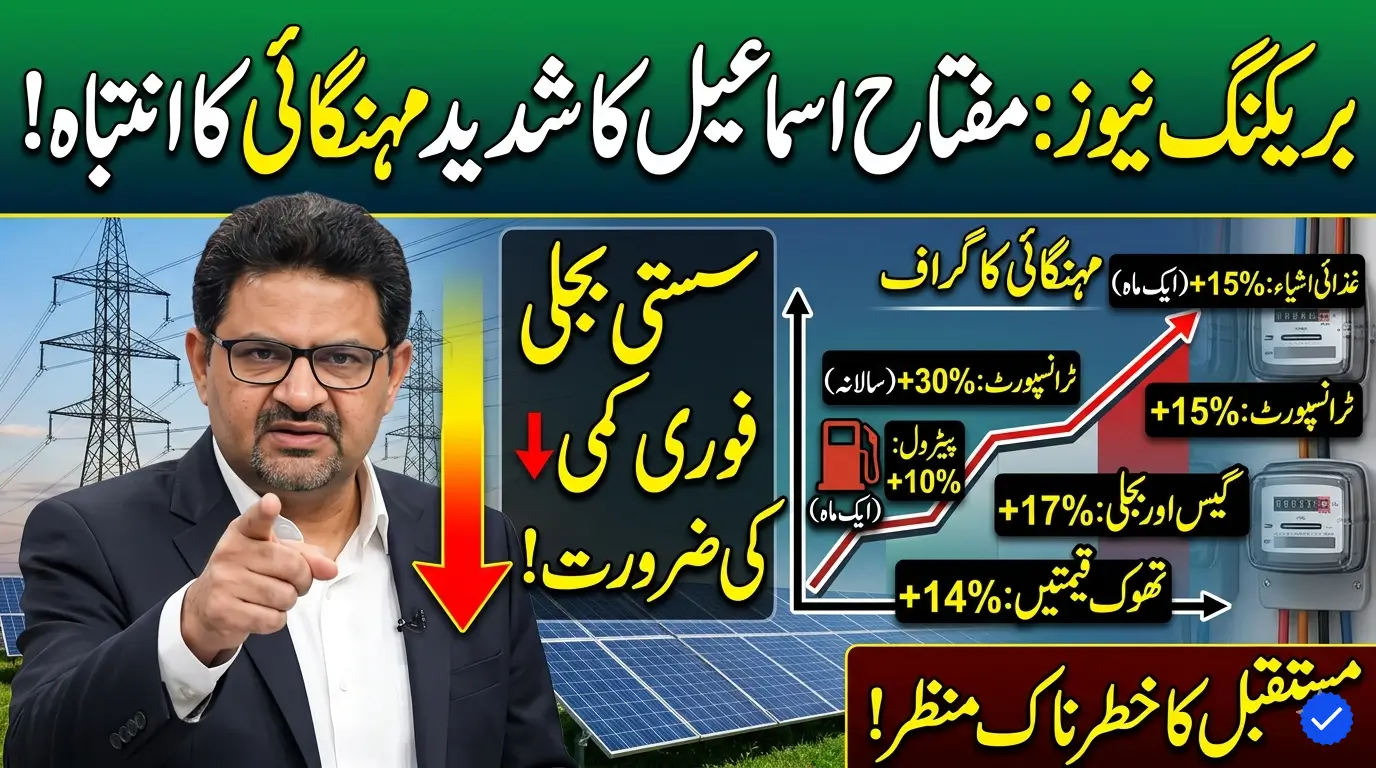
Pakistan’s economic challenges continue to deepen as Miftah Ismail has raised serious concerns about the country’s rising inflation, warning that the current surge in prices is likely to persist beyond May. In a recent statement shared on social media, he attributed the ongoing inflationary pressure not only to global economic conditions but also to domestic policy missteps and fiscal mismanagement.
PM Shahbaz Wishes to Make Electricity Cheaper and End Power

According to his analysis, inflation in Pakistan reached approximately 11 percent on a year-on-year basis in April, reflecting a sharp increase in the cost of living across multiple sectors. This rise has affected households, businesses, and the overall economic environment, making it increasingly difficult for people to manage their daily expenses.
Inflation Driven by Multiple Factors
While global oil prices are often cited as a major contributor to inflation, Miftah Ismail emphasized that domestic policies have also played a significant role. He argued that fiscal decisions, including taxation and government spending, have added to the burden on consumers.
Inflation is a complex phenomenon influenced by both external and internal factors. In Pakistan’s case, currency depreciation, rising import costs, and structural inefficiencies have combined with policy challenges to create a difficult economic situation. As a result, prices of essential goods and services have increased at a rapid pace.
Sector-Wise Breakdown of Price Increases
One of the most concerning aspects of the current inflation trend is the widespread increase in prices across key sectors. Transport costs have surged by nearly 30 percent on a year-on-year basis, largely due to rising fuel prices. This increase not only affects individual commuters but also raises the cost of goods transportation, contributing to higher prices across the economy.
Housing, water, electricity, and gas charges have risen by around 17 percent annually. These are essential services that households cannot easily reduce, making the impact of these increases particularly severe. Higher utility costs also affect businesses, which may pass these expenses on to consumers.
Food prices have also seen significant increases. Perishable items have become approximately 10 percent more expensive over the past year, with a sharp 15 percent rise within a single month. This rapid increase in food prices is especially alarming, as it directly impacts the most vulnerable segments of the population.
Former PM Imran Khan’s ex-Wife Set to Marry Billionaire Businessman
Alarming Trends in Food Inflation
Food inflation has been described as an ominous trend by Miftah Ismail. The rapid rise in the cost of essential food items indicates that inflationary pressures are deeply embedded in the economy.
When food prices increase, the impact is immediate and widespread. Lower-income households spend a larger portion of their income on food, making them more vulnerable to price changes. As a result, rising food costs can lead to reduced consumption, malnutrition, and increased financial stress.
The sharp month-on-month increase in food prices suggests that supply chain disruptions, higher transportation costs, and seasonal factors may also be contributing to the problem. Without effective intervention, these pressures are likely to continue.
Rising Inflation Indicators
In addition to consumer price inflation, other economic indicators also point to increasing price pressures. The Sensitive Price Index has risen by around 13 percent year-on-year, reflecting changes in the prices of essential goods. Similarly, the Wholesale Price Index has increased by 14 percent annually and 5 percent within a single month.
These indicators show that inflation is not limited to retail markets but is also affecting the broader supply chain. When wholesale prices rise, businesses face higher input costs, which are eventually passed on to consumers. This creates a cycle of increasing prices that can be difficult to control.
The data suggests that inflationary pressures are still moving through the economy and have not yet reached their peak. This means that consumers may continue to face rising prices in the coming months.
Gold Rate in Pakistan Declines 2nd Time in Four Days
Government Policies and Fiscal Challenges
A key point raised by Miftah Ismail is the role of government policies in shaping the current economic situation. He criticized fiscal mismanagement and called for corrective measures to address the issue.
One of his main recommendations is for the government to reduce its own expenditures. At a time when citizens are being forced to cut back on spending due to rising costs, he argues that the government should also adopt a more disciplined approach to its finances.
Reducing fiscal deficits and improving revenue collection are essential for stabilizing the economy. However, these measures must be carefully balanced to avoid placing additional burdens on consumers.
Impact on Daily Life and Economy
The rising inflation rate has far-reaching consequences for both individuals and the broader economy. For households, higher prices mean reduced purchasing power and a lower standard of living. Families may be forced to cut back on essential expenses, affecting their overall well-being.
For businesses, inflation increases operating costs and creates uncertainty. Companies may struggle to maintain profit margins, leading to reduced investment and slower economic growth. In some cases, businesses may pass on higher costs to consumers, further fueling inflation.
The combined effect of these factors can create a challenging economic environment, making it difficult for the country to achieve sustainable growth.
Latest Chinese Battery is 80x Cheaper Than Lithium And Lasts Almost
Future Outlook and Policy Recommendations
Looking ahead, the outlook for inflation in Pakistan remains uncertain. According to Miftah Ismail, inflation is likely to persist beyond May unless significant policy changes are implemented.
Addressing inflation requires a comprehensive approach that includes fiscal discipline, monetary policy adjustments, and structural reforms. Improving supply chains, stabilizing the currency, and reducing reliance on imports can also help mitigate inflationary pressures.
Collaboration between government institutions, businesses, and policymakers will be essential in developing effective solutions. Without coordinated efforts, controlling inflation may remain a difficult task.
FAQs
1. Why is inflation rising in Pakistan?
Inflation is increasing due to a combination of global factors like oil prices and domestic issues such as fiscal mismanagement and rising costs of goods and services.
2. Which sectors are most affected by inflation?
Transport, housing, utilities, and food sectors are experiencing the most significant price increases.
3. What is the impact of food inflation on people?
Food inflation directly affects daily life, especially for low-income households, by increasing the cost of essential items.
4. What are SPI and WPI?
SPI measures the price changes of essential goods, while WPI tracks changes in wholesale prices, indicating broader economic trends.
5. Can inflation be controlled in the near future?
Inflation can be controlled with proper fiscal policies, reduced government spending, and improved economic management.
Pakistan Fuel Prices Now Carry More Hidden Charges Than Your Electricity
Final Words
Pakistan’s rising inflation presents a serious challenge that requires immediate attention and effective policy responses. The concerns raised by Miftah Ismail highlight the need for a balanced approach that addresses both global and domestic factors. Without timely intervention, inflation may continue to erode purchasing power and hinder economic stability. By implementing strong fiscal measures and focusing on long-term reforms, Pakistan can work toward stabilizing its economy and improving the financial well-being of its citizens.