

Banks Get Special Power to Publicly Shame
Pakistan’s banking sector is expected to receive stronger legal authority against loan defaulters after the National Assembly Standing Committee on Finance and Revenue approved the Financial Institutions (Amendment) Bill 2026. The proposed law is designed to improve loan recovery and strengthen financial discipline across the banking system.
packaging Pakistan Customs Updates Valuation of Empty Tin Cans
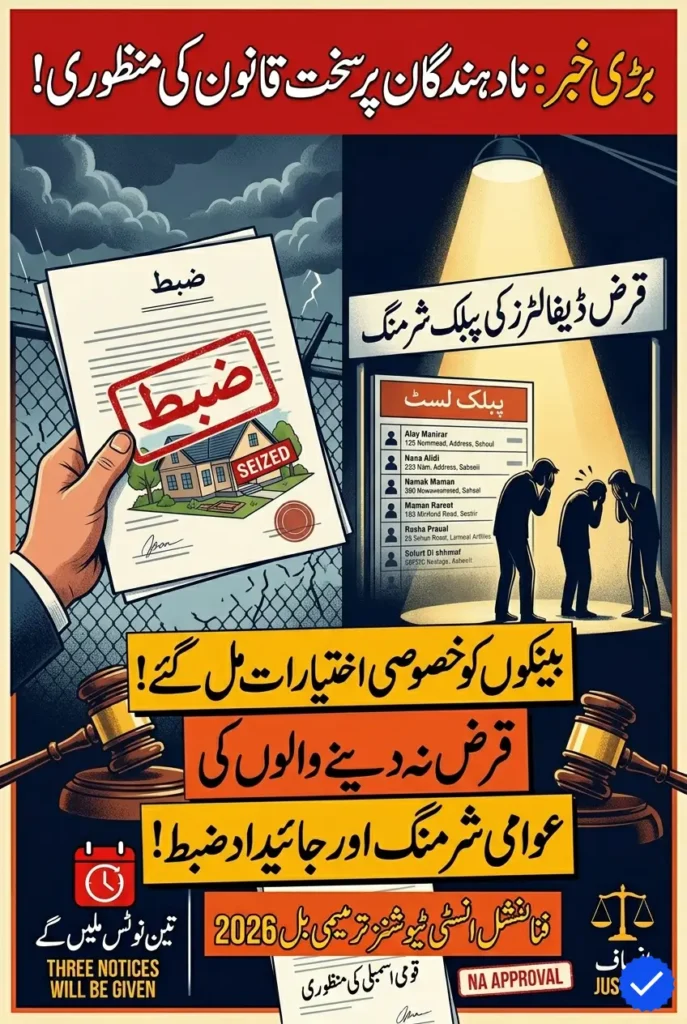
Under the new framework, banks will be able to take stricter action against borrowers who fail to repay loans on time. The government believes stronger recovery mechanisms are necessary to reduce financial pressure on banks and improve economic stability.
Banks Will Issue Three Notices Before Action
According to the proposed law, banks will first be required to issue three formal notices within 90 days before starting any recovery process. Authorities say this condition is meant to give borrowers enough time to clear dues or respond legally.
If borrowers still fail to repay loans after receiving notices, banks may begin enforcement procedures. However, financial institutions will still need government approval before seizing any property linked to unpaid loans.
Property Seizure Rules Included In New Law
One of the major features of the amendment bill is the power to seize property from loan defaulters. The government says this measure will help banks recover long-pending loans more efficiently.
Officials believe strict recovery powers can discourage willful default and improve confidence within the banking sector. However, experts also stress the importance of proper oversight to prevent misuse of authority.
Energy Sector Circular Debt Climbs to Rs. 5.2 Trillion
Government Wants Stronger Financial Discipline
Minister of State for Finance Bilal Azhar Kayani said the purpose of the legislation is to strengthen loan recovery mechanisms and improve financial discipline in the country.
The government believes unpaid loans create pressure on the banking system and reduce the ability of banks to provide financing to businesses and individuals. Better recovery laws are expected to improve lending confidence.
Names Of Defaulters May Be Published
The proposed law also allows competent authorities to publicly disclose the names and addresses of loan defaulters. Authorities believe this step can increase transparency and discourage intentional loan defaults.
Public disclosure of defaulters may also create reputational pressure on borrowers to settle outstanding liabilities. However, some experts have raised concerns regarding privacy and legal protections.
Restrictions On Housing Finance Properties
The amendment bill also places restrictions on properties acquired through housing finance schemes. Borrowers will not be allowed to rent out financed properties to third parties without authorization.
Officials say this measure is aimed at ensuring that housing finance schemes are used for residential purposes instead of commercial rental activity.
Govt Assures IMF Electricity And Gas Prices Will Keep Rising in Pakistan
Banking Sector Faces Rising Loan Recovery Challenges
Pakistan’s banking sector has faced increasing concerns regarding non-performing loans in recent years. Economic uncertainty, inflation, and rising borrowing costs have made loan repayments difficult for many borrowers.
Banks often face delays in recovering unpaid loans due to lengthy legal procedures and weak enforcement systems. Authorities hope the new law will improve recovery efficiency and reduce financial losses.
Experts Stress Need For Balance
While many banking experts support stronger recovery laws, some analysts believe borrower rights must also remain protected. They argue that proper legal safeguards and transparent implementation will be important.
Experts say the success of the law will depend on fair enforcement and balanced regulation that protects both financial institutions and borrowers.
Here Are New Prices for Toyota Cars After Increase in Taxes
Bill Expected To Move Forward
The Financial Institutions (Amendment) Bill 2026 is expected to proceed for further legislative approval before becoming part of Pakistan’s financial laws.
If implemented, the law could significantly change the way banks handle loan defaults and recovery procedures in the future.
FAQs
1. What is the Financial Institutions Amendment Bill 2026?
It is a proposed law that gives banks stronger powers to recover unpaid loans from defaulters.
2. Can banks seize property under the new law?
Yes, banks can seize property after obtaining government approval and following legal procedures.
3. How many notices must banks issue before taking action?
Banks are required to issue three formal notices within 90 days before enforcement action.
4. Can names of loan defaulters be published publicly?
Yes, authorities may publicly disclose the names and addresses of loan defaulters.
5. What restriction applies to housing finance properties?
Borrowers financed under housing schemes cannot rent out the property to third parties without authorization.
Final Words
The Financial Institutions Amendment Bill 2026 reflects the government’s effort to strengthen Pakistan’s banking system and improve loan recovery mechanisms. While stricter powers may help reduce deliberate defaults and financial losses, experts believe fair implementation and legal safeguards will remain essential to protect borrower rights and maintain trust in the financial system.
Punjab Announces New Fines for 26 Traffic Violations