
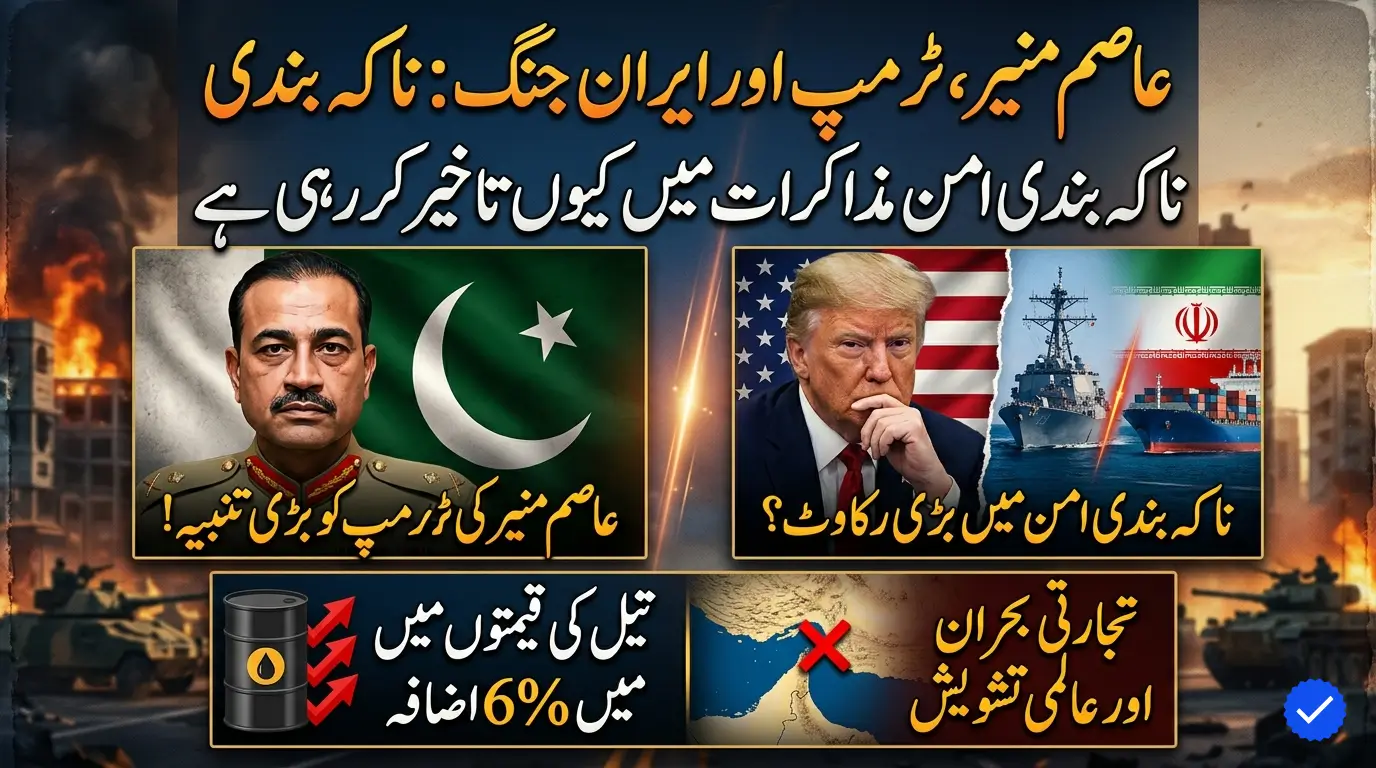
Global politics is once again facing uncertainty as tensions between the United States and Iran continue to rise. According to reports, Pakistan’s Field Marshal Asim Munir directly told US President Donald Trump that the ongoing blockade had become one of the biggest obstacles preventing meaningful peace talks with Iran. Trump reportedly responded by saying he would consider the advice.
Redmi Book 2026 Series Becomes Official with Intel Core Ultra Power And 80Wh

This development is highly significant because the ceasefire between the United States and Iran was already fragile. Recent maritime confrontations and military actions have created fresh pressure on diplomatic efforts. In this tense environment, Pakistan is emerging as an important mediator trying to keep communication alive between both sides.
What Is the Blockade and Why Does It Matter?
A blockade is a strategy used to restrict a country’s trade routes, shipping movement, or economic access in order to apply pressure. In Iran’s case, maritime restrictions have affected trade and increased economic stress. Such actions often create resentment and weaken trust between nations.
When one side feels economically or militarily pressured, peace talks become much harder to advance. That is why Asim Munir reportedly advised Trump that unless the blockade issue is addressed, diplomacy may remain stuck.
How the Cargo Ship Incident Increased Tensions
One of the biggest recent flashpoints was the interception of an Iranian-flagged cargo vessel by the US military. Reports said the ship was heading toward Bandar Abbas when it was stopped, leading to a six-hour standoff.
The United States accused the vessel of trying to break the blockade, while Iran strongly rejected the move and called it a hostile action. Tehran argued that such incidents damage peace efforts and prove that Washington is not fully committed to diplomacy.
When military confrontations happen during peace talks, trust becomes even weaker. This makes future negotiations slower and more difficult.
IMF Likely to Approve $1.2 Billion for Pakistan as Economic Reforms Progress
Iran’s Position on the Talks
Iranian Foreign Ministry spokesman Esmaeil Baghaei said that the United States was not showing seriousness in negotiations. He also accused Washington of pushing unrealistic demands and attempting to force deadlines.
Iran made it clear that it would not accept ultimatums and would not compromise on what it considers vital national security interests. This means Tehran wants talks based on equality rather than pressure.
Iran’s statements suggest that while it may remain open to diplomacy, it will resist any agreement that appears one-sided or forced.
Why Pakistan’s Role Is Important
Pakistan holds a unique position in this crisis. It has working relations with both the United States and Iran, giving it an opportunity to act as a bridge between the two sides.
Field Marshal Asim Munir’s communication with Trump shows that Pakistan is actively involved in behind-the-scenes diplomacy. This role could become critical if direct US-Iran communication remains difficult.
Pakistan also understands regional security concerns better than many outside powers. Because of this, it may be able to offer practical solutions acceptable to both sides.
Iran President Rejects Trump’s Demand to Give Up Nuclear Program
Impact on Oil Prices and Global Markets
Whenever tensions rise in the Middle East, global markets react quickly. Following these developments, oil prices reportedly rose by more than 6 percent as investors feared the ceasefire could collapse.
The Strait of Hormuz is one of the world’s most important oil shipping routes. Any disruption there can affect fuel prices, inflation, transport costs, and international markets.
That is why even a limited standoff between the United States and Iran creates worldwide economic concern.
What Could Happen Next?
There are several possible outcomes in the coming weeks:
- The United States may ease some restrictions, allowing talks to restart.
- Iran may delay negotiations until pressure tactics are reduced.
- Pakistan or another mediator may help create a compromise framework.
- If tensions continue, the ceasefire could weaken further.
The most positive path forward remains diplomacy, as military escalation would create instability across the region.
FAQs
1. What did Asim Munir tell Donald Trump?
He reportedly said that the blockade was becoming a major obstacle to US-Iran peace talks.
2. What happened with the cargo ship?
The US military intercepted an Iranian-flagged cargo vessel, leading to a six-hour maritime standoff.
3. Why is Iran unhappy with the negotiations?
Iran says the United States is using pressure tactics and unrealistic demands instead of serious diplomacy.
4. Why is Pakistan involved?
Pakistan has relations with both countries and is trying to help facilitate dialogue.
5. Why did oil prices rise?
Markets feared that the ceasefire could fail and that oil supply routes might be disrupted.
PTA Tax Reduction on Mobile Phones Likely in Budget 2026-27
Final Words
The road to peace between the United States and Iran depends on trust, dialogue, and compromise. Blockades, military confrontations, and harsh demands only deepen mistrust. Asim Munir’s reported message to Trump highlights an important reality: diplomacy cannot succeed if pressure remains too high. If both sides choose flexibility and allow mediation efforts to continue, the region may still avoid another major conflict.