
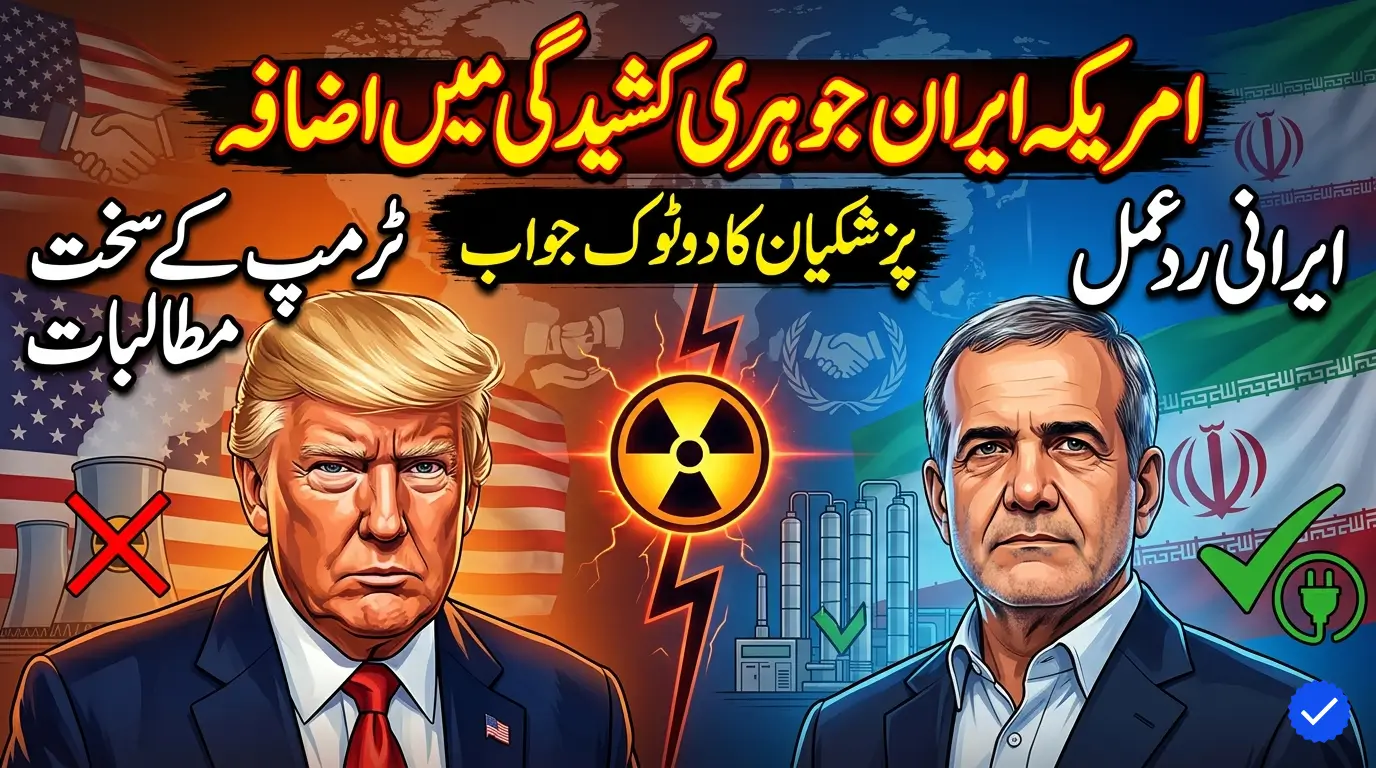
The long-standing tensions between Iran and the United States have once again intensified following recent remarks by Iranian President Masoud Pezeshkian. In a strong response to statements made by former US President Donald Trump, Pezeshkian firmly rejected any demand that Iran abandon its nuclear program, calling such expectations unjustified and contrary to international norms.
PTA Tax Reduction on Mobile Phones Likely in Budget 2026-27

Pezeshkian questioned the legitimacy of the US stance, asking what wrongdoing Iran had committed to justify such restrictions. His remarks reflect Iran’s consistent position that its nuclear program is peaceful and intended for civilian purposes such as energy production, scientific development, and medical research.
Background of the Nuclear Dispute
The dispute over Iran’s nuclear program dates back more than two decades and has involved numerous negotiations and international interventions. It reached a significant milestone in 2015 with the Joint Comprehensive Plan of Action, an agreement aimed at limiting Iran’s nuclear activities in exchange for sanctions relief.
However, tensions escalated when the United States withdrew from the deal during Trump’s presidency. This move led to renewed economic sanctions on Iran and triggered a gradual breakdown in diplomatic relations between the two countries.
Iran’s Position on Nuclear Rights
Iran maintains that its nuclear activities are entirely peaceful and fall within its rights under international law. The country argues that it is being unfairly targeted and denied access to technology that is legally available to other nations.
President Pezeshkian emphasized that no country has the authority to unilaterally restrict another nation’s access to nuclear technology. According to Iran, such demands are not only unjust but also politically motivated.
Govt Pays Rs. 38 Billion to Keep Petrol Prices Stable
The United States’ Concerns
The United States, on the other hand, views Iran’s nuclear program with suspicion. American officials argue that without strict controls, Iran could potentially develop nuclear weapons, posing a threat to global security.
This concern has led Washington to push for tighter restrictions and increased monitoring of Iran’s nuclear facilities, despite Tehran’s repeated assurances that its program is not intended for military purposes.
Diplomatic Efforts and Upcoming Talks
Efforts to revive the nuclear agreement have repeatedly faced obstacles, with both sides accusing each other of non-compliance. Iran points to US sanctions as a key issue, while Western nations highlight Iran’s uranium enrichment activities.
Recent reports suggest that representatives from both countries may meet in Islamabad. Preparations, including heightened security and the arrival of foreign delegations, indicate that these talks are being taken seriously, although expectations for a major breakthrough remain limited.
Pakistan Embassy in Muscat Announces Job Openings for Temporary Positions
Regional and Global Impact
The ongoing dispute has significant implications for regional stability and global politics. Any escalation could affect not only the Middle East but also international energy markets and economic conditions worldwide.
Iran’s position as an oil-producing nation means that tensions can influence global oil prices, making the situation a matter of concern for many countries beyond the immediate conflict.
FAQs
1. Why is Iran refusing to give up its nuclear program?
Iran believes its nuclear program is peaceful and a legal right under international law.
2. What is the main concern of the United States?
The US fears that Iran could develop nuclear weapons.
3. What was the 2015 nuclear deal?
It was an agreement to limit Iran’s nuclear activities in exchange for sanctions relief.
4. Why did the US withdraw from the agreement?
The US argued the deal did not effectively prevent nuclear weapon development.
5. What is expected from the Islamabad talks?
The talks may help reduce tensions and possibly restart negotiations.
Has Iran Decided to Transfer Its Uranium Stockpile to Pakistan
Final Words
The Iran-US nuclear dispute remains a complex and evolving issue. While both sides continue to defend their positions, the importance of dialogue and diplomacy cannot be overlooked. Future negotiations may play a crucial role in determining whether tensions escalate further or move toward resolution.