
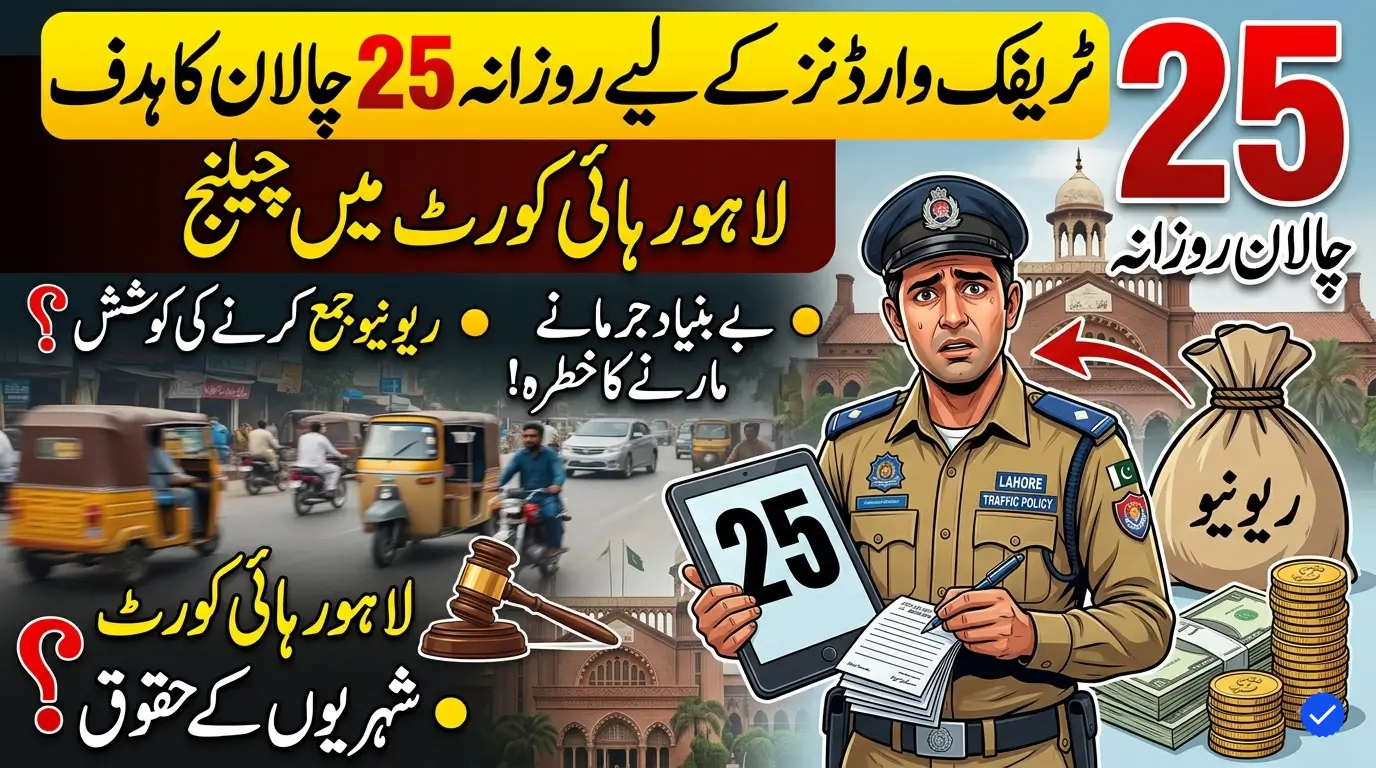
A constitutional petition has been filed in the Lahore High Court challenging the reported policy of assigning a daily target of 25 traffic challans to wardens. The case has sparked debate over law enforcement practices and the balance between maintaining road discipline and protecting citizens’ rights.
FIA Arrests Biscuit Company Directors Bankers in Rs. 6.6 Billion Fraud Case

According to the petitioner, the practice of imposing fixed challan targets is transforming traffic enforcement into a revenue-driven exercise rather than a system based on actual violations. This concern has raised serious questions about the intent and implementation of such policies.
Concerns Over Revenue-Driven Enforcement
The petition argues that the introduction of daily challan quotas is effectively turning traffic policing into a mechanism for generating revenue. Instead of focusing on genuine violations, wardens may feel pressured to meet targets regardless of whether motorists have committed offenses.
This shift, according to the plea, undermines the integrity of traffic enforcement and erodes public trust in institutions responsible for maintaining road safety.
Allegations of Fundamental Rights Violations
A key argument presented in the petition is that the quota system violates citizens’ fundamental rights. By encouraging the issuance of fines without proper justification, the policy could lead to arbitrary enforcement.
Such actions may conflict with constitutional protections that ensure fairness, due process, and equal treatment under the law, making the issue not just administrative but also legal in nature.
Punjab Opens Registrations for CM IT Internship Program
Impact on Traffic Wardens and Their Duties
The policy is also said to affect the professional conduct of traffic wardens. Assigning numerical targets may create undue pressure on officers, forcing them to prioritize quantity over quality in enforcement.
As a result, wardens might focus more on issuing challans than on managing traffic flow, educating drivers, and preventing accidents, which are their primary responsibilities.
Risk of Unjustified and Baseless Fines
The petitioner has warned that the quota system could lead to unjustified fines being imposed on motorists. When officers are required to meet daily targets, there is a risk that challans may be issued even in the absence of clear violations.
This not only creates financial burden for citizens but also increases the likelihood of disputes between the public and law enforcement authorities.
Karachi Launches Smart Water Metering System to Modernize Supply
Broader Implications for Public Trust
The case highlights broader concerns about transparency and accountability within traffic policing systems. If enforcement is perceived as unfair or biased, it can damage the relationship between citizens and authorities.
Maintaining public trust is essential for effective governance, and policies that appear to prioritize revenue over justice may have long-term negative consequences.
Legal Proceedings and Expected Outcome
The Lahore High Court is expected to examine the legality of the challan quota system and determine whether it aligns with constitutional principles. The court’s decision could set an important precedent for how traffic laws are enforced across the region.
Legal experts believe the outcome may influence future policies, ensuring that enforcement practices remain fair, transparent, and focused on public safety rather than financial targets.
Iran Undecided on Talks as Tensions Rise Between Washington and Tehran
FAQs
What is the petition about?
The petition challenges the policy of assigning a daily target of 25 challans to traffic wardens, claiming it promotes unfair enforcement.
Why is the challan quota controversial?
It is seen as turning traffic policing into a revenue-generating activity rather than focusing on actual traffic violations.
How could this policy affect citizens?
Citizens may face unjustified fines if wardens issue challans simply to meet daily targets.
What legal grounds are being used in the petition?
The petitioner argues that the policy violates fundamental rights, including fairness and due process.
What could be the outcome of the case?
The court may strike down or modify the policy, potentially setting guidelines for fair traffic enforcement.
Final Words
The challenge to the challan quota system brings attention to an important issue at the intersection of governance, law enforcement, and citizens’ rights. While maintaining traffic discipline is essential, it must not come at the cost of fairness and justice. The court’s decision will likely play a crucial role in shaping future policies, ensuring that enforcement remains balanced, transparent, and aligned with constitutional values.
Ceasefire Extended After Pakistan Stops US From Attacking Iran