
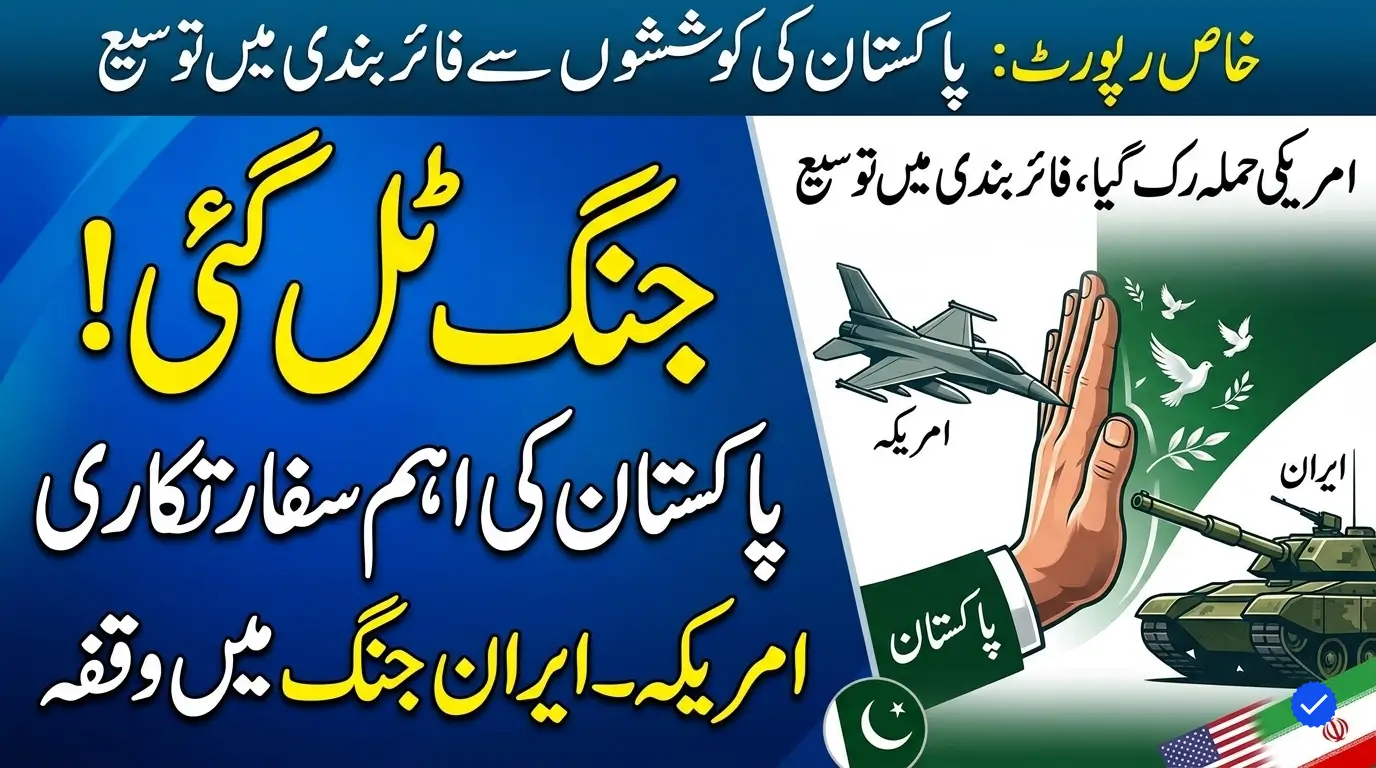
A significant development emerged in rising global tensions as US President Donald Trump announced an extension of the ceasefire between the United States and Iran. The decision came after Pakistan’s top leadership intervened diplomatically, urging Washington to delay a planned military strike.
Huawei Launches World’s First Passport Style Foldable Ahead of

Pakistan’s Prime Minister Shehbaz Sharif and Chief of Army Staff Asim Munir played a central role in this effort, engaging in high-level communication aimed at preventing further escalation.
Pakistan’s Diplomatic Role
Pakistan positioned itself as a key mediator in the crisis, working actively to reduce tensions between the US and Iran. Its diplomatic outreach helped create space for dialogue at a time when the situation was rapidly deteriorating.
This role has strengthened Pakistan’s image globally as a responsible actor capable of facilitating dialogue in high-stakes geopolitical conflicts.
US Strategy and Position
Despite extending the ceasefire, the United States has maintained pressure on Iran, particularly through its blockade around the Strait of Hormuz. This move continues to impact Iran’s economic and strategic position.
According to President Trump, Iran’s internal situation remains unstable, and additional time is needed for its leadership to present a unified proposal, justifying the delay in military action.
Islamabad Police to Get Modern Training Academy as Safe City
Iran’s Response and Concerns
Iran has responded strongly to the ongoing developments. Foreign Minister Seyed Abbas Araghchi accused the US of violating the ceasefire, stating that the blockade of ports amounts to an act of war.
Tehran has also expressed reluctance to participate in upcoming negotiations, citing concerns over the effectiveness and fairness of the current ceasefire framework.
Talks and Rising Complications
The situation became more complicated when Iran reportedly refused to attend talks scheduled in Pakistan. This decision has created uncertainty around future diplomatic efforts.
Meanwhile, the cancellation of US Vice President JD Vance visit to Pakistan further signals the fragile and uncertain nature of the ongoing crisis.
Future Risks and Possibilities
While the ceasefire extension has temporarily prevented conflict, underlying issues remain unresolved. Analysts warn that tensions could escalate again if negotiations fail.
Pakistan’s diplomatic efforts have bought valuable time, but the path to lasting peace depends on meaningful engagement from both the US and Iran.
Gold Prices Decline in Pakistan but Stay Near Record High Levels
FAQs
What role did Pakistan play in this situation?
Pakistan acted as a mediator, helping to delay military action and secure an extension of the ceasefire.
Why was the ceasefire extended?
The ceasefire was extended to give Iran time to stabilize internally and prepare a unified proposal for negotiations.
Is Iran participating in the talks?
Currently, Iran has shown reluctance to join talks, citing concerns over the ceasefire framework.
What is the purpose of the US blockade?
The blockade is intended to maintain pressure on Iran by restricting its trade and maritime movement.
Is the threat of war over?
No, the risk remains if diplomatic efforts fail and tensions rise again.
Final Words
The extension of the ceasefire offers a temporary pause in a highly volatile situation. Pakistan’s diplomatic intervention has played a crucial role in preventing immediate conflict, but sustainable peace will require serious negotiations and mutual compromise between the United States and Iran.
Pakistan Extends Airspace Ban on Indian Flights Until May 2026