
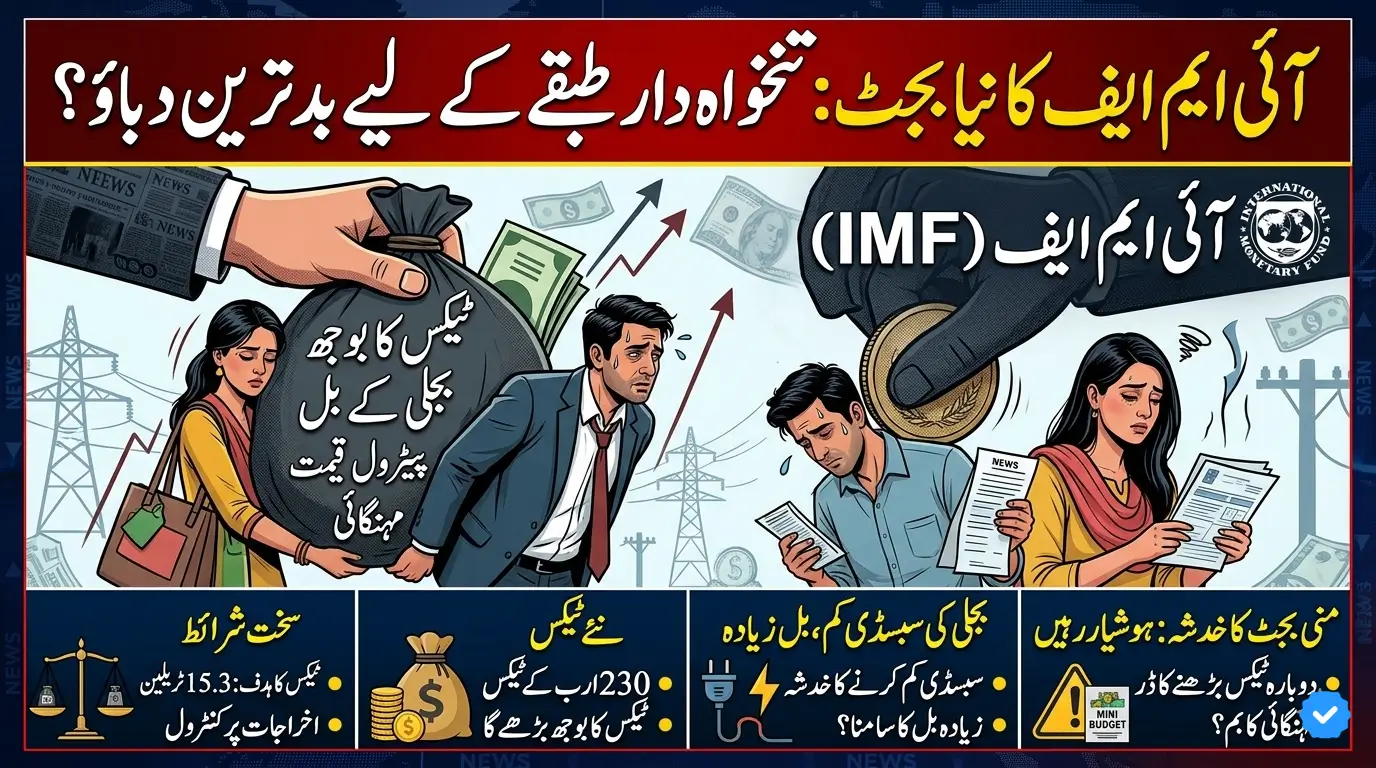
Pakistan is preparing to begin important budget negotiations with the International Monetary Fund (IMF) for the 2026-27 federal budget, and early reports suggest that salaried individuals may face even greater financial pressure in the coming year. The discussions are expected to focus on new taxation measures, spending controls, and revenue targets as the government attempts to secure IMF approval while managing the country’s economic challenges.
Sindh Announces Early Salaries Pensions Ahead of Eid ul Adha
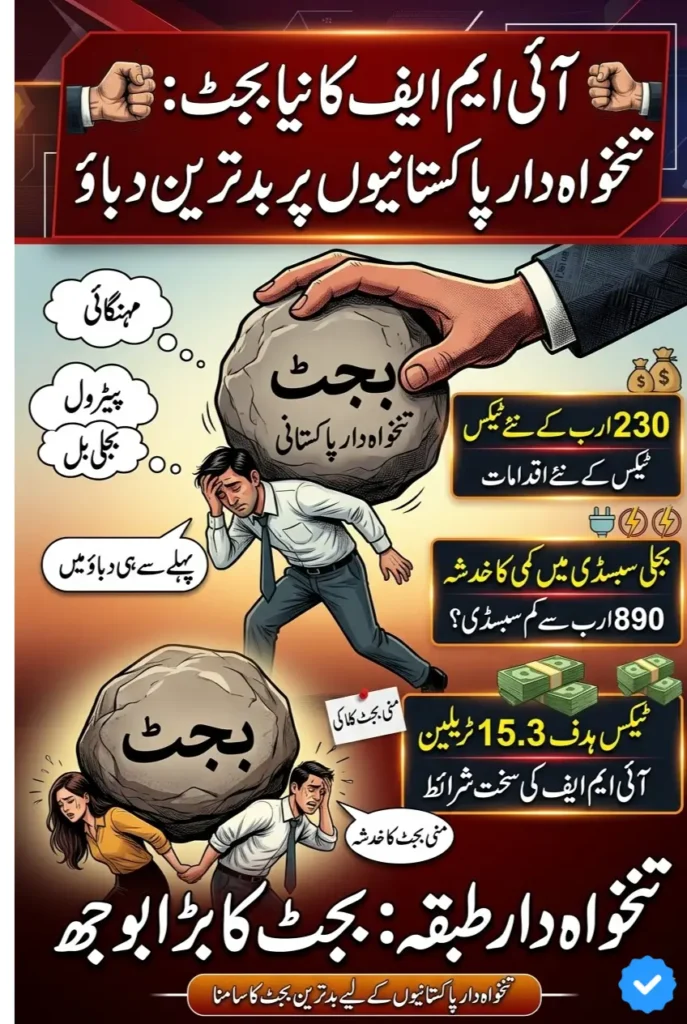
According to reports, the IMF mission is expected to arrive in Islamabad next week to review Pakistan’s economic plans and budget proposals. The government is trying to seek some relief for salaried workers, especially middle-income earners, by proposing reductions in income tax rates. However, experts believe that obtaining IMF approval for major tax relief measures may be difficult because Pakistan remains under strict financial conditions tied to the ongoing loan program.
IMF Conditions and Budget Negotiations
Pakistan’s economic policies are currently heavily influenced by IMF conditions linked to financial assistance and loan agreements. The IMF wants Pakistan to increase revenue collection, reduce budget deficits, and maintain strict control over government spending. Because of this, every budget proposal must match the lender’s financial targets and reform expectations.
The upcoming federal budget is expected to target tax collection of around Rs. 15.3 trillion. At the same time, Pakistan must keep the fiscal deficit close to 3.5 percent of GDP and maintain a primary surplus of approximately Rs. 2.8 trillion. These conditions are considered very strict and leave limited room for the government to provide relief to taxpayers or increase subsidies.
Salaried Class May Face More Burden
The salaried class in Pakistan has already been under pressure due to inflation, rising fuel prices, expensive electricity, and increasing living costs. Many employees hoped the upcoming budget would reduce income tax rates and provide some financial relief. The government is reportedly considering proposals for lower taxes on middle-income earners, but experts warn that such measures may not be approved without alternative revenue sources.
The IMF has reportedly informed Pakistan that any reduction in taxes must be balanced through other taxation measures. This means that if the government lowers taxes for salaried individuals, it may have to increase taxes elsewhere to meet revenue targets. As a result, many people fear that the overall financial burden on ordinary citizens could still increase despite promises of relief.
Petrol Prices in Pakistan Jump 64% After Three Months of US-Iran War
New Taxes and Revenue Measures
The IMF discussions are expected to focus on approximately Rs. 230 billion in additional tax measures. Authorities are considering several new taxation proposals to improve revenue collection and widen the tax base in Pakistan.
One major proposal involves introducing a new taxation system for traders and businesses. Under the suggested framework, businesses with annual sales of up to Rs. 300 million could face income tax equal to 1 percent of annual turnover. The government believes this measure could help bring more businesses into the documented economy and improve tax collection from sectors that have traditionally paid lower taxes.
Possible End of Subsidies
Another major concern is the future of power subsidies. Reports suggest that electricity subsidies may remain limited to around Rs. 890 billion or could even be reduced further under IMF pressure. This could directly affect electricity bills for households and industries already struggling with high energy costs.
The IMF has consistently encouraged Pakistan to reduce subsidies and allow market-based pricing in the energy sector. Officials argue that uncontrolled subsidies create additional pressure on the national budget and increase circular debt. However, critics say reducing subsidies during a period of high inflation could create further difficulties for lower and middle-income families.
Corporate Tax and Super Tax Discussions
The government is also reviewing proposals to reduce corporate tax rates, abolish the super tax, and withdraw the capital value tax. Business groups have long argued that high taxation discourages investment and slows economic growth.
However, financial experts believe that major tax reductions for businesses may be difficult under current IMF conditions. Since Pakistan is under pressure to increase revenue collection, the IMF may oppose significant reductions unless the government identifies other reliable income sources to offset losses.
Strict Spending Controls
The IMF has also imposed strict conditions on government spending. Current expenditure growth cannot exceed the projected inflation rate of around 8.4 percent. This means federal departments and public institutions may face tighter spending limits in the coming fiscal year.
These controls are intended to improve financial discipline and reduce unnecessary government expenses. However, they may also affect development projects, public services, and social welfare programs if budget allocations remain limited.
Saudi Arabia Provides $2 Billion Support to Strengthen Economy
Possibility of Mini-Budget
Economic experts warn that Pakistan could again face the possibility of a mini-budget later in the fiscal year if revenue targets are not achieved. In previous years, the government introduced additional taxes and financial measures after failing to meet IMF conditions during the annual budget cycle.
A mini-budget usually includes sudden tax increases, subsidy reductions, or new revenue measures aimed at controlling fiscal deficits. Businesses and taxpayers are therefore closely watching current negotiations to understand how strict the final budget may become.
Structural Tax Reforms Under Discussion
Tax experts have also proposed several structural reforms for Pakistan’s taxation system. One proposal suggests introducing a simpler tax system for salaried individuals to reduce complexity and improve compliance.
Authorities are also considering stricter rules regarding undeclared assets. Under the proposed framework, previously hidden assets could be taxed when discovered by authorities rather than when originally acquired. Supporters believe this could improve accountability and reduce tax evasion, while critics fear it may create additional uncertainty for investors and property owners.
Public Concerns Over Rising Costs
The public reaction to reports about the upcoming IMF budget has been largely negative, especially among salaried employees already facing financial pressure from inflation and rising utility costs. Many people fear that additional taxes or reduced subsidies could make daily life even more expensive.
Workers in private and public sectors argue that salaries have not increased at the same pace as inflation. Rising fuel prices, transport costs, food expenses, and electricity bills have already reduced purchasing power for many households. As a result, any further financial burden in the budget could create more economic hardship for middle-class families.
Government’s Economic Challenge
The government now faces the difficult task of balancing IMF conditions with public expectations. On one side, Pakistan needs IMF support to maintain financial stability and secure international confidence. On the other side, citizens are demanding relief from inflation and economic pressure.
Officials hope that economic reforms, improved tax collection, and better financial management can gradually stabilize the economy. However, experts say sustainable improvement will require stronger exports, investment growth, energy sector reforms, and long-term fiscal discipline.
Punjab Govt Reveals Expected Summer Vacation Dates
5 Key Facts
- Pakistan will begin IMF budget negotiations for 2026-27 next week.
- The IMF is expected to discuss around Rs. 230 billion in new tax measures.
- The government wants some income tax relief for salaried workers.
- Electricity subsidies may remain limited or face further reductions.
- Pakistan’s tax collection target for the next fiscal year is expected to reach Rs. 15.3 trillion.
Final Word
Pakistan’s upcoming IMF-backed budget is expected to become one of the toughest financial plans in recent years, especially for salaried individuals already struggling with inflation and rising living costs. While the government is attempting to secure some relief measures, strict IMF conditions and ambitious revenue targets may leave limited space for major concessions.
Iran Allows Qatari Ship Full of LNG to Clear Hormuz And Head to Pakistan