
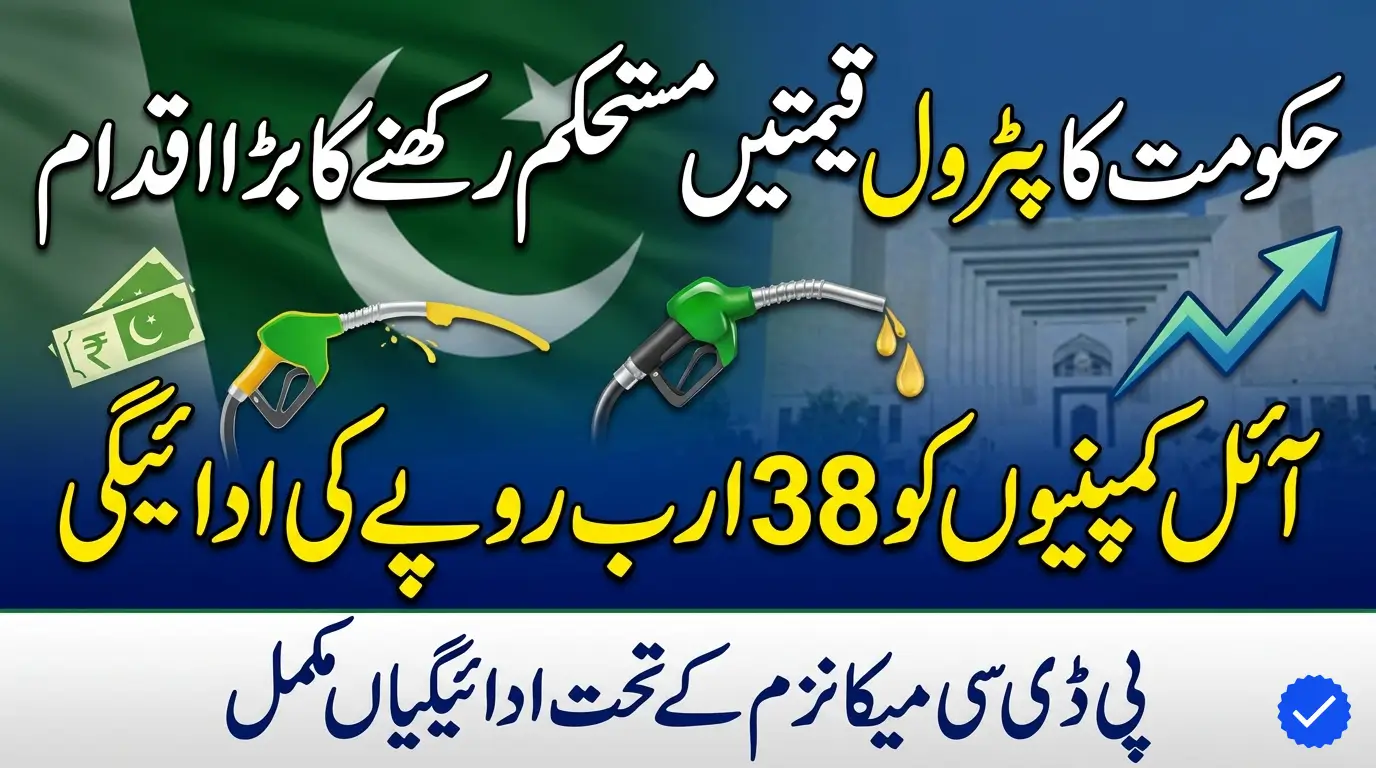
The Government of Pakistan has taken a significant step to maintain stability in fuel prices by disbursing approximately Rs. 38 billion to oil marketing companies. This payment has been processed through the Oil and Gas Regulatory Authority under the Price Differential Claims mechanism. The purpose of this initiative is to compensate oil companies for selling petroleum products at rates lower than the actual market price, thereby shielding consumers from sudden increases in fuel costs.
Pakistan Embassy in Muscat Announces Job Openings for Temporary Positions

This move comes at a time when global oil prices remain volatile, placing additional pressure on domestic markets. By absorbing part of the financial burden, the government aims to provide relief to the public while ensuring that fuel remains accessible and affordable. The disbursement has been made to 34 oil marketing companies, reflecting the scale of the effort and the importance of maintaining stability in the energy sector.
Understanding the Price Differential Claims Mechanism
The Price Differential Claims system is a financial arrangement through which the government compensates oil companies for losses incurred due to controlled pricing. When international oil prices rise but domestic prices are kept lower to protect consumers, oil marketing companies bear the difference. The PDC mechanism ensures that these companies are reimbursed, allowing them to continue operations without significant financial strain.
In recent developments, officials have introduced a revised mechanism to improve the efficiency and transparency of this system. The updated process is designed to ensure timely verification of claims and faster disbursement of funds. This is expected to reduce delays and improve financial discipline within the sector, benefiting both the government and the companies involved.
Has Iran Decided to Transfer Its Uranium Stockpile to Pakistan
Challenges Faced by Oil Marketing Companies
Despite the recent payment, concerns within the oil industry persist. The Oil Companies Advisory Council has highlighted that delays in receiving payments under the PDC mechanism continue to create cash flow problems for oil marketing companies. These companies rely on consistent funding to import petroleum products, maintain inventory levels, and ensure uninterrupted supply across the country.
Industry estimates suggest that a substantial backlog of payments still exists. Reports indicate that around Rs. 23 billion is pending for mid-March, Rs. 48 billion for late March, and approximately Rs. 57 billion for early April. Such delays can place significant pressure on companies, potentially affecting their ability to sustain operations efficiently.
Impact on Fuel Supply and Market Stability
Timely payments under the PDC mechanism are crucial for maintaining a stable fuel supply. If oil marketing companies face financial difficulties, it could disrupt the import and distribution of petroleum products. This, in turn, may lead to shortages, price fluctuations, or logistical challenges that impact consumers and businesses alike.
The government’s recent disbursement is a positive step toward addressing these concerns, but industry stakeholders emphasize the need for a more consistent and predictable payment schedule. Ensuring that companies receive their dues on time will help maintain confidence in the system and support the smooth functioning of the energy sector.
Moreover, stable fuel prices play a vital role in the overall economy. Transportation, manufacturing, and agriculture all depend heavily on fuel, and any disruption can have widespread consequences. By managing price fluctuations and supporting oil companies, the government aims to create a more stable economic environment.
Peshawar Zalmi Qualify for PSL 11 Playoffs Complete Analysis and Season Review
Economic Implications of Subsidizing Fuel Prices
While keeping petrol prices stable provides immediate relief to consumers, it also places a financial burden on the government. The funds used for PDC payments come from public resources, which could otherwise be allocated to other sectors such as health, education, or infrastructure. Therefore, maintaining a balance between consumer relief and fiscal responsibility is a key challenge for policymakers.
At the same time, controlled fuel prices can help curb inflation and support economic stability. Lower fuel costs reduce transportation expenses, which can prevent a rise in the prices of goods and services. This makes fuel subsidies an important, though complex, tool in economic management.
However, long-term reliance on such mechanisms may not be sustainable. Experts often suggest that structural reforms, improved energy efficiency, and diversification of energy sources are necessary to reduce dependence on subsidies and ensure long-term stability.
FBR Allows Use of Confiscated Luxury Cars in Anti-Smuggling Operations
The Way Forward
The recent disbursement highlights the government’s commitment to supporting both consumers and the oil industry. However, it also underscores the need for ongoing improvements in the system. Strengthening the PDC mechanism, reducing payment delays, and enhancing transparency will be essential for addressing industry concerns.
In addition, exploring alternative energy solutions and improving domestic production could help reduce reliance on imported fuel. Such measures would not only ease financial pressure on the government but also contribute to energy security and environmental sustainability.
Moving forward, collaboration between government authorities, regulatory bodies, and industry stakeholders will be crucial. By working together, they can develop strategies that ensure a stable fuel supply, protect consumers, and maintain the financial health of the energy sector.
What is the purpose of the Rs. 38 billion payment?
The payment is meant to compensate oil marketing companies for selling fuel at lower-than-market prices under the Price Differential Claims mechanism.
What is the Price Differential Claims system?
It is a system where the government reimburses oil companies for losses incurred due to controlled fuel pricing.
Why are oil companies concerned despite the payment?
They are facing delays in payments and a significant backlog, which affects their cash flow and operations.
How do delayed payments impact fuel supply?
Delays can disrupt the ability of companies to import and distribute fuel, potentially leading to shortages.
Is subsidizing fuel prices sustainable in the long term?
While it provides short-term relief, it can strain government finances and may not be sustainable without reforms.
Govt Announces Huge Decrease in Diesel Price But No Change in Petrol Yet
Final Words
In conclusion, the government’s decision to release Rs. 38 billion to stabilize petrol prices reflects its effort to balance consumer relief with industry support. While this step is encouraging, the existence of payment backlogs and ongoing financial challenges highlights the need for further improvements. A more efficient and transparent system, combined with long-term energy strategies, will be essential to ensure stability and sustainability in the fuel sector.