
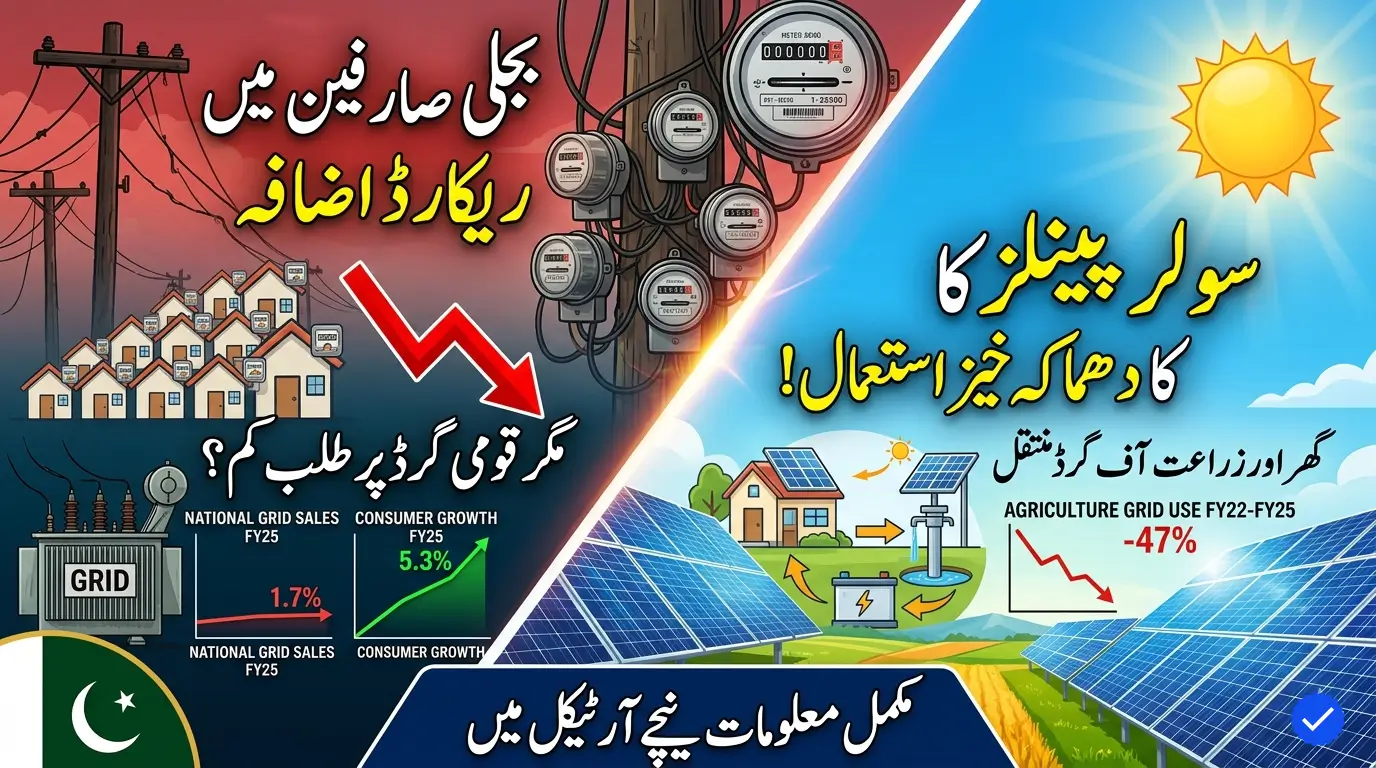
Pakistan’s electricity system is facing a growing challenge as the number of electricity consumers continues to rise while overall demand from the national grid grows at a much slower pace. According to the Pakistan Electricity Review 2026, more households and businesses are joining the electricity network, but many are increasingly relying on alternative energy sources, especially solar power, instead of depending entirely on the national grid.
Pakistan Helps Negotiate Final US-Iran Deal to End War Announcement Imminent
The report highlights a major shift in electricity consumption patterns across the country. While electricity sales through the national grid increased only slightly during FY25, consumer growth expanded much faster, signaling that Pakistan’s energy landscape is changing rapidly as people search for more affordable and reliable solutions.
Table of Contents
| Sr. No | Topic |
|---|---|
| 1 | Electricity Consumers Rising Rapidly |
| 2 | Why Grid Demand Is Growing Slowly |
| 3 | Solar Energy Changing Consumption Patterns |
| 4 | Agriculture Sector Moving Off-Grid |
| 5 | Structural Challenges for Pakistan’s Power Sector |
| 6 | Final Thoughts |
| 7 | FAQs |
Electricity Consumers Rising Rapidly
According to the report, Pakistan recorded a 5.3 percent increase in electricity consumers during FY25, while grid electricity sales rose by only 1.7 percent, reaching 111 terawatt-hours (TWh). This growing difference shows that although more people are getting electricity connections, overall grid consumption is not increasing at the same pace.
The trend suggests that many consumers are using less electricity from the national grid than before. Experts believe this shift reflects changing energy habits as households and businesses increasingly explore cheaper and independent power alternatives.
Why Grid Demand Is Growing Slowly
Over the past five years, Pakistan’s electricity demand pattern has changed significantly. Despite population growth averaging around 2 percent annually and real GDP growth of nearly 3 percent, grid electricity sales have reportedly declined by about 1 percent every year.
یہ صورتحال ظاہر کرتی ہے کہ بجلی کی طلب مکمل طور پر ختم نہیں ہو رہی بلکہ لوگ متبادل ذرائع، خاص طور پر سولر توانائی، کی طرف منتقل ہو رہے ہیں۔ بڑھتی ہوئی مہنگی بجلی نے بھی عوام کو قومی گرڈ پر کم انحصار کرنے پر مجبور کیا ہے۔
Solar Energy Changing Consumption Patterns
One of the biggest reasons behind slower grid demand growth is Pakistan’s rapidly expanding solar sector. Many households and businesses are installing solar systems to reduce electricity bills and protect themselves from rising energy costs.
The report suggests that domestic electricity sales increased by 4 percent in FY25, but household electricity connections grew by 6 percent during the same period. This indicates that average electricity consumption per household connection is gradually declining.
Pakistan to Introduce Cashless Payment for Passport Fee
Agriculture Sector Moving Off-Grid
The agriculture sector has witnessed one of the most dramatic changes in electricity usage. Grid electricity consumption in agriculture reportedly declined by 47 percent between FY22 and FY25, largely because farmers are increasingly switching to solar-powered irrigation systems.
کسانوں کے لیے سولر ٹیوب ویلز اور آبپاشی کے نظام نسبتاً کم خرچ ثابت ہو رہے ہیں، جس کی وجہ سے روایتی گرڈ بجلی پر انحصار تیزی سے کم ہو رہا ہے۔ یہ تبدیلی مستقبل میں زرعی شعبے کی توانائی ضروریات کو مکمل طور پر تبدیل کر سکتی ہے۔
Structural Challenges for Pakistan’s Power Sector
The report concludes that Pakistan’s electricity sector is now facing a structural mismatch. The country’s centralized power system was designed around growing electricity sales through the national grid, but consumers are increasingly moving toward decentralized energy sources.
As more people adopt solar systems and reduce dependence on traditional electricity networks, policymakers may need to redesign the country’s energy model to better align with changing consumer behavior and future energy demands.
PTA Updates Website With Easier Telecom Package Price Comparison Tools
Final Thoughts
Pakistan’s electricity sector appears to be entering a period of major transformation. While consumer numbers continue to grow, rising electricity prices and affordable solar alternatives are pushing many users away from the national grid. If this trend continues, the government may need significant reforms to adapt the power system to a rapidly changing energy environment.
FAQs
1. Why is Pakistan’s electricity demand growing slowly?
Electricity demand from the national grid is growing slowly because many consumers are increasingly using solar energy and other alternatives.
2. How much did electricity sales increase in FY25?
Grid electricity sales increased by only 1.7 percent in FY25, reaching 111 TWh.
3. Why are more people switching to solar power?
Rising electricity prices and the need for cheaper, reliable energy sources are encouraging households and businesses to adopt solar systems.
4. How has agriculture electricity usage changed?
Grid electricity use in agriculture dropped by 47 percent between FY22 and FY25 as farmers shifted to solar-powered irrigation.
5. What challenge does Pakistan’s power sector face now?
Pakistan’s power system faces a structural mismatch because it was designed for increasing grid demand while consumers are moving toward decentralized energy solutions.
Increase memory for more relevant answers
Upgrade to expand the amount of detail Chat GPT can bring into responses from your saved files and past conversations.
Pakistan Seeks Extension of $1.2 Billion Saudi Oil Facility