
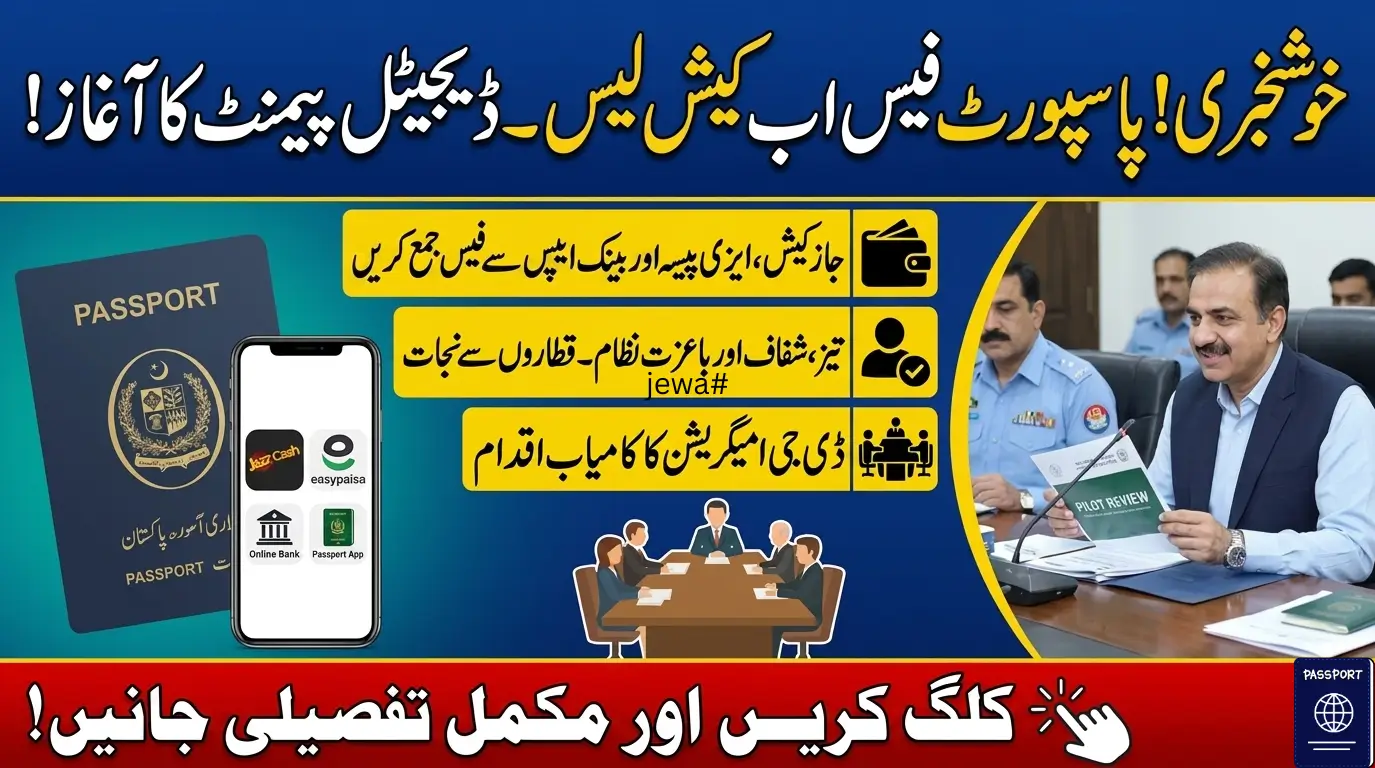
Pakistan to Introduce Cashless Payment
Pakistan is moving towards a fully digital system for passport fee payments, marking a significant shift in how citizens interact with government services. Instead of visiting banks and standing in long queues, applicants will now be able to pay their passport fees through digital platforms.
Traffic Plan Announced for Islamabad Cattle Markets
This initiative is part of a broader vision to modernize public services and align them with global digital standards. By integrating mobile wallets, banking apps, and online systems, the process is expected to become much more efficient and user-friendly.
Why Is Pakistan Moving Toward Digital Payments?
پاکستان میں پاسپورٹ فیس کو کیش لیس کرنے کا فیصلہ عوام کو سہولت فراہم کرنے کے لیے کیا گیا ہے۔ ماضی میں شہریوں کو بینکوں میں لمبی قطاروں میں کھڑا ہونا پڑتا تھا، جس سے وقت اور توانائی دونوں ضائع ہوتے تھے۔ اب ڈیجیٹل ادائیگی کے نظام سے یہ تمام مسائل کافی حد تک حل ہو جائیں گے اور لوگ گھر بیٹھے آسانی سے اپنی فیس جمع کر سکیں گے۔
The shift also supports the government’s broader digital transformation agenda. Digital payments reduce corruption, improve transparency, and create a record of every transaction, making the system more accountable and efficient.
Pakistan to Introduce Cashless Payment for Passport Fee
| Key Aspect | Details |
|---|---|
| Initiative | Cashless Passport Fee System |
| Authority | Directorate of Immigration & Passports |
| Chairperson | Muhammad Ali Randhawa |
| Payment Methods | Digital (JazzCash, EasyPaisa, Bank, etc.) |
| Objective | Faster, transparent, queue-free system |
| Government Vision | PM Shehbaz Sharif & Interior Ministry |
| Pilot Review | G-10 Passport Office Islamabad |
Which Payment Methods Will Be Available?
Under the new system, multiple payment options will be available to ensure accessibility for all citizens. These include mobile wallets like JazzCash and EasyPaisa, as well as traditional banking channels through the National Bank and other financial institutions.
This variety ensures that users from different backgrounds—whether tech-savvy or not—can easily adapt to the new system. It also reduces dependency on a single platform, making the system more reliable and flexible.
Gold Prices Rise Again in Pakistan as Per Tola Rate Nears Rs. 4.8 Lakh
How Will This System Benefit Citizens?
The benefits of a cashless passport fee system are numerous. First and foremost, it saves time. Citizens no longer need to visit banks physically, which is especially helpful for people living in remote areas.
Secondly, it enhances transparency. Every transaction is recorded digitally, reducing the chances of errors or fraud. Thirdly, it improves convenience, allowing users to complete payments anytime and from anywhere. Overall, it transforms a traditionally slow process into a fast and efficient one.
What Role Did the Meeting Play in This Decision?
This decision was finalized during a high-level meeting chaired by Director General Muhammad Ali Randhawa. The meeting included representatives from key financial institutions and stakeholders, ensuring that all aspects of the system were carefully planned.
The presence of organizations like National Bank, JazzCash, and EasyPaisa indicates strong collaboration between the public and private sectors. Such coordination is essential for the successful implementation of large-scale digital initiatives.
Pumps Could Soon Replace Costly Petrol With New Japanese Fuel Made From Air
What Improvements Are Being Made at Passport Offices?
حکام نہ صرف ادائیگی کے نظام کو بہتر بنا رہے ہیں بلکہ پاسپورٹ دفاتر میں خدمات کے معیار کو بھی بہتر بنانے پر توجہ دے رہے ہیں۔ جدید ٹیکنالوجی کے استعمال سے شہریوں کو تیز، شفاف اور باعزت سہولیات فراہم کرنے کا مقصد ہے تاکہ وہ کسی قسم کی پریشانی کے بغیر اپنی درخواست مکمل کر سکیں۔
In addition to digital payments, authorities are working on improving infrastructure, reducing processing times, and enhancing customer service. These steps aim to create a more comfortable and efficient experience for applicants.
What Did the G-10 Passport Office Visit Reveal?
During his visit to the Regional Passport Office in G-10 Islamabad, Muhammad Ali Randhawa reviewed the facilities and assessed the implementation of the cashless system already in place.
He interacted directly with citizens, listened to their concerns, and issued immediate instructions for resolving issues. His satisfaction with the system indicates that the pilot phase has been successful and is ready for wider implementation.
Pakistan’s Crude Oil Imports Hit Record High of US$964 Million in April 2026
What Challenges Could Arise With This System?
While the cashless system offers many benefits, it may also face some initial challenges. For instance, people who are not familiar with digital technology might find it difficult to adapt.
Additionally, technical issues such as server downtime or payment failures could temporarily disrupt the process. However, with proper planning, awareness campaigns, and support systems, these challenges can be effectively managed.
Final world
The introduction of a cashless payment system for passport fees is a major step forward in Pakistan’s journey toward digital governance. It not only simplifies the process for citizens but also enhances transparency and efficiency within government institutions. While some challenges may arise during the transition phase, the long-term benefits far outweigh the initial hurdles. With strong collaboration between authorities and financial institutions, this initiative has the potential to transform how public services are delivered in Pakistan.
Key Facts
- Pakistan is introducing a fully digital system for passport fee payments.
- The initiative was led by DG Immigration Muhammad Ali Randhawa.
- Payment options will include JazzCash, EasyPaisa, and bank channels.
- The system aims to eliminate long queues at banks.
- A pilot implementation at G-10 Passport Office has shown positive results.
Pumps Could Soon Replace Costly Petrol With New Japanese Fuel Made From Air