

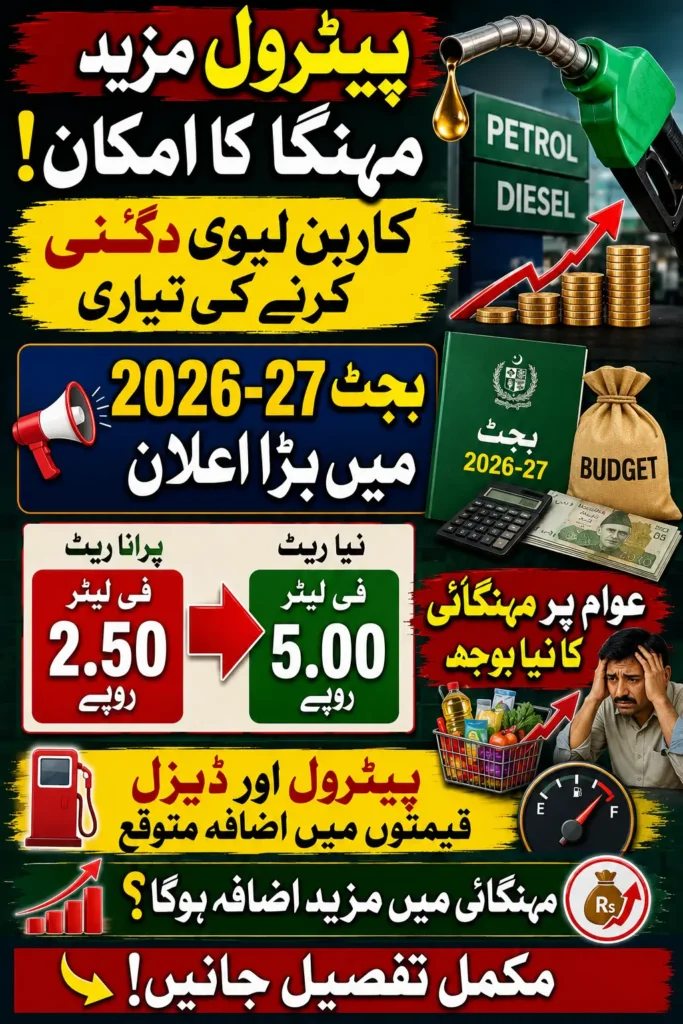
The government of Pakistan is preparing to introduce new fiscal measures in the upcoming Budget 2026 27 and one of the most significant developments is the proposed increase in the carbon levy on petroleum products. This move is expected to directly impact fuel prices, making petrol and diesel more expensive for consumers across the country. According to sources involved in the budget-making process, the carbon levy may be doubled from its current rate raising concerns among the public already dealing with inflation.
FBR Plans New Tax Scheme for Small Traders and
Background of Carbon Levy Policy
The carbon levy was introduced as part of the government’s strategy to generate revenue while aligning with global climate commitments. In the current fiscal year, a levy of Rs. 2.50 per litre was imposed on petroleum products. This was seen as a modest step toward incorporating environmental costs into fuel pricing. However in the upcoming fiscal year the government is planning to increase this levy to Rs. 5 per litre effectively doubling the existing charge.
This policy is not entirely unexpected, as previous budget documents had already hinted at a gradual increase in carbon-related taxes. The government is now preparing to fully implement this plan as part of broader economic reforms.
Expected Impact on Fuel Prices
If the proposed increase is approved, petrol prices are likely to rise further starting from July 1, 2026. The doubling of the carbon levy will directly add to the cost per litre, which will ultimately be passed on to consumers. This means that individuals who rely on petrol for daily commuting, transportation, and business operations will face higher expenses.
In Pakistan, fuel prices have a ripple effect on the entire economy. An increase in petrol prices leads to higher transportation costs, which in turn raises the prices of essential goods and services. As a result, inflationary pressures may intensify, affecting households and businesses alike.
Government’s Objectives Behind the Move
The primary objective of increasing the carbon levy is to boost government revenue while promoting environmentally responsible policies. By imposing higher taxes on petroleum products, the government aims to discourage excessive fuel consumption and encourage the use of cleaner energy alternatives.
Additionally, this move is part of Pakistan’s commitment to international climate agreements, where reducing carbon emissions is a key goal. The government believes that higher fuel costs may push industries and individuals toward energy-efficient solutions, such as electric vehicles and renewable energy sources.
Gold Rate Slips Near Rs. 4.7 Lac in Pakistan After Another
Economic and Public Concerns
Despite its environmental intentions, the proposed increase in the carbon levy has raised concerns among the public and business community. Many people argue that the timing of this decision is not ideal, as the country is already facing high inflation and economic challenges.
Transporters, small businesses, and daily wage earners are likely to be the most affected groups. Higher fuel costs can significantly increase operational expenses, reducing profit margins and placing additional financial strain on households.
Long-Term Implications
In the long run, the increase in carbon levy could have both positive and negative effects. On the positive side, it may contribute to environmental sustainability by reducing fuel consumption and lowering carbon emissions. It could also help the government generate additional revenue to support development projects.
However, if not managed carefully, it may also slow down economic growth by increasing the cost of doing business. Industries that rely heavily on fuel, such as logistics and manufacturing, may face challenges in maintaining competitiveness.
Role in Budget 2026-27
The proposed increase in the carbon levy is expected to be officially announced in the federal budget for FY2026-27. It will likely be part of a broader set of fiscal measures aimed at stabilizing the economy and meeting revenue targets.
Budget announcements often include adjustments in taxes and levies to address financial gaps. In this case, the carbon levy appears to be a strategic tool for both economic and environmental policy objectives.
US Plan to Extend 10% Tariff Unlikely to Hurt Pakistan’s
FAQS
1. What is the carbon levy on petroleum products?
The carbon levy is a tax imposed on fuel to account for environmental costs and generate government revenue.
2. How much will the carbon levy increase?
The government is planning to increase it from Rs. 2.50 per litre to Rs. 5 per litre.
3. When will the new levy be?
It is expected to be implemented from July 1, 2026, as part of the new budget.
4. Will petrol prices increase this levy?
Yes, the increase in carbon levy will likely make petrol and diesel more expensive.
5. Why is the government increasing the carbon levy?
The goal is to raise revenue and promote environmentally friendly policies by reducing fuel consumption.
Final Words
The proposed doubling of the carbon levy on petroleum products is a significant step that reflects the government’s attempt to balance economic needs with environmental responsibilities. While it may help increase revenue and support climate goals, it also poses challenges for consumers already struggling with rising costs. The real impact of this policy will depend on how it is implemented and whether supportive measures are introduced to ease the burden on the public.
Oil Now Under $90 But Petrol Likely to Stay Over Rs. 400