
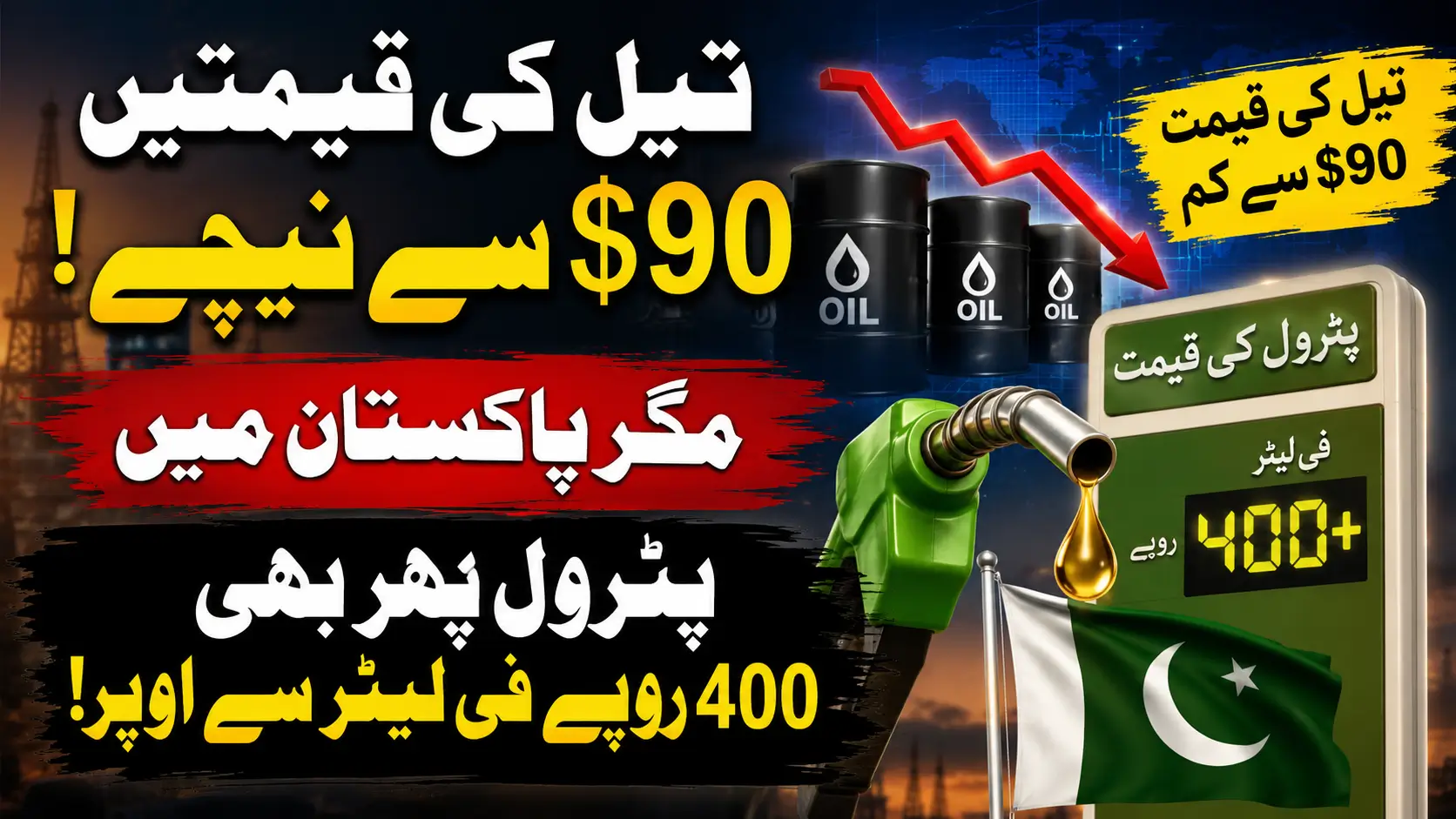
Global crude oil prices have recently dropped below the $90 per barrel mark, raising hopes of relief for fuel-importing countries like Pakistan. The decline in prices comes amid reports of easing geopolitical tensions and speculation about possible diplomatic developments involving the United States and Iran, with indirect regional mediation efforts also being discussed.
Court Questions Why Punjab Is Charging Royalty on Cement Instead of Minerals
تاہم، صورتحال اب بھی انتہائی غیر یقینی ہے کیونکہ مشرق وسطیٰ میں جغرافیائی سیاسی خطرات سرمایہ کاروں کے جذبات کو متاثر کرتے رہتے ہیں۔ آبنائے ہرمز جیسے اہم جہاز رانی کے راستوں میں کوئی بھی اضافہ یا خلل تیل کی قیمتوں میں کمی کے رجحان کو تیزی سے تبدیل کر سکتا ہے۔
Global Oil Market Shows Downward Trend
In recent trading sessions, West Texas Intermediate (WTI) crude fell more than 4 percent to around $89.83 per barrel, while Brent crude dropped to approximately $95.94 per barrel. This decline marked a continued move below the $100 threshold for Brent, which had previously been considered a psychological barrier for traders.
At the same time, tensions in the region have not fully subsided. Reports of military activity and political accusations between involved parties continue to create uncertainty in the energy market.
Because of this instability, oil prices remain highly sensitive to any sudden geopolitical change, making long-term forecasting difficult for traders and policymakers.
Why Petrol Prices in Pakistan Do Not Fall Easily
In Pakistan, fuel prices are not directly linked to global crude oil rates alone. Several additional factors determine the final price, including petroleum levies, taxes, import premiums, and the value of the Pakistani rupee against the US dollar.
Another important factor is government revenue dependency on fuel taxes. Petroleum products are a major source of income for the national budget, and adjustments in global prices are often balanced through taxation changes.
Geopolitical Risks Continue to Influence Oil Markets
The global oil market is highly sensitive to political developments, especially in the Middle East. Any tension involving Iran, the United States, or other regional powers can immediately affect supply expectations and investor confidence.
Even small disruptions in this region can lead to sharp price fluctuations. Therefore, while current conditions show some improvement, the overall risk environment has not completely stabilized.
Analysts suggest that any potential agreement between major powers would likely be temporary rather than a permanent solution.
Your Electricity Bill Could Go Up Again Next Month
Global Oil Price Situation
Global oil prices have fallen due to weaker demand and easing geopolitical pressure. Traders are reacting to changing news from international markets.
This decline has created short-term expectations of cheaper energy worldwide. However, the situation remains unstable and can change quickly.
Any sudden political tension can reverse this trend immediately. Oil markets are highly sensitive to global conflicts and supply risks.
Therefore, analysts believe this price drop may not last for a long time.
Pakistan Fuel Price Pressure
Pakistan imports most of its fuel requirements from international markets. Because of this, global oil prices directly affect local costs.
But the final petrol price in Pakistan is not based only on crude oil rates.
Taxes, duties, and transportation costs add a heavy burden on consumers. The government also depends on fuel taxes for revenue.
As a result, even when global oil prices fall, relief for the public remains limited.
Economic Impact on Pakistan and Public Pressure
Fuel prices in Pakistan directly affect transportation costs, food prices, and overall inflation. As a result, any increase in petrol rates puts additional pressure on household budgets already affected by rising living expenses.
Even when global oil prices decline the benefits are often diluted before reaching the public due to domestic economic constraints. Economists suggest that meaningful relief would require structural reforms, including tax rationalization and currency stabilization.
FAQs
- WTI crude oil recently fell to around $89.83 per barrel.
- Brent crude dropped to approximately $95.94 per barrel.
- Global prices are influenced by expectations of Iran–US diplomatic developments.
- Pakistan’s fuel prices depend heavily on taxes and currency value, not just crude oil.
- The Strait of Hormuz remains a critical and sensitive global oil route.
Free Electricity By Maryam Nawaz For All Punjab People Update 2026
Final Word
Although global oil prices have declined, the expected relief for Pakistan may remain limited due to internal economic pressures and external geopolitical risks.
Until there is sustained stability in both global markets and domestic fiscal policy, petrol prices in Pakistan are likely to remain high despite fluctuations in crude oil.