
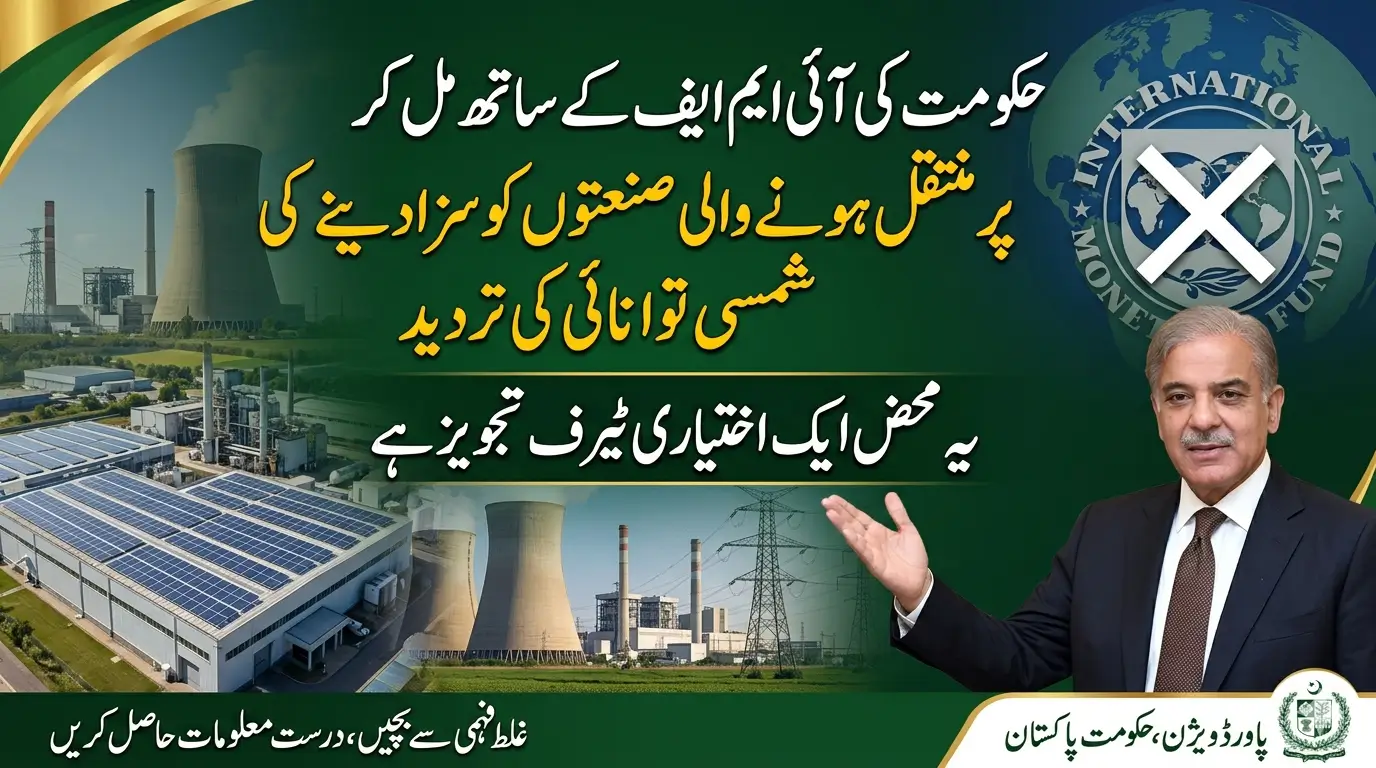
The Government of Pakistan has firmly denied reports suggesting that it is working with the International Monetary Fund IMF on a plan to penalize industries shifting toward solar energy. The clarification comes after a news report claimed that a new tariff structure was being designed to discourage industries from reducing their reliance on grid electricity. According to the Power Division, such claims are misleading and based on a misunderstanding of an optional tariff proposal currently under review.
Petrol Likely to Get More Expensive With 2x Carbon
Clarification by Power Division
A spokesperson for the Power Division categorically rejected the notion that any proposal has been shared with the IMF to penalize industrial consumers. The spokesperson emphasized that there is no plan to punish industries for using less than their sanctioned electricity load or for adopting solar and other alternative energy sources.
The official further explained that the confusion appears to stem from misinterpretation of a tariff proposal that is still under consideration. This proposal is not mandatory and is designed to provide an alternative option rather than enforce restrictions on consumers.
Understanding the Proposed Tariff Model
The proposed tariff model introduces a different cost allocation mechanism. It suggests relatively higher fixed charges while reducing variable energy charges across different time periods, including solar generation hours and night-time consumption. The aim is to create a pricing structure that aligns better with certain industrial consumption patterns.
This model is particularly intended for industries that operate continuously and have stable, predictable energy demands. For such consumers, a tariff with higher fixed costs but lower variable rates may offer better cost efficiency and planning certainty.
Optional Not Mandatory
One of the key points highlighted by the Power Division is that the proposed tariff structure is entirely optional. Industrial consumers will have the freedom to choose whether to adopt this new model or continue with the existing tariff system.
There will be no obligation or pressure on industries to switch to the new tariff. Moreover, those who decide not to adopt it will face no penalties or adverse consequences. This flexibility ensures that businesses can select the pricing structure that best suits their operational needs.
FBR Plans New Tax Scheme for Small Traders and Shopkeepers in Budget 2026-27
Misinterpretation of Policy Intent
According to the spokesperson, the claims that industries would be “punished” for shifting to solar energy are completely unfounded. The report in question failed to accurately reflect the clarification provided by the Power Division prior to its publication.
The government believes that such misreporting can create unnecessary confusion among stakeholders and may negatively impact confidence in energy sector reforms. It reiterated that the proposal is meant to provide additional options rather than restrict consumer choices.
Support for Renewable Energy
Pakistan has seen a growing trend of industries adopting solar power as a cost-effective and sustainable energy solution. The government has generally supported this transition as part of its broader renewable energy goals.
The Power Division clarified that there is no policy aimed at discouraging solar adoption. Instead, efforts are being made to balance the financial sustainability of the power sector while accommodating the increasing shift toward alternative energy sources.
Importance of Accurate Reporting
The spokesperson stressed the importance of responsible journalism, especially on technical matters such as energy tariffs. Misrepresentation of policy proposals can lead to misunderstandings and unnecessary concern among businesses and investors.
Public discussions on energy reforms should be based on accurate information and a proper understanding of the underlying mechanisms. Clear communication is essential to ensure that stakeholders can make informed decisions.
Gold Rate Slips Near Rs. 4.7 Lac in Pakistan After Another
Impact on Industrial Sector
For industrial consumers, the reassurance from the government provides clarity and stability. Businesses can continue exploring solar energy solutions without fear of punitive measures.
At the same time, the introduction of an optional tariff model offers additional flexibility. Industries with different consumption patterns can evaluate whether the new structure aligns with their operational and financial goals.
FAQS
1. Is the government planning to penalize industries using solar energy?
No, the Power Division has clearly stated that there is no such plan. Industries adopting solar energy will not face any penalties.
2. Has Pakistan shared any such proposal with the IMF?
No, the government has denied sharing any proposal with the IMF related to penalizing industrial consumers for shifting to solar power.
3. What is the proposed tariff model about?
The proposed model includes higher fixed charges and lower variable energy costs, designed as an optional alternative for certain industrial consumers.
4. Is the new tariff structure mandatory?
No, it is completely optional. Industries can choose to adopt it or continue with the existing tariff system.
5. Who will benefit from the proposed tariff model?
Industries with stable and continuous energy usage patterns, such as process industries, may benefit from the new structure.
Final World
The clarification by the Power Division puts to rest concerns about any punitive measures against solar adoption. As Pakistan moves toward a more diversified energy mix, policies must strike a balance between encouraging renewable energy and maintaining the stability of the power sector. Accurate reporting and transparent communication will remain key in building trust among stakeholders and ensuring a smooth transition toward a sustainable energy future.
US Plan to Extend 10% Tariff Unlikely to Hurt Pakistan’s Exporters Industry