
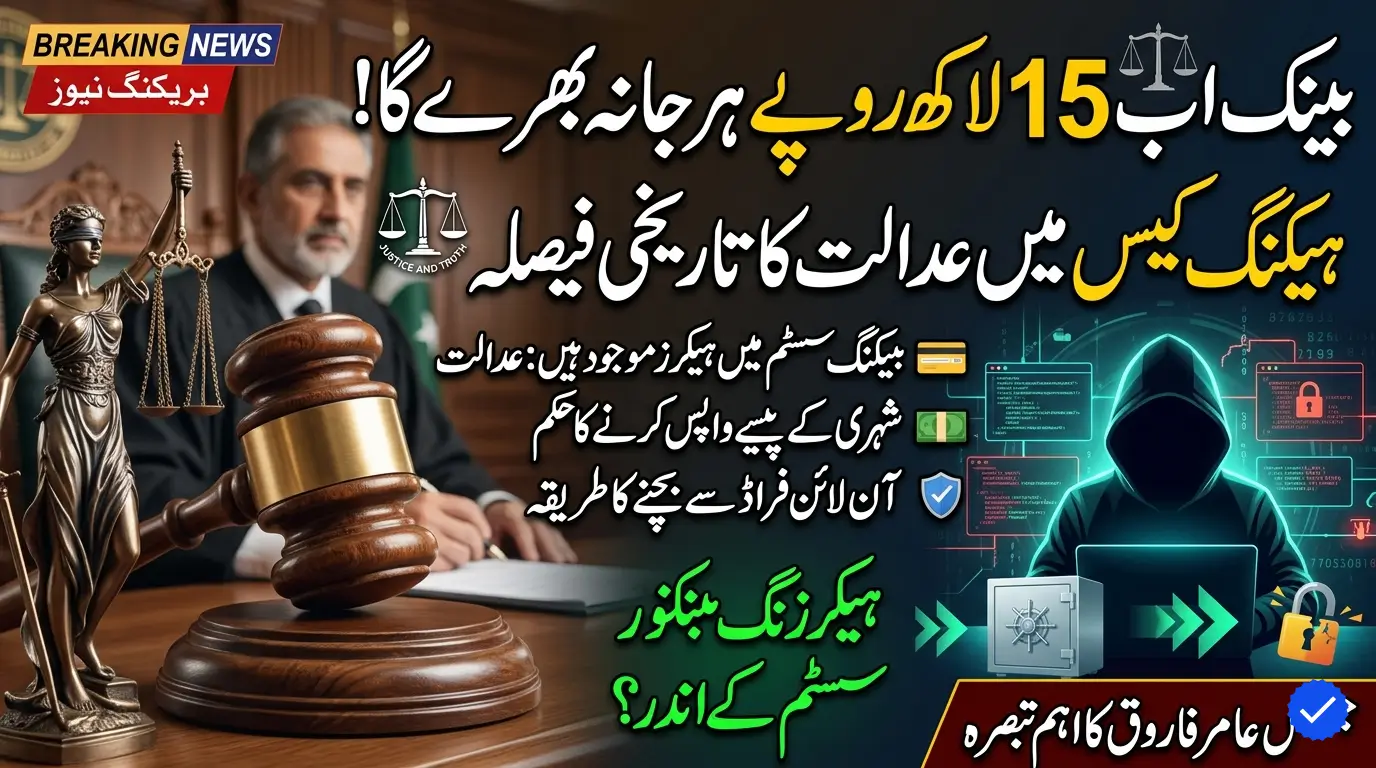
Hackers Inside Banking Systems
Pakistan’s Federal Constitutional Court has ordered a private bank to return more than Rs. 15 lac to a citizen whose bank account was allegedly hacked. The important ruling has once again highlighted growing concerns about cybercrime, online banking fraud, and the security of digital banking systems in the country.
Gold Rate Slips to Rs. 4.7 Lac in Pakistan After Third Consecutive
عدالت نے بینک کی جانب سے دائر اپیل کو مسترد کرتے ہوئے شہری کے حق میں فیصلہ سناتے ہوئے کہا کہ مالیاتی ادارے صارفین کے فنڈز کی حفاظت کے لیے محفوظ نظام برقرار رکھنے کے ذمہ دار ہیں۔ اس کیس نے عوام کی خاصی توجہ مبذول کرائی ہے کیونکہ یہ بینکنگ اداروں کے اندر سائبرسیکیوریٹی اقدامات کے حوالے سے سنگین سوالات اٹھاتا ہے۔
Details of the Banking Fraud Case
According to court proceedings, the case involved a resident of Layyah whose bank account was hacked in 2022. During the cyber fraud incident, approximately Rs. 1.534 million was withdrawn from the customer’s account without authorization.
The victim approached the court after failing to recover the stolen amount through regular banking procedures. The citizen argued that the bank had failed to protect customer funds and did not maintain adequate cybersecurity measures to prevent unauthorized access.
Justice Aamer Farooq’s Important Remark
The judge stated that hackers often operate within banking systems or exploit weaknesses in digital banking infrastructure. He emphasized that banks have a legal and moral responsibility to ensure that their systems remain secure, modern, and capable of protecting customer data and funds.
Justice Aamer Farooq also mentioned that he personally had received fraudulent scam calls, showing that cyber fraud has become a widespread issue affecting people from all walks of life.
How to Check the Number of SIMs Issued Against Your CNIC
Rising Cybercrime Threat in Pakistan
Cybercrime cases have increased significantly in Pakistan over the last few years. As more people use online banking, mobile apps, digital wallets, and internet-based financial services, fraudsters have also become more active and sophisticated.
Common forms of banking fraud in Pakistan include:
- Fake banking calls
- OTP scams
- Phishing messages
- Fake mobile applications
- SIM swap fraud
- ATM card cloning
- Online account hacking
Criminals often pretend to be bank representatives and trick users into sharing sensitive information such as PIN codes, passwords, or verification codes.
Weak Security Measures Under Scrutiny
The recent court decision has placed banking security systems under public scrutiny. Many customers now question whether banks are doing enough to protect user accounts from hackers and cybercriminals.
ماہرین کا خیال ہے کہ آن لائن خطرات سے نمٹنے کے لیے بینکوں کو اپنے سائبر سیکیورٹی کے بنیادی ڈھانچے کو مسلسل اپ ڈیٹ کرنا چاہیے۔ مالیاتی اداروں سے توقع کی جاتی ہے کہ وہ صارفین کے لین دین کو محفوظ بنانے کے لیے جدید نگرانی کے نظام، خفیہ کاری کی ٹیکنالوجیز، اور فراڈ کا پتہ لگانے کے طریقہ کار کا استعمال کریں۔
Importance of Digital Banking Security
With the rapid growth of digital banking in Pakistan, cybersecurity has become more important than ever. Millions of Pakistanis now rely on mobile banking apps and online transactions for everyday financial activities.
A single security breach can result in:
- Financial loss
- Identity theft
- Unauthorized transactions
- Data leaks
- Emotional stress for victims
Customers expect banks to provide secure services and immediate assistance in case of suspicious activity.
NADRA Launches New Website with Maps, Online Verification for CNIC
How Customers Can Protect Their Bank Accounts
While banks are responsible for maintaining secure systems, customers should also take precautions to reduce the risk of fraud.
Some important safety measures include:
- Never share OTP codes with anyone
- Avoid clicking suspicious links
- Use official banking applications only
- Enable transaction alerts
- Change passwords regularly
- Avoid public Wi-Fi for banking transactions
- Report suspicious activity immediately
Cybersecurity experts say awareness is one of the strongest tools against online fraud.
Impact of the Court Decision
Legal experts believe this ruling could influence future banking fraud cases in Pakistan. The decision may encourage victims of cyber fraud to seek legal action if banks fail to provide adequate protection or refuse compensation.
Consumer rights advocates argue that financial institutions must take greater responsibility because ordinary users often lack technical knowledge to defend themselves against advanced cyberattacks.
Banking Sector Faces New Challenges
Pakistan’s banking sector is rapidly moving toward digital transformation, but this shift also creates new risks and responsibilities. Banks must now balance convenience with strong cybersecurity protection.
As cybercriminals develop more advanced techniques, financial institutions may need to invest heavily in:
- Artificial intelligence-based fraud detection
- Real-time transaction monitoring
- Biometric verification systems
- Stronger customer authentication
- Employee cybersecurity training
Experts warn that failing to improve security systems could damage public trust in digital banking services.
How to Get NADRA Tracking and Verification Service Online
Public Awareness About Cyber Fraud
The case has also increased awareness about cyber fraud among the public. Many users are now becoming more cautious while using online banking services.
Authorities, banks, and telecom companies regularly issue warnings advising people not to share confidential information over phone calls or messages. However, fraud incidents continue to occur because scammers constantly change their tactics.
Final Words
The Federal Constitutional Court’s decision to order a bank to refund Rs. 15 lac to a fraud victim highlights the growing importance of cybersecurity in Pakistan’s banking sector. The ruling makes it clear that banks are expected to maintain secure systems capable of protecting customer funds from hackers and cybercriminals.
As digital banking continues to expand, both financial institutions and customers must remain vigilant against online threats. Strong cybersecurity measures, quick fraud reporting, and public awareness will play a crucial role in reducing cybercrime and protecting users from financial losses.
FAQs
1. What was the amount stolen from the victim’s bank account?
The victim lost approximately Rs. 1.534 million after the account was allegedly hacked.
2. What did the Federal Constitutional Court decide?
The court ordered the private bank to refund the stolen money to the affected customer.
3. What did Justice Aamer Farooq say during the hearing?
Justice Aamer Farooq stated that hackers often operate within banking systems and banks are responsible for maintaining secure systems.
4. What are common banking fraud methods in Pakistan?
Common methods include phishing scams, fake banking calls, OTP fraud, ATM cloning, and SIM swap scams.
5. How can customers protect themselves from banking fraud?
Customers should avoid sharing OTPs or passwords, use official banking apps, enable transaction alerts, and report suspicious activity immediately.
Govt May Allow Market-Based Sugar and Wheat Prices What It Means