
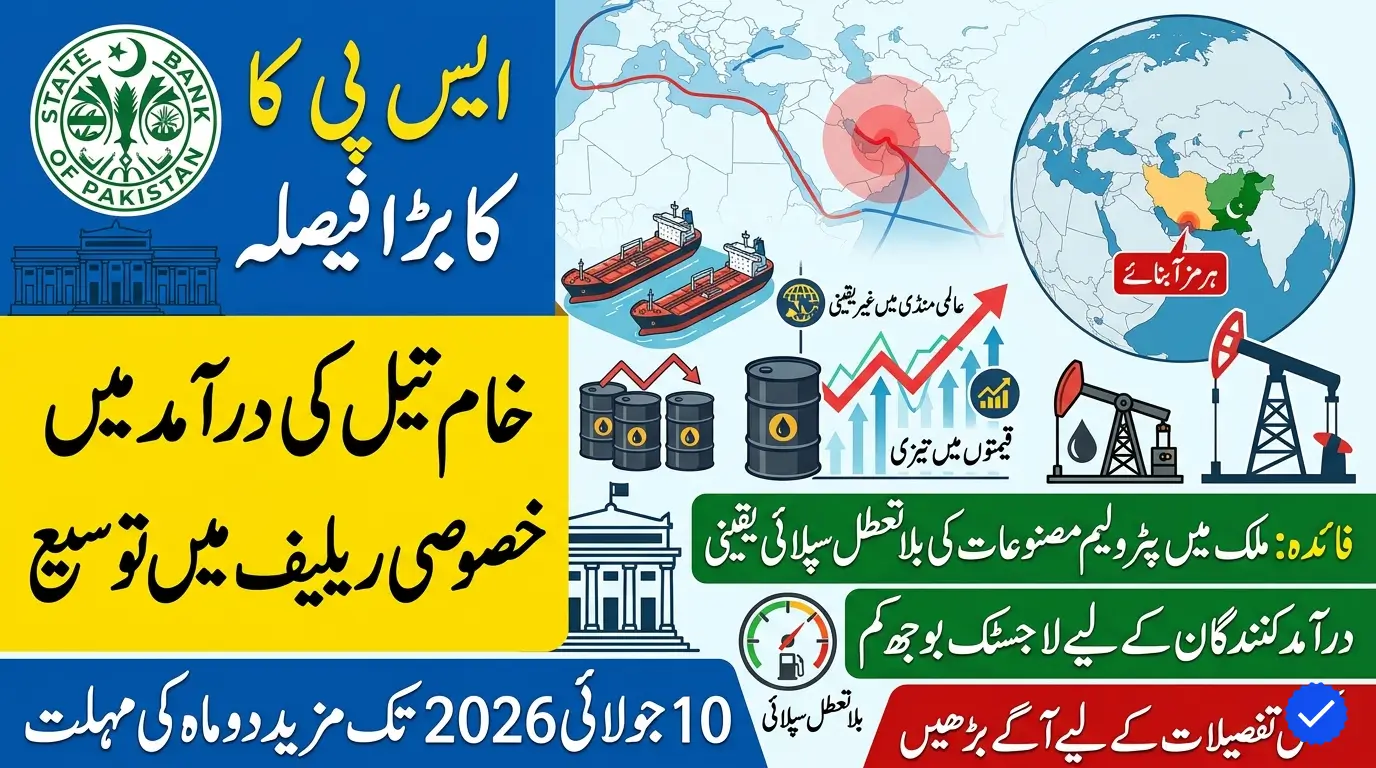
SBP Extends Special Oil Import Relief
The State Bank of Pakistan has extended special permission for the import of crude oil and petroleum products on a Cost, Insurance and Freight (CIF) basis until July 10, 2026. The decision was taken to ensure uninterrupted fuel supplies in the country as international oil markets continue to face uncertainty and sharp price fluctuations. According to the State Bank, the extension will help importers manage petroleum shipments more efficiently during a period of global instability.
NAB Freezes 4 Major Bahria Town Properties, Including Bahria Icon
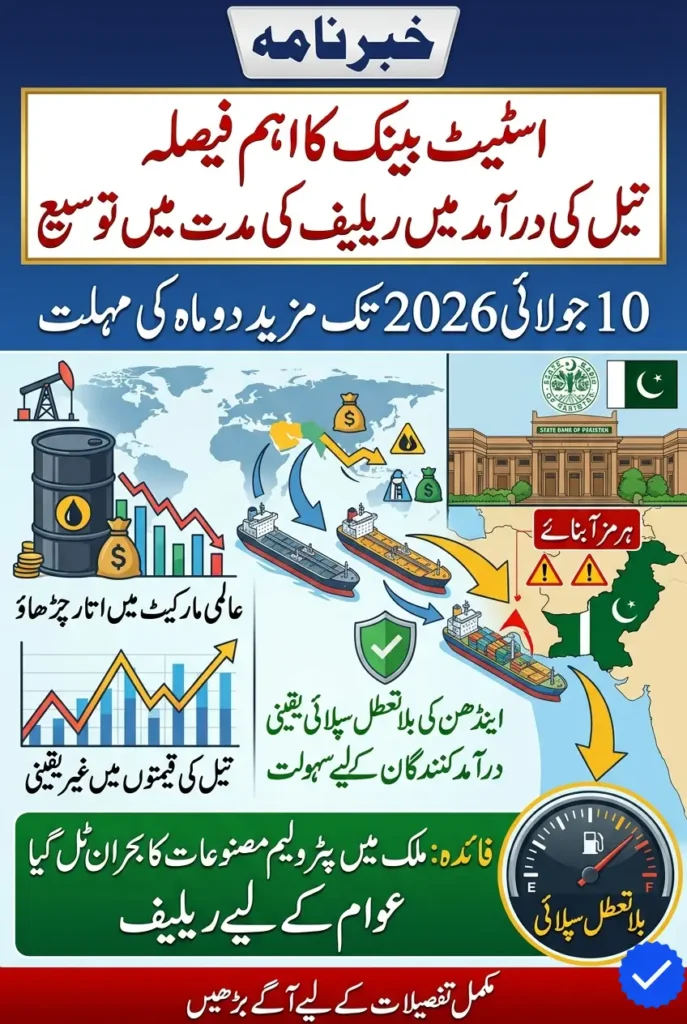
The announcement came through an official circular issued to authorized dealers. The central bank stated that the relaxation originally granted through EPD Circular Letter No. 04 dated March 11, 2026, would remain valid for an additional two months. Officials explained that the decision was necessary because global energy markets remain unstable due to geopolitical tensions and concerns about oil supply routes in different parts of the world.
Background of the CIF Import Facility
Earlier in March 2026, the State Bank had introduced temporary relaxation allowing the import of crude oil and petroleum products under the CIF mechanism for 60 days. The decision was taken after global oil prices experienced rapid fluctuations caused by rising tensions in the Middle East and uncertainty in international shipping routes.
Under normal circumstances, import arrangements can sometimes place additional financial and operational responsibilities on importers. However, under the CIF system, the seller is responsible for the cost of goods, insurance coverage, and freight charges until the cargo reaches the destination port. This arrangement provides greater convenience to importers and reduces logistical burdens during uncertain market conditions.
Reasons Behind the Extension
The State Bank’s decision to extend the facility comes at a time when global energy markets continue to face uncertainty. Oil prices in international markets have remained unstable due to ongoing geopolitical tensions, especially in the Middle East. Concerns over shipping routes linked to the Strait of Hormuz have also increased fears about possible supply disruptions.
The Strait of Hormuz is considered one of the world’s most important oil transit routes because a large portion of global petroleum exports pass through this area. Any political or military tensions affecting the region can immediately influence oil prices and shipping costs around the world. Pakistan, which relies heavily on imported fuel, remains highly sensitive to such international developments.
PM Shehbaz Inaugurates Major Development Projects in Gilgit
Importance of Fuel Supply Stability
Pakistan’s economy depends heavily on uninterrupted fuel supplies because petroleum products are essential for transportation, electricity generation, agriculture, and industrial production. Any major disruption in oil imports can directly affect inflation, business activity, and public transportation costs.
In recent years, global oil prices have experienced repeated fluctuations due to wars, supply chain disruptions, and political conflicts. Such instability creates financial pressure on countries like Pakistan that import large quantities of petroleum products. Rising oil prices can increase import bills and place additional pressure on foreign exchange reserves.
Measures Taken by Pakistani Authorities
In recent months, Pakistani authorities have taken several steps to strengthen energy security and manage economic risks linked to global fuel markets. These measures include facilitating LNG imports, monitoring foreign exchange outflows, and coordinating with oil marketing companies and local refineries.
The government has also remained in contact with financial institutions and energy companies to ensure that petroleum imports continue without major interruptions. Officials believe close coordination between regulators and the private sector is important during periods of international uncertainty.Authorities are also trying to balance fuel import requirements with the country’s foreign exchange situation.
Impact on Businesses and Consumers
The extension of the CIF import facility may provide relief to oil importers, refineries, and businesses that depend on stable petroleum supplies. Easier import arrangements can reduce operational difficulties and help companies plan shipments more effectively.
For consumers, the decision may help reduce the risk of fuel shortages in local markets. While international oil prices remain outside Pakistan’s control, uninterrupted imports can help authorities maintain stable supplies and avoid sudden disruptions at petrol stations. Economic analysts believe the government’s strategy is focused on minimizing the impact of global uncertainty on Pakistan’s domestic market.
Telcos Push Govt to End Customs Duty on 5G Devices Reduce Taxes
Challenges Facing Pakistan’s Energy Sector
Despite the relief measures, Pakistan’s energy sector continues to face serious challenges. The country remains dependent on imported fuel, making it vulnerable to global price changes and supply disruptions. High oil import bills can also increase pressure on inflation and the trade deficit.
Another challenge is the management of foreign exchange reserves. Rising petroleum imports require significant dollar payments, which can affect Pakistan’s overall economic stability. Policymakers therefore face the difficult task of maintaining fuel supplies while protecting the country’s financial position.
FAQs
1. What decision did the State Bank of Pakistan announce?
The State Bank extended permission for importing crude oil and petroleum products on a CIF basis until July 10, 2026.
2. What does CIF mean in oil imports?
CIF stands for Cost, Insurance, and Freight, where the seller covers shipping and insurance costs up to the destination port.
3. Why did the SBP extend this facility?
The extension was made due to continued volatility in international oil markets and concerns over fuel supply stability.
4. What global factors are affecting oil markets?
Geopolitical tensions in the Middle East and concerns over shipping routes near the Strait of Hormuz are affecting oil prices and supply chains.
5. How can this decision benefit Pakistan?
The decision can help ensure uninterrupted fuel supplies, reduce operational difficulties for importers, and maintain market stability.
Federal Constitutional Court Upholds Dismissal in Case of Job Quota
Final Words
The State Bank of Pakistan’s decision to extend the CIF import facility reflects the country’s ongoing effort to maintain stable fuel supplies during uncertain global market conditions. Rising geopolitical tensions and fluctuating oil prices continue to create challenges for energy-importing countries like Pakistan. By providing operational convenience to importers and ensuring smoother petroleum shipments, authorities hope to avoid supply disruptions and protect the domestic economy from sudden shocks.