

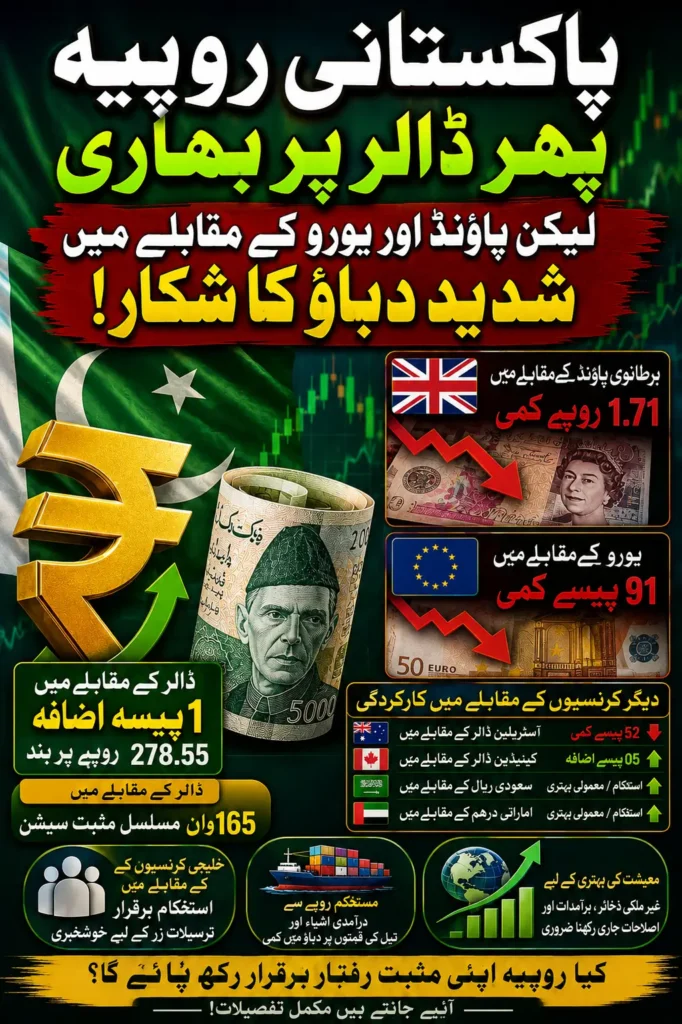
Pakistan’s currency market remained in focus on Thursday as the Pakistani Rupee (PKR) extended its positive streak against the US Dollar (USD). The rupee managed to gain one paisa against the dollar, continuing an impressive run of stability in the interbank market. However, despite beating the dollar once again, the local currency struggled against several major international currencies, particularly the British Pound and Euro.
Pakistan Offers Gulf Countries to Store All Their Oil in Gwadar for Emergencies
For millions of Pakistanis, exchange rate fluctuations are more than just numbers. They directly affect inflation, petrol prices, imported goods, overseas remittances, foreign education costs, and even online shopping. This latest movement in the currency market paints a mixed picture for Pakistan’s economy.
Table of Contents
- Pakistani Rupee Gains Against US Dollar
- Pound and Euro Put Pressure on Rupee
- Performance Against Gulf and Other Currencies
- Why Currency Rates Matter in Pakistan
- Will the Rupee Stay Stable?
- Final Thoughts
- Conclusion
- 5 Key Facts About Today’s Currency Movement
Pakistani Rupee Gains Against US Dollar
The Pakistani Rupee closed at 278.55 against the US Dollar, gaining one paisa during Thursday’s trading session. This marks the 165th consecutive day that the rupee has either remained stable or strengthened against the greenback.
Although one paisa may sound insignificant, experts say the consistency matters more than the size of the gain. A stable rupee helps businesses plan imports and creates confidence in the financial market. It also gives some relief to inflationary pressure linked to imported goods and fuel prices.
Pound and Euro Put Pressure on Rupee
Despite performing positively against the US Dollar, the Pakistani Rupee suffered noticeable losses against major European currencies. The rupee lost Rs. 1.71 against the British Pound (GBP) and 91 paisas against the Euro (EUR) during the same session.
This decline can affect overseas education costs, visa-related expenses, imported products, and travel to European countries and the UK. Since many Pakistanis work, study, or conduct business in Europe and Britain, exchange rate movements against these currencies remain highly important.
LNG Prices Jump Sharply in Pakistan
Performance Against Gulf and Other Currencies
The rupee also showed mixed results against several global currencies. It weakened by 52 paisas against the Australian Dollar (AUD) but posted a slight gain against the Canadian Dollar (CAD).
On the positive side, the Pakistani currency closed in green against the Saudi Riyal (SAR) and the UAE Dirham (AED). This is good news for overseas Pakistanis living in Gulf countries, as remittances sent home remain relatively stable and predictable.
Why Currency Rates Matter in Pakistan
Pakistan depends heavily on imported fuel, machinery, food items, medicine, and industrial raw materials. When the rupee weakens against major currencies, import costs rise, eventually increasing inflation for ordinary citizens.
At the same time, a stronger or stable rupee against the US Dollar can help reduce pressure on fuel imports and improve confidence among investors and businesses. Exchange rates are one of the strongest indicators of economic stability in Pakistan.
Will the Rupee Stay Stable?
Financial analysts believe the rupee’s future performance will depend on several factors, including Pakistan’s foreign reserves, remittances, IMF-related reforms, exports, and global oil prices.
If economic reforms continue and foreign inflows remain stable, the rupee may maintain its momentum against the dollar. However, global market uncertainty could still create pressure from stronger currencies like the Pound and Euro.
You Might Be Unknowingly Sharing Your Electricity Bill QR Code With Fraudsters
Conclusion
The Pakistani Rupee’s latest performance highlights both progress and challenges. While beating the dollar for the 165th consecutive session sends a positive signal, sharp losses against the Pound and Euro remind us that currency stability is a broader challenge.
Moving forward, Pakistan’s economic policies, foreign reserves, and international market conditions will play a key role in determining whether the rupee can continue its positive momentum or face renewed pressure.
Facts About Today’s Currency Market in Pakistan
- The Pakistani Rupee gained one paisa against the US Dollar, closing at Rs. 278.55 in the interbank market.
- PKR completed its 165th consecutive positive session against the USD, showing continued currency stability.
- The rupee lost Rs. 1.71 against the British Pound (GBP), increasing pressure on overseas education and travel costs.
- PKR also weakened by 91 paisas against the Euro (EUR) during Thursday’s trading session.
- The rupee remained relatively stable against Gulf currencies, including the Saudi Riyal (SAR) and UAE Dirham (AED), supporting stable remittance flows.