
Punjab Wheat Procurement
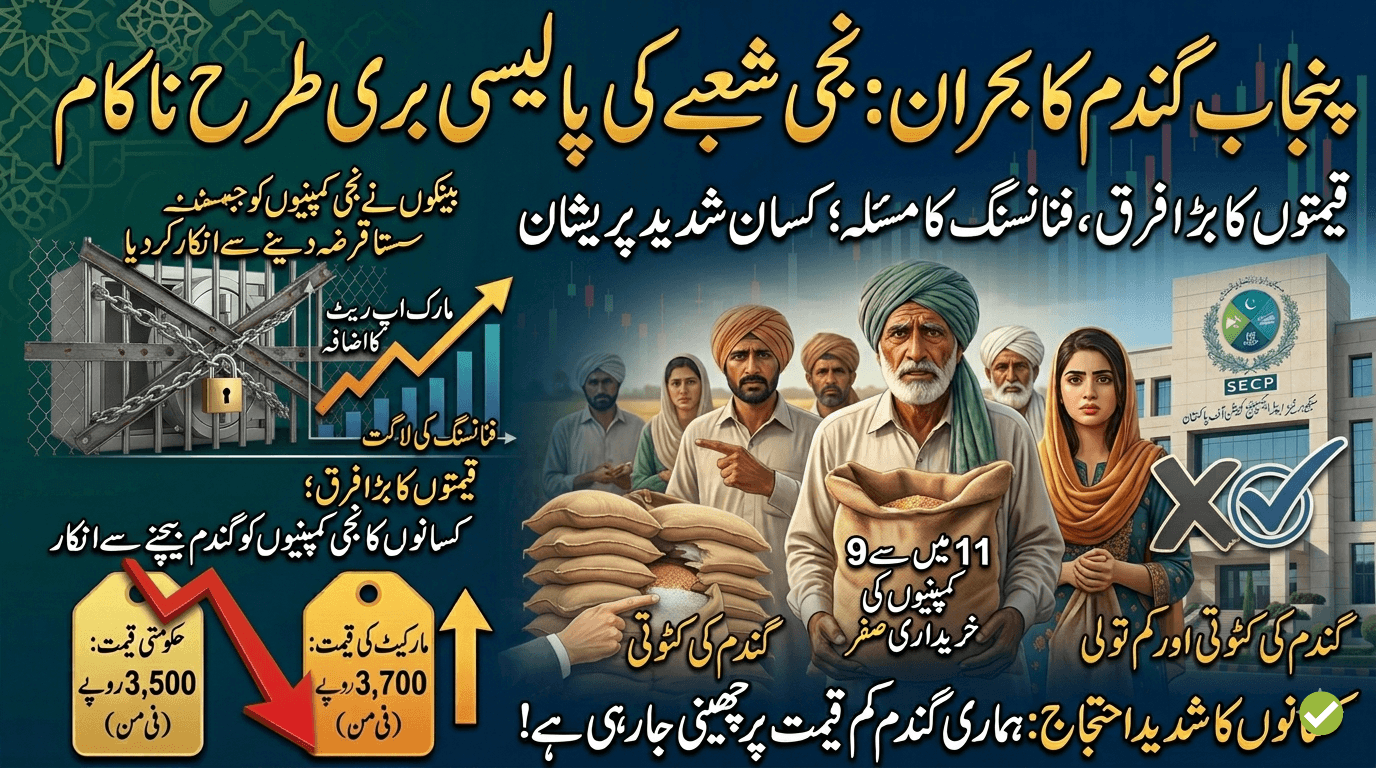
Punjab’s shift toward a private-sector-led wheat procurement system has faced serious challenges, raising concerns about the effectiveness of the new strategy. The government planned to procure 3 million tonnes of wheat through 11 private companies, aiming to modernize the system and reduce reliance on traditional state-led procurement.
SECP Opens New Halal Investment Options

To support this plan, authorities offered incentives such as bank financing support, coverage of 70 percent markup costs, free storage in government warehouses, and assistance from nearly 400 officials. However, despite these efforts, the policy has failed to deliver the expected results, with most firms unable to procure significant wheat quantities.
Financing Issues Create Major Obstacles
One of the biggest hurdles has been the lack of proper financing for participating firms. Negotiations between banks and companies did not succeed, leaving firms without affordable funding options.
Many companies had expected loans based on KIBOR plus 1 percent, but when talks failed, they were forced to consider costly alternatives. The rising markup rates made it risky for firms to hold large wheat stocks, discouraging active participation.
Price Gap Discourages Farmers
Another major issue is the difference between the government’s support price and the open market rates. While companies are offering Rs. 3,500 per maund, wheat is being sold at around Rs. 3,700 per maund in the market.
This price gap has discouraged farmers from selling their produce to the participating firms. Instead, many farmers prefer selling to traders or storing wheat in hopes of better prices in the future.
Islamabad’s New National Bus Terminal Project 2026 Moder
Enforcement Actions Increase Tensions
Authorities have intensified enforcement measures to control the movement of wheat across provinces. Several consignments have been intercepted and redirected to government storage facilities.
In many cases, the confiscated wheat is purchased at the official price, which is lower than the market rate. This has raised concerns among farmers and traders, who view such actions as forced sales and unnecessary interference in the market.
Farmers Raise Serious Concerns
Farmer groups have strongly criticized the government’s handling of the situation. Many farmers, especially in South Punjab, had already sold a large portion of their wheat at lower prices earlier due to financial pressure.
Now that prices have increased, they feel they are not being allowed to benefit fully. Allegations of unfair deductions and faulty weighing systems at procurement centers have further damaged trust.
Weak Implementation Slows Progress
Despite the government’s planning, the execution of the policy has remained weak. Reports suggest that at least nine out of the eleven companies have failed to procure any meaningful quantity of wheat.
This lack of progress highlights serious gaps in coordination between the government, banks, and private firms. Without proper execution, even well-planned policies can fail to achieve their goals.
Pakistan Energy Update 95% Renewable Power Target
Financing Barriers Slow Down Procurement Activity
One of the most critical challenges has been the inability of private firms to secure workable financing from banks. Negotiations between financial institutions and companies reportedly failed to reach mutually acceptable terms, leaving firms without affordable capital support.
Many businesses had anticipated financing linked to KIBOR plus a minimal margin, but the actual proposed structure turned out to be significantly more expensive. With markup rates rising and repayment pressure increasing over time, companies became reluctant to take large inventory risks, especially in a volatile commodity market like wheat.
Price Difference Weakens Farmer Participation
Another major issue affecting the procurement process is the gap between official support prices and prevailing market rates. While the government-fixed rate stands at Rs. 3,500 per maund, wheat in the open market is being traded at approximately Rs. 3,700 per maund.
This difference has strongly influenced farmer behavior. Instead of selling to procurement firms, many farmers prefer open market buyers who offer better returns. Others are holding their stock in anticipation of further price increases. As a result, private firms have struggled to attract supply into the official procurement system.
Enforcement Measures Add to Market Uncertainty
In response to supply shortages and market movement, authorities have increased enforcement actions across the province. Wheat transportation between regions has been closely monitored, and several consignments have reportedly been intercepted during transit.
In some cases, confiscated wheat has been shifted to government storage centers and purchased at the official procurement rate. While officials describe these actions as necessary to stabilize supply, traders and farmers view them as restrictive interventions that disrupt normal market operations and reduce trust in the system.
Punjab Summer Vacations 2026 Expected School Holiday Dates
Farmers Express Strong Concerns Over Policy Impact
Farmer organizations have raised serious objections to the current procurement approach, arguing that it fails to protect producer interests. Many growers in South Punjab reportedly sold a large portion of their crop earlier at lower prices due to financial pressure and market uncertainty.
With current prices now higher, farmers feel they are not benefiting from improved market conditions. Allegations have also emerged regarding deductions at procurement centers, with claims of weight adjustments and quality-based reductions affecting overall payments. These concerns have further reduced farmer confidence in the official procurement system.
Weak Implementation Limits Policy Success
Although the policy framework was ambitious, its implementation has faced serious coordination gaps. Reports suggest that the majority of participating firms have failed to procure meaningful wheat volumes, indicating a breakdown between planning and execution.
This situation highlights the difficulty of managing large-scale agricultural procurement through private-sector involvement without strong financial, logistical, and market alignment. The lack of synchronization between stakeholders has significantly slowed down progress.
Key Facts
- Punjab aimed to procure 3 million tonnes of wheat through private firms.
- Financing issues prevented companies from operating effectively.
- Official price (Rs. 3,500) is lower than market price (around Rs. 3,700).
- Farmers prefer selling in the open market for higher profits.
- Enforcement actions and complaints have increased tensions.
TECNO Launches SPARK 50 in Pakistan with 7000mAh Battery
Final Word
Punjab’s wheat procurement plan highlights the challenges of shifting to a private-sector-driven model. While the initiative aimed to improve efficiency and reduce government burden, practical issues like financing constraints, pricing differences, and lack of trust have limited its success.