
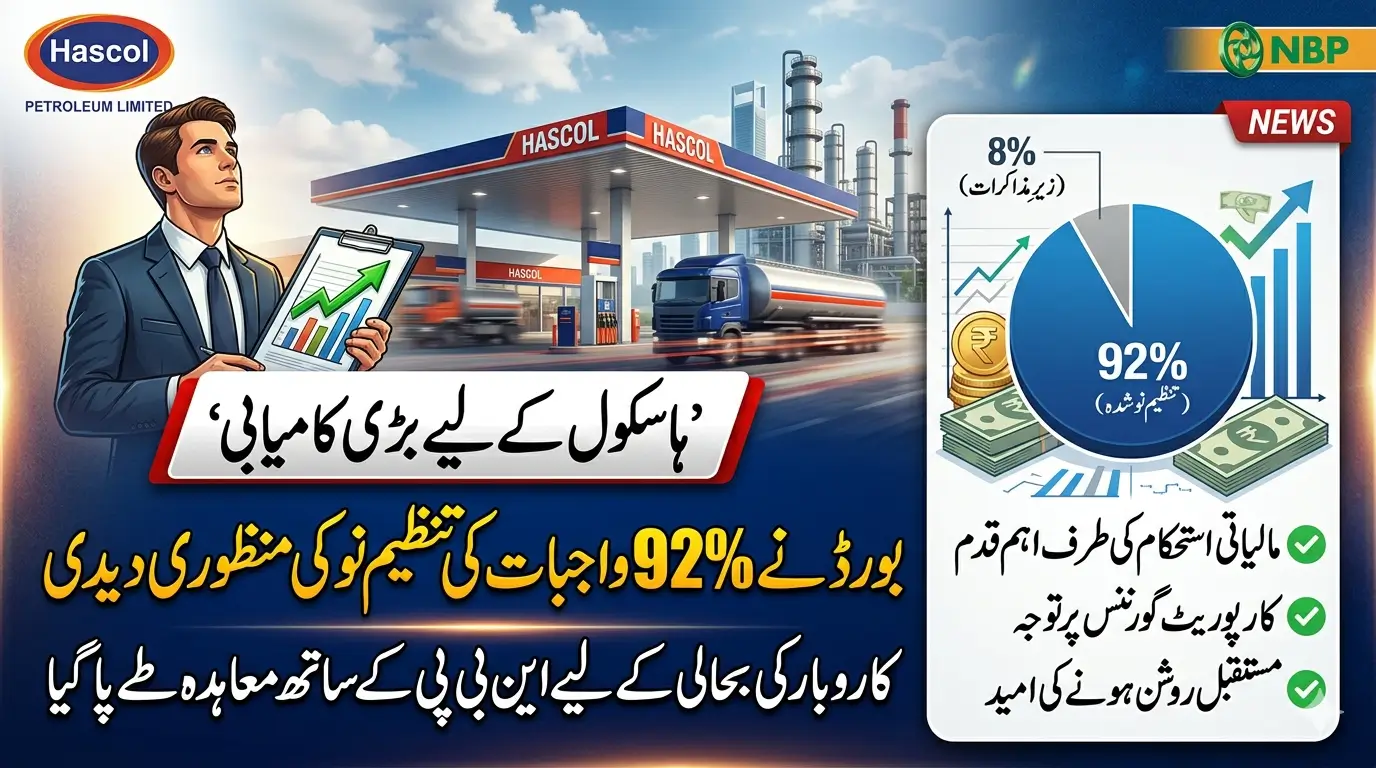
Pakistan’s energy sector company Hascol Petroleum Limited has taken a major step toward financial recovery after its Board of Directors approved a restructuring and rescheduling arrangement for nearly 92 percent of its funded banking debt. The decision mainly focuses on the company’s financial obligations with the National Bank of Pakistan (NBP) and is being viewed as an important move toward business revival.
LNG Prices Jump Sharply in Pakistan
کمپنی نے تصدیق کی کہ مالیاتی سہولیات کی تنظیم نو کے حوالے سے NBP کے ساتھ بات چیت کو حتمی شکل دے دی گئی ہے۔ اس انتظام کو 15 مئی 2026 کو منعقدہ بورڈ میٹنگ کے دوران باضابطہ طور پر منظوری دی گئی۔ ہاسکول نے کہا کہ اب وہ تنظیم نو کو مکمل طور پر فعال بنانے کے لیے درکار قانونی دستاویزات اور عمل درآمد کے عمل کو مکمل کر رہا ہے۔
Table of Contents
- Why Hascol Needed Debt Restructuring
- NBP Agreement Marks a Major Milestone
- What 92% Debt Restructuring Means
- Company Focus on Financial Discipline
- Potential Impact on Business Recovery
- Challenges Still Remaining for Hascol
- Future Outlook for the Company
- Final Thoughts
- 5 Key Facts
Why Hascol Needed Debt Restructuring
Hascol Petroleum has faced financial difficulties for several years due to mounting debt, operational challenges, and declining business performance. The company struggled to maintain stability as banking liabilities increased, putting pressure on its financial operations and long-term sustainability.
For companies dealing with high debt burdens, restructuring becomes necessary to avoid financial collapse. By renegotiating payment schedules and financing arrangements, businesses can improve cash flow, stabilize operations, and create a roadmap for recovery.
NBP Agreement Marks a Major Milestone
The agreement with the National Bank of Pakistan represents a significant breakthrough for Hascol’s financial restructuring efforts. Once fully implemented, nearly 92 percent of the company’s total funded banking debt will be restructured, leaving only a small portion of financing arrangements still under negotiation.
یہ پیش رفت کمپنی کے لیے ایک اہم سنگِ میل سمجھی جا رہی ہے کیونکہ اس سے مالی دباؤ میں کمی آ سکتی ہے۔ قرضوں کی نئی ترتیب کمپنی کو اپنی روزمرہ سرگرمیوں کو بہتر انداز میں چلانے اور کاروبار کو دوبارہ مستحکم کرنے میں مدد دے سکتی ہے۔
You Might Be Unknowingly Sharing Your Electricity Bill QR Code With Fraudsters
What 92% Debt Restructuring Means
Restructuring 92 percent of funded debt means that Hascol will likely receive revised repayment schedules, adjusted financial terms, or other supportive arrangements from lenders. This can reduce immediate repayment pressure and allow the company to focus more on business operations instead of short-term financial stress.
The company stated that after implementing the NBP settlement, only a limited number of financing arrangements will remain unresolved. This could improve investor confidence and help restore stability to Hascol’s financial standing.
Company Focus on Financial Discipline
Hascol emphasized that its board and management remain committed to financial discipline and stronger corporate governance. The company sees these measures as essential for rebuilding trust with investors, banks, and stakeholders after facing prolonged financial challenges.
کمپنی کے مطابق مضبوط کارپوریٹ گورننس اور مالی نظم و ضبط مستقبل کی بحالی کی حکمت عملی کا اہم حصہ ہیں۔ اگر یہ اقدامات مؤثر انداز میں جاری رہے تو کمپنی دوبارہ مارکیٹ میں اپنی پوزیشن مضبوط بنا سکتی ہے۔
Potential Impact on Business Recovery
Financial restructuring can provide companies with breathing space to recover from losses and operational disruptions. For Hascol, reducing debt pressure may improve working capital, operational planning, and business continuity in Pakistan’s competitive petroleum market.
A healthier financial position may also encourage partnerships, better supplier confidence, and improved market reputation. However, recovery will depend on how effectively the company executes its long-term business strategy after restructuring.
Challenges Still Remaining for Hascol
Although the restructuring plan is a positive development, challenges still remain. Around eight percent of funded debt still requires resolution, meaning the company’s financial recovery process is not yet fully complete.
Market competition, fuel demand fluctuations, regulatory policies, and operational efficiency will continue to affect Hascol’s future performance. The company must also maintain strict financial discipline to avoid repeating past difficulties.
Future Outlook for the Company
The debt restructuring arrangement may mark the beginning of a new chapter for Hascol Petroleum. If implemented successfully, it can improve financial stability and help the company gradually rebuild its business operations.
Pakistan’s petroleum sector remains highly competitive, but a stronger balance sheet may give Hascol a better chance to recover. The coming months will be important in determining whether the company can successfully turn financial restructuring into long-term business growth.
HMD Vibe 2 5G Goes Official with Unisoc Chip and Big Battery For Only $115
Final Thoughts
Hascol Petroleum’s approval of a debt restructuring plan for 92 percent of its funded banking debt reflects a serious effort to revive the company after years of financial stress. The agreement with NBP is being seen as a major milestone in the company’s broader recovery strategy.
While some financing arrangements are still pending, the restructuring could reduce financial pressure and support operational stability. The company’s focus on governance and financial discipline may also play an important role in rebuilding market confidence.
5 Key Facts
- Hascol approved restructuring for 92% of its funded banking debt.
- The agreement was finalized with the National Bank of Pakistan (NBP).
- The board formally approved the arrangement on May 15, 2026.
- Only a small portion of financing arrangements remains unresolved.
- Hascol aims to improve financial discipline and corporate governance for long-term recovery.