
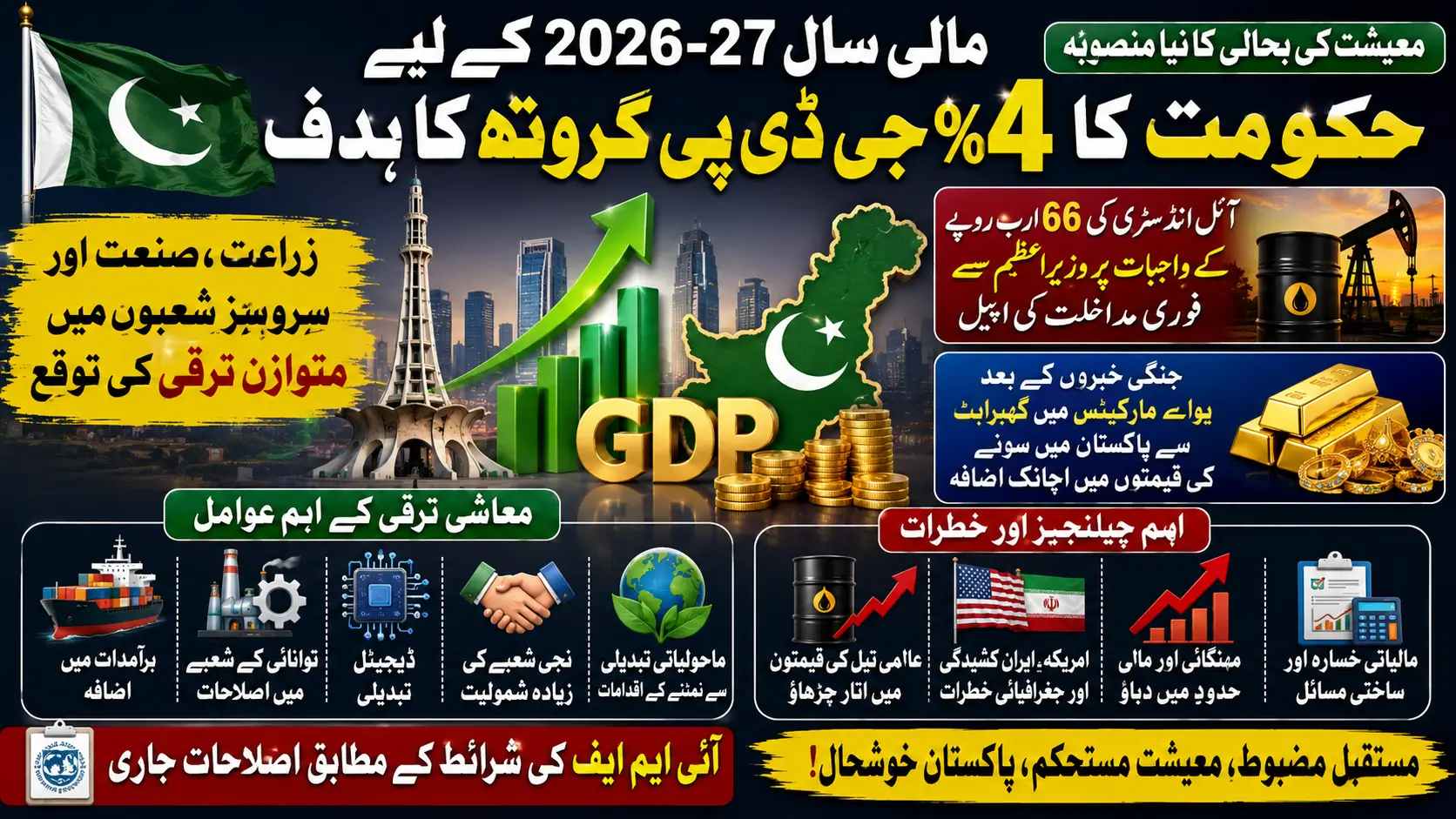
The Government of Pakistan has set an ambitious target of achieving a GDP growth rate of 4 percent for the fiscal year 2026-27. The target reflects the country’s determination to sustain its economic recovery despite ongoing global uncertainties, including volatile oil prices and geopolitical tensions such as the US-Iran conflict. The announcement was made through a working paper presented at the Annual Plan Coordination Committee (APCC) meeting, which highlighted the government’s roadmap for economic stability and growth.
Oil Industry Seeks PM’s Intervention Over Rs. 66 Billion
پاکستان نے مالی سال 2026-27 کے لیے 4 فیصد جی ڈی پی گروتھ کا ہدف مقرر کیا ہے، جو معیشت کو مستحکم کرنے کی ایک اہم کوشش ہے۔ حکومت کو امید ہے کہ زراعت، صنعت اور خدمات کے شعبوں میں متوازن ترقی حاصل ہوگی، جس سے مجموعی اقتصادی کارکردگی بہتر ہوگی۔ خاص طور پر بڑی صنعتوں کی پیداوار میں اضافے کی توقع ہے، جبکہ برآمدات، توانائی کے شعبے میں اصلاحات اور ڈیجیٹل تبدیلی اس ترقی میں اہم کردار ادا کریں گے۔ تاہم، عالمی سطح پر تیل کی قیمتوں میں اتار چڑھاؤ اور جغرافیائی سیاسی کشیدگی جیسے عوامل اس ہدف کے لیے چیلنج بن سکتے ہیں۔
Economic Outlook and Growth Strategy
The GDP growth target of 4 percent indicates a cautious but optimistic outlook for the Pakistani economy. The government expects broad-based growth across all major sectors, indicating a more balanced economic expansion than in previous years. Policymakers are focused on strengthening key economic indicators while maintaining macroeconomic stability in a challenging global environment.
The strategy revolves around improving productivity, enhancing exports, and encouraging private sector participation. By focusing on sustainable economic practices, the government aims to build resilience against external shocks while ensuring steady progress in domestic economic performance.
Sector-Wise Growth Projections
According to the APCC working paper, the commodity-producing sectors are projected to grow by 3.9 percent. Agriculture, which plays a vital role in Pakistan’s economy, is expected to expand by 3.8 percent. This growth will likely be supported by better crop yields, improved water management, and government support initiatives.
The large-scale manufacturing (LSM) sector is projected to grow by 4.5 percent, reflecting increased industrial activity and demand. Meanwhile, the overall industrial sector is expected to achieve a growth rate of 4 percent. The services sector, which contributes a significant share to GDP, is anticipated to grow by 4.2 percent, driven by improvements in trade, finance, and communication services.
Key Drivers of Economic Growth
The government plans to achieve its growth target through several key initiatives. Export-oriented policies will play a central role in boosting foreign exchange earnings and reducing trade deficits. Additionally, energy sector reforms are expected to improve efficiency and reduce costs, benefiting both industries and consumers.
Digital transformation is another major focus area, with efforts to modernize economic systems and promote innovation. Climate resilience measures are also being prioritized to address environmental challenges that impact agriculture and infrastructure. Furthermore, increasing private sector involvement is seen as essential for driving investment and creating employment opportunities.
Gold Rate Suddenly Jumps in Pakistan After UAE Markets Panic Over War News
Challenges and External Risks
Despite the positive outlook, the government acknowledges several challenges that could impact economic performance. Fluctuations in global oil prices remain a significant risk, as Pakistan heavily relies on imported energy. Rising oil prices can increase inflation and widen the trade deficit, putting pressure on the economy.
Geopolitical tensions, particularly the US-Iran conflict, add another layer of uncertainty. These developments can disrupt global markets and affect Pakistan’s economic stability. Additionally, domestic challenges such as inflation, fiscal constraints, and structural inefficiencies continue to pose risks to achieving the growth target.
IMF Reforms and Policy Discipline
Pakistan’s economic strategy for FY2026-27 is closely aligned with the requirements of the International Monetary Fund (IMF). The government remains committed to implementing structural reforms, improving tax collection, and maintaining fiscal discipline.
These reforms are essential for restoring investor confidence and ensuring long-term economic stability. However, strict adherence to IMF conditions may also limit the government’s flexibility in implementing expansionary policies, making it crucial to strike a balance between growth and stability.
Future Outlook
The 4 percent GDP growth target represents a step forward in Pakistan’s economic recovery journey. While the target is achievable, it will require consistent policy implementation, strong governance, and effective coordination among various sectors.
If the government successfully implements its plans, Pakistan can move towards a more stable and sustainable economic future. However, external uncertainties and internal challenges must be carefully managed to ensure that it remains on the path to growth.
IMF Proposes Increasing GST to 19% in Pakistan Budget 2026-27
🔹 Key Facts:
- Pakistan has set a 4% GDP growth target for the fiscal year 2026-27.
- The government expects balanced growth across agriculture, industry, and services sectors.
- Large-scale manufacturing (LSM) is projected to grow by 4.5%.
- Economic growth will be supported by exports, energy reforms, and digital transformation.
- External risks like oil price fluctuations and geopolitical tensions may impact the target.
Final Words
Pakistan’s decision to set a GDP growth target of 4 percent for FY27 reflects both ambition and caution. The focus on sectoral development, reforms, and private sector participation underscores a comprehensive approach to economic growth. However, achieving this target will depend on the government’s ability to navigate global uncertainties and effectively address domestic challenges.
FBR Faces Rs. 190 Billion Revenue Shortfall in May 2026 as Tax Collection Misses Target