
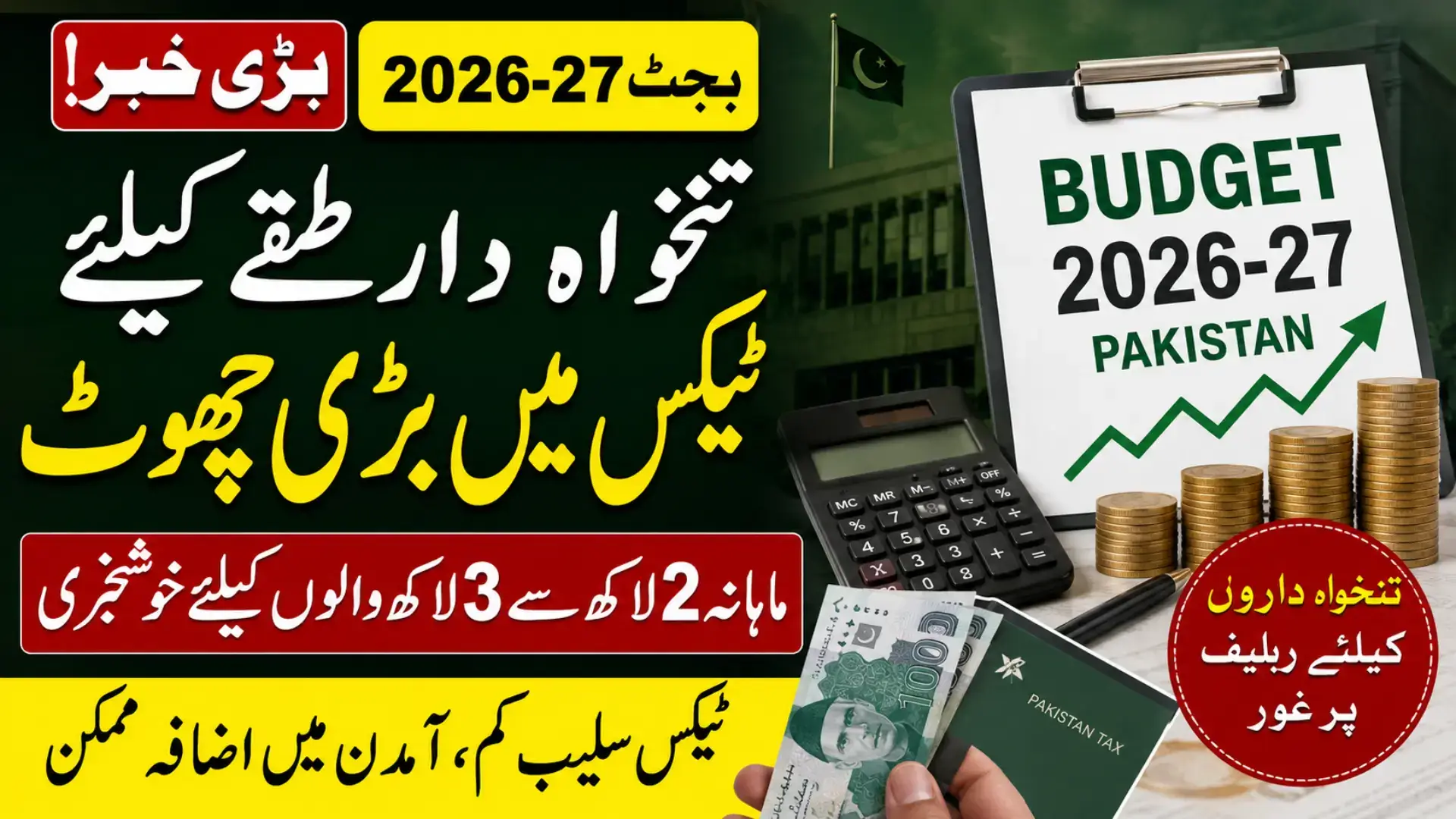
Pakistan’s budget tax relief for 2026-27 is under serious discussion as the government looks to reduce the tax burden on middle income and salaried families. The proposed changes include lower income tax ratesand possible relief for employees earning between Rs200,000 and Rs300,000 per month.
Pakistan Electricity Subsidy Update 2026 QR Code Registration Benefits and Policy Changes
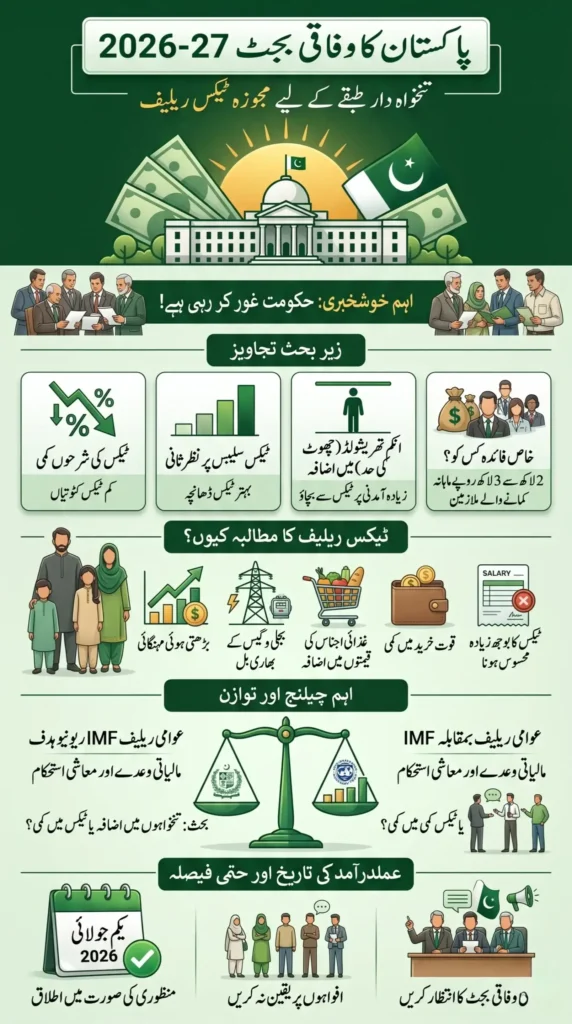
The government is trying to balance the public relief with IMF revenue targets and fiscal commitments. If approved the new tax measures will come into effect from July 1, 2026. Millions of taxpayers are waiting for the final take home income could increase.
Why Tax Relief Has Become a Major Budget Demand in Pakistan
The salaried class has faced a difficult financial environment for the past few years. Although salaries have increased gradually the cost of living has increased very rapidly.
Household budgets have been affected by:
Higher electricity and gas bills
Rising food prices
Rising transport costs
High school and university fees
High healthcare costs
Rising housing and rent costs
Unlike many sectors of the economy salaried employees cannot easily avoid taxes because income tax is deducted directly from their salaries.
What Pakistan Budget 2026-27 Discussions Are Suggesting
According to reports several proposals are under consideration before the final announcement of the budget. The government is examining ways to provide targeted relief without creating a major revenue shortfall.
Possible measures being discussed include:
| Proposed Measure | Expected Benefit |
|---|---|
| Reduction in tax rates for middle-income earners | Higher take-home salary |
| Revision of tax slabs | Lower tax burden on certain salary brackets |
| Increase in income thresholds | Delay entry into higher tax rates |
| New tax slab introduction | Smoother tax progression |
| Review of surcharge rules | Relief for higher-income taxpayers |
These proposals are under discussion and may change before final approval.
BISP 8171 Dynamic Survey Registration 2026 – Complete CNIC Update & Eligibility Guide
Current Income Tax Structure for Salaried Individuals
Currently salaried individuals are taxed according to income brackets.
| Annual Income | Approx. Monthly Income | Tax Rate |
|---|---|---|
| Up to Rs 600,000 | Up to Rs 50,000 | 0% |
| Rs 600,001 – Rs 1,200,000 | Rs 50,001 – Rs 100,000 | 1% |
| Rs 1,200,001 – Rs 2,200,000 | Rs 100,001 – Rs 183,333 | 11% |
| Rs 2,200,001 – Rs 3,200,000 | Rs 183,334 – Rs 266,667 | 23% |
| Rs 3,200,001 – Rs 4,100,000 | Rs 266,668 – Rs 341,667 | 30% |
| Above Rs 4,100,000 | Above Rs 341,667 | 35% |
Many taxpayers say that inflation and declining purchasing power have made these rates difficult to manage.
Maryam Nawaz Loan Scheme 2026 Online Apply How to Get 1500,000 Through ID Card
Which Families Could Benefit the Most?
Current discussions suggest that middle-income households could benefit the most if relief measures are approved.
This category generally includes:
Government employees
Private sector workers
Teachers and lecturers
Bank employees
Engineers
IT professionals
Healthcare workers
Small business professionals are drawing fixed salaries
Special attention is reportedly being paid to those earning between Rs 200,000 and Rs 300,000 per month as this group contributes significantly to tax revenue and also faces rising expenses.
Why the IMF Matters in Budget Decisions
One question many Pakistanis are asking is.
“If the government wants to reduce taxes why doesn’t it simply announce relief?”
The answer lies partly in Pakistan’s fiscal commitments. The government must maintain revenue targets and budget discipline while continuing economic reforms. Any major tax reduction could affect revenue collection.
Because of this policymakers are attempting to find a balance between:
- Providing relief to taxpayers
- Meeting revenue targets
- Maintaining economic stability
- Avoiding a larger budget deficit
This is why budget discussions have focused on targeted relief rather than broad tax cuts.
What Can Pakistanis Expect From July 2026?
If approved the new tax measures are expected to take effect from the start of the new fiscal year, July 1, 2026. Employers will then update their payroll systems and apply the revised tax deductions accordingly.
For millions of salaried workers the biggest question is whether the final budget will provide enough relief to meet the rising cost of living. At this stage negotiations are ongoing, and taxpayers should expect more clarity once the federal budget is formally presented.
BISP Qist June 2026 New Latest Update for Eligible Families
FAQS
What is Pakistan Budget Tax Relief 2026-27?
It refers to proposed measures being discussed to reduce the income tax burden on salaried and middle-income individuals in Pakistan during the 2026-27 fiscal year.
Will middle-income families get tax relief in Budget 2026-27?
Current discussions suggest that middle income earners are among the primary groups being considered for tax relief but no final approval has been announced.
Which salary group may benefit the most?
Reports indicate that employees earning roughly between Rs 200,000 and Rs 300,000 per month may receive the greatest benefit if proposed changes are approved.
Will income tax slabs change in Pakistan?
Possible revisions to tax slabs income thresholds and tax rates are under consideration but official confirmation is still awaited.
When will new tax rates be implemented?
If approved in the federal budget revised tax measures are expected to become effective from 1 July 2026.
Final Words
The debate surrounding the Pakistan Budget tax relief highlights the challenge facing middle-income families across the country. Salaried employees continue to contribute significantly to direct taxes while also coping with rising household expenses. This is why expectations are particularly high for Budget 2026-27.
Is 8171 Registration Really Online? Official 2026 Update