

A recent survey conducted by Kaspersky has highlighted serious cybersecurity concerns in workplaces across Pakistan, shedding light on gaps in policies, employee awareness, and overall compliance. Titled “Cybersecurity in the workplace: Employee knowledge and behavior,” the study reveals that many organizations are struggling to align their security frameworks with employee expectations and modern work environments.
Karachi Kings Keep Playoff Hopes Alive with Stunning Win
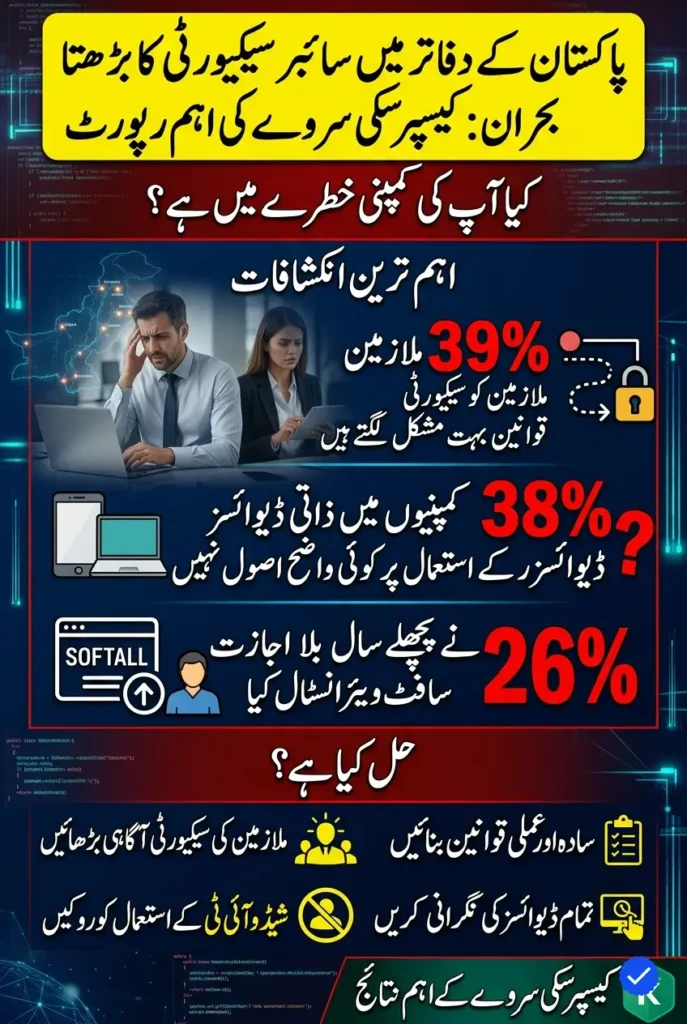
One of the most striking findings of the survey is that 39 percent of professionals believe their organization’s cybersecurity policies are either too complex or not practical for everyday use. In addition, 8 percent of respondents reported that their companies either lack clear cybersecurity rules or that employees are unaware of them.
Disconnect Between Policies and Employee Behavior
The survey underscores a growing gap between established cybersecurity policies and how employees actually behave in the workplace. While companies may design strict guidelines, employees often find ways to bypass them if they perceive them as inconvenient or restrictive. This behavior significantly increases the risk of security breaches and data leaks.
Experts point out that effective cybersecurity is not just about creating rules but also about ensuring that employees understand and follow them. When policies are overly complicated or poorly communicated, employees may unintentionally put company systems at risk. Bridging this gap requires better communication, simplified policies, and ongoing engagement with staff.
PM Shahbaz Orders Fast-Track Local Battery Production for EVs and Solar
The Rising Threat of Shadow IT
A major concern highlighted in the report is the increasing use of shadow IT, which refers to employees using unauthorized software, devices, or services without approval from the IT department. While such tools are often adopted to improve productivity, they create serious blind spots for organizations, making it difficult to monitor and secure data effectively.
The rise of hybrid work environments, cloud-based platforms, and artificial intelligence tools has accelerated the adoption of shadow IT. Employees working remotely or across different locations may rely on personal tools to complete tasks quickly, but this convenience often comes at the cost of security. Without proper oversight, these tools can expose organizations to cyber threats and vulnerabilities.
Weak Policies on Personal Device Usage
Another critical issue identified in the survey is the lack of clear policies regarding the use of personal devices for work purposes. Approximately 38 percent of respondents stated that their organizations do not have defined rules for using non-corporate devices. This creates a major security gap, as personal devices may not have the same level of protection as company-issued systems.
Additionally, 17 percent of employees said they are allowed to access work data on personal devices as long as basic security measures are in place. Meanwhile, only 16 percent reported strict IT approval processes before using personal devices, and 29 percent indicated that their companies restrict work access to official devices only. These mixed practices highlight the inconsistency in how organizations approach device security.
Govt Orders Probe Into Costly Off-Grid Power Purchases by Discos
Software Installation Controls and Risks
The survey also examined how organizations manage software installation on company devices. While 56.5 percent of respondents said only IT specialists are authorized to install software, and 19.5 percent indicated that this authority lies with senior management or designated personnel, there are still notable risks.
About 17 percent of employees mentioned that they can install software approved by IT teams, while 7 percent admitted that there are no restrictions at all. More concerning is the finding that 26 percent of professionals installed software on work devices without IT supervision in the past year. This behavior further emphasizes the prevalence of shadow IT and the challenges organizations face in enforcing their policies.
The Need for Stronger Cybersecurity Strategies
The findings of the survey highlight the urgent need for organizations in Pakistan to strengthen their cybersecurity strategies. Companies must not only develop clear and practical policies but also ensure that employees are aware of and understand them. Regular training sessions, awareness programs, and user-friendly guidelines can help bridge the gap between policy and practice.
Kaspersky recommends conducting regular audits to identify shadow IT usage, implementing advanced monitoring tools, and enforcing strict security standards for personal devices. Technologies such as mobile device management and endpoint protection can play a key role in securing corporate data across different platforms.
Revised PTA Tax Values for Used iPhone 15 Series in Pakistan
Building a Culture of Cyber Awareness
Creating a secure workplace requires more than just technical solutions; it also involves building a culture of cybersecurity awareness. Employees should be encouraged to follow best practices, such as using approved applications, securing their devices, and reporting suspicious activities.
Organizations must foster an environment where cybersecurity is seen as a shared responsibility rather than just an IT concern. By involving employees in the process and addressing their concerns, companies can improve compliance and reduce the likelihood of security incidents.
FAQs
What is the main finding of the Kaspersky survey.
The survey found major gaps in cybersecurity policies and employee compliance in Pakistani workplaces.
What is shadow IT.
Shadow IT refers to the use of unauthorized software, devices, or services without IT department approval.
How many employees believe cybersecurity rules are excessive.
Around 39 percent of professionals think their company’s cybersecurity rules are excessive or unsuitable.
Are personal devices commonly allowed for work use.
Yes, but policies vary widely, and many organizations lack clear rules regarding personal device usage.
What percentage of employees installed software without IT approval.
Approximately 26 percent of professionals admitted to installing software without IT supervision.
Attock Refinery Restarts Supply After Shutdown Over Road Closures
Final Words
The survey serves as a wake-up call for organizations across Pakistan to rethink their approach to cybersecurity. In an era where digital transformation is accelerating, ignoring these challenges can lead to serious consequences, including data breaches and financial losses. By aligning policies with employee needs, improving awareness, and adopting modern security solutions, companies can build a safer and more resilient digital environment.