
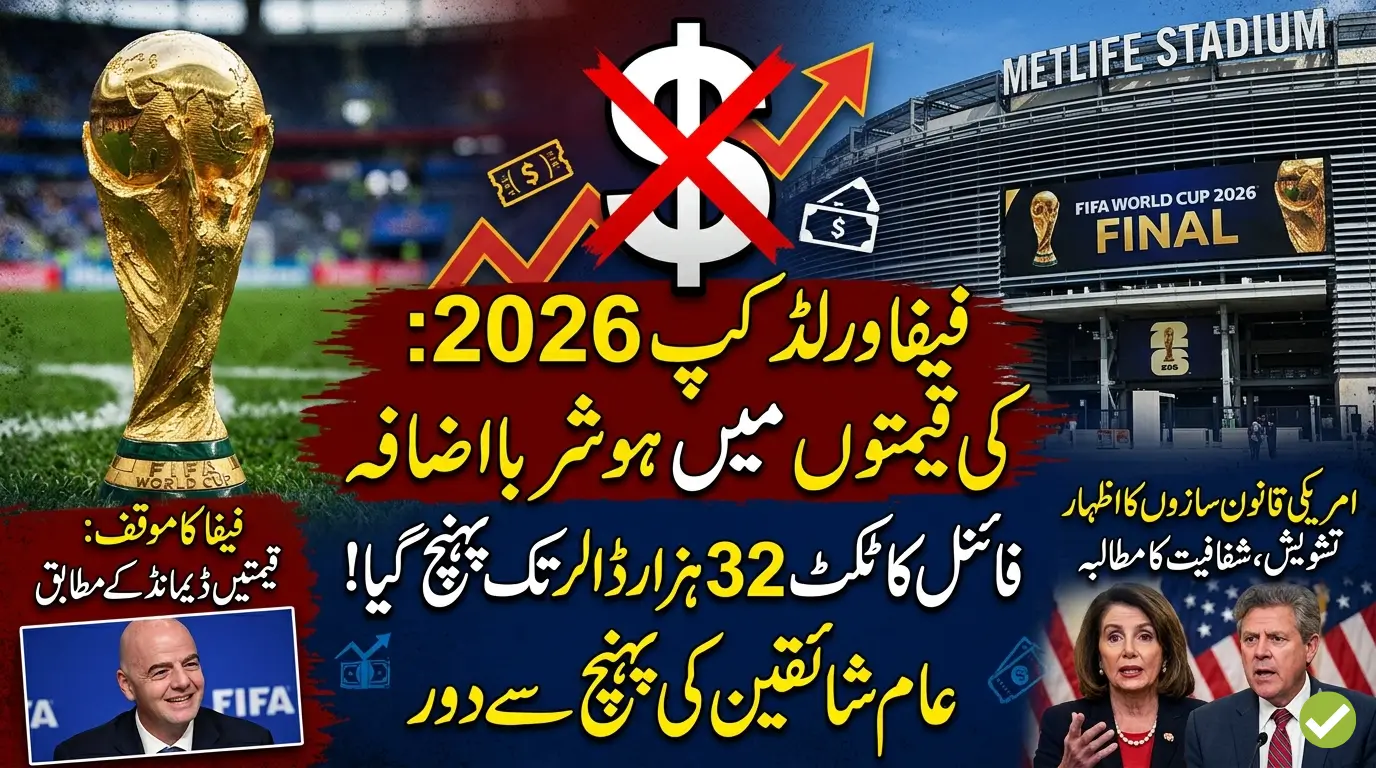
FIFA Triples Prices of Most Expensive
FIFA has come under intense global criticism after significantly increasing ticket prices for the 2026 FIFA World Cup final, with the most expensive premium seats now reaching a staggering $32,970. The final, set to be held at Stadium in New Jersey, is expected to be one of the most watched sporting events rise in ticket prices has sparked outrage among fans, lawmakers, and football communities worldwide.
SBP Extends Special Oil Import Relief As Market Volatility Continues

The price hike represents a nearly threefold increase compared to previous listings, where the highest Category 1 ticket was priced at $10,990. With this change, FIFA has effectively introduced a new premium pricing tier, replacing earlier high-end categories with limited accessibility seating options. Critics argue that such a move not only limits accessibility but also raises serious questions about fairness and transparency in ticket distribution.
Lawmakers Demand Transparency in Ticketing Practices
The controversy surrounding ticket prices intensified when US lawmakers raised concerns about FIFA’s ticketing system. New Jersey Democrats Nellie Pou and Frank Pallone Jr. formally criticized the governing body in a letter addressed to FIFA President Gianni Infantino, urging greater transparency and accountability.
Lawmakers described FIFA’s pricing practices as “opaque” and accused the organization of implementing shifting rules that confuse and frustrate fans. They argued that the lack of clarity around pricing structures and ticket categories undermines trust and creates an uneven playing field for supporters trying to secure seats for major matches.
This political pressure highlights the growing scrutiny on FIFA, especially as the 2026 World Cup will be jointly hosted by the United States, Canada, and Mexico, bringing increased attention to how tickets are sold and distributed.
NAB Freezes 4 Major Bahria Town Properties, Including Bahria Icon Tower
Rising Costs Across All Match Categories
The price surge is not limited to the final match. Ticket prices for other key fixtures, including semi-finals and group-stage matches, have also seen significant increases. Premium seats for the semi-finals in cities like Arlington and Atlanta have been listed at over $10,000, further fueling criticism that attending World Cup matches is becoming increasingly unaffordable for average fans.
Even group-stage matches, which are traditionally more accessible, have experienced notable price hikes. Fans hoping to watch the United States in the early stages of the tournament are reportedly facing ticket prices ranging from approximately $840 to nearly $3,000. This trend suggests a broader shift toward premium pricing across the entire tournament.
For many football supporters, these changes represent a departure from the spirit of the World Cup, which has historically been celebrated as a global event accessible to fans from diverse economic backgrounds.
FIFA Defends Pricing Strategy
Despite the backlash, FIFA President Gianni Infantino has defended the organization’s pricing policy, stating that ticket prices are determined by market demand. According to Infantino, the high cost of tickets reflects the immense popularity of the World Cup and the willingness of fans to pay premium prices.
He also pointed out that tickets often resell at even higher prices on secondary markets, suggesting that FIFA’s official pricing may still be below true market value. In response to reports of extreme resale listings, Infantino made light of the situation by joking that he would personally deliver refreshments to anyone who purchases a ticket for an exorbitant amount, such as $2 million.
While FIFA maintains that its pricing strategy is economically justified, critics argue that relying solely on market dynamics overlooks the social and cultural importance of making football accessible to a broader audience.
PM Shehbaz Inaugurates Major Development Projects in Gilgit Baltistan
Impact on Fans and Global Football Culture
The dramatic increase in ticket prices has raised concerns about the long-term impact on football culture and fan engagement. Many supporters feel that the World Cup is gradually becoming an event tailored for wealthy spectators, corporate clients, and VIP attendees rather than everyday fans.
This shift could have significant implications for the atmosphere of matches, as passionate supporters play a crucial role in creating the unique energy associated with World Cup games. If ticket prices continue to rise, there is a risk that stadiums may lose the vibrant and diverse fan base that defines international football.
Additionally, the perception of exclusivity could alienate younger fans and those from developing countries, potentially weakening the global appeal of the tournament over time.
Economic and Commercial Considerations
From a financial perspective, FIFA’s pricing strategy is likely aimed at maximizing revenue from one of its most lucrative events. The World Cup generates billions of dollars through broadcasting rights, , and ticket sales, making it a cornerstone of FIFA’s financial model.
Higher ticket prices could contribute to increased revenue, which may be reinvested in football development programs worldwide. However, critics argue that revenue generation should not come at the expense of accessibility and fairness.
Balancing commercial interests with fan engagement remains a key challenge for FIFA as it prepares for the 2026 tournament.
Telcos Push Govt to End Customs Duty on 5G Devices Reduce Taxes on Recharge in Budget 2026-27
Role of Resale Markets and Scalping Concerns
Another major issue highlighted by the controversy is the role of ticket resale markets. Many fans have pointed out that even official prices may not reflect the true cost of attending matches, as tickets are often resold at significantly higher rates.
This creates opportunities for scalping and profiteering, further limiting access for genuine supporters. While FIFA has implemented measures to control resale activities in the past, the effectiveness of these efforts remains a topic of debate.
Experts suggest that improving transparency and strengthening regulations around ticket resale could help address some of these concerns.
Looking Ahead to the 2026 World Cup
As preparations for the 2026 World Cup continue, the issue of ticket pricing is likely to remain a central topic of discussion. With matches spread across multiple host countries and unprecedented global interest, demand for tickets is expected to be extremely high.
FIFA will need to carefully navigate the balance between maximizing revenue and maintaining the inclusive spirit of the tournament. Any further changes to ticketing policies will likely be closely monitored by fans, media, and policymakers alike.
Govt Considering Relief in PTA Mobile Phone Taxes for Overseas Pakistanis
FAQS
1. How much is the most expensive ticket for the 2026 World Cup final?
The most expensive premium ticket is priced at $32,970.
2. How does this compare to previous prices?
Previously, the highest Category 1 ticket was around $10,990, meaning prices have nearly tripled.
3. Why is FIFA increasing ticket prices?
FIFA says prices are based on market demand and the high popularity of the World Cup.
4. Are other match tickets also expensive?
Yes, semi-final tickets exceed $10,000, and group-stage tickets range from $840 to $3,000.
5. What concerns have been raised by critics?
Critics highlight lack of transparency, high costs, and reduced accessibility for average fans.
Final Words
FIFA’s decision to significantly increase ticket prices for the 2026 World Cup has sparked widespread debate about the future of football’s biggest tournament. While the organization defends its approach as market-driven, the growing backlash reflects deeper concerns about accessibility, fairness, and the commercialization of the sport.
As the countdown to the World Cup continues, FIFA faces the challenge of addressing these concerns while maintaining the global appeal of the tournament. The way it responds could shape not only the success of the 2026 event but also the future relationship between football’s governing body and its worldwide fan base.
Chery is Officially Launching 3 New More Affordable Cars in Pakistan