
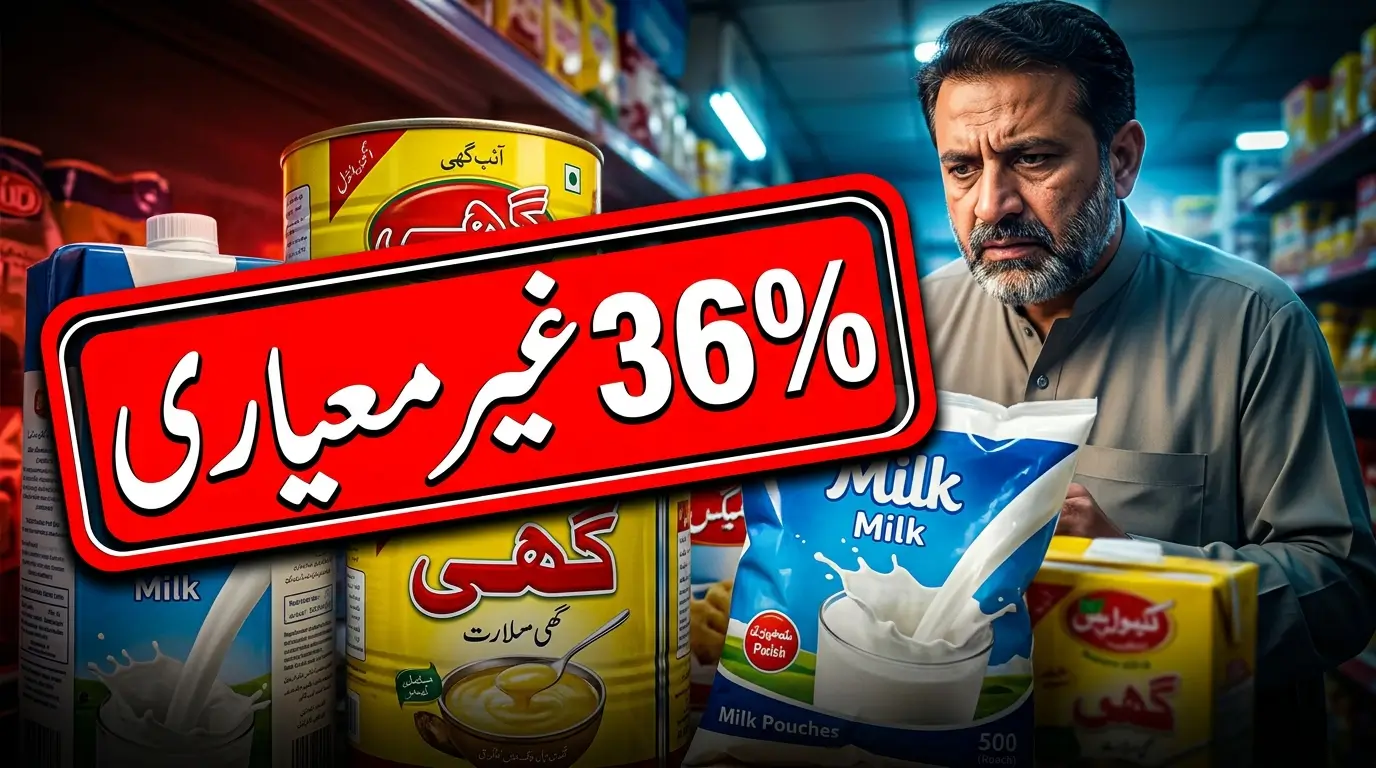
36% of Packaged Ghee Oil and Milk
36% of Packaged Ghee Oil and Milk Pakistan’s most widely consumed packaged food items have been given an important news regarding the quality which has created concern for people across the country. A total of 491 packets of packaged ghee cooking oil and milk from Pakistan and India went for laboratory testing.
Amazing REDMI 17 4G Launches Early in Europe with Large Battery and Affordable Price
Out of which 315 packets met the prescribed standards while 176 packets were declared substandard. Similarly about 36 percent of the tested packets could not meet the required national standards. This testing was conducted by the Pakistan Council of Scientific and Industrial Research while the results were presented to the relevant government agencies.
Why is the quality of milk and ghee important?
The most important part of this report is that the amount of nutrients in some packets was found to be much lower than the prescribed standard. For example in one milk sample the milk fat content was recorded as only 0.8% while the prescribed minimum amount was 3.5%. Such results raise the question that not every packaged product available in the market is necessarily of the same quality.
It is also important to note that not every packet that fails the test can necessarily be declared dangerous but it means that it does not meet the specific standard or prescribed characteristics. The report also states that samples from well-known multinational packaged milk companies were found to be compliant with the standard while some lesser-known local brands showed quality issues.
Redmi K100 Pro Series to Bring Redmi’s Best Display Tech Yet
The government’s next big step and a warning to the public
36% of Packaged Ghee Oil and Milk After the report came out, people should be careful and check the information on the packaging manufacturing and expiration date of oil or milk when buying it. It is better to avoid buying products that are unusually cheap or have suspicious banking.
It is the responsibility of the government and relevant food safety agencies to conduct regular testing in the market and take action against products that do not meet the prescribed standards in accordance with the law. In this case just testing is not enough but effective monitoring and corrective action based on the results is also necessary.
Conclusion
A significant issue is the failure of about 36% of the 491 packets of packaged ghee and milk in Pakistan to meet the standards. This report has raised many questions regarding food quality market surveillance and public confidence. Now there is a need for the government to conduct further testing and reveal the reasons for substandard products and provide safe and quality food to the people.
Amazing Honor Play 11 Pro Arrives With Giant 7000mAh Battery and 6500nit OLED Display

5 FAQs
1. What percentage of packaged ghee, oil and milk failed quality tests in Pakistan?
36% of Packaged Ghee Oil and Milk Around 36% of the tested samples did not meet the required quality standards.
2. How many samples were tested in total?
36% of Packaged Ghee Oil and Milk PCSIR A total of 491 samples of packaged ghee, cooking oil and milk were tested.
3. Which product had the highest number of failed samples?
36% of Packaged Ghee Oil and Milk Vanaspati ghee recorded the highest number of failed samples among the tested products.
4. Does failing a quality test mean the product is dangerous?
Not necessarily. It means the product did not meet one or more required quality standards. The health risk depends on the specific issue found in the product.
5. What should consumers check before buying these products?
Consumers should check the product seal, manufacturing and expiry dates, label information and the overall condition of the packaging before making a purchase.